
info@jxgreentape.com
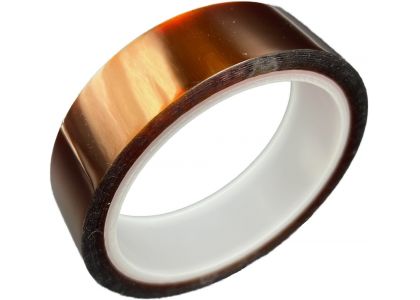
Kapton tape, widely recognized as polyimide film tape, has become a go-to material across high-performance sectors because of its exceptional stability and specialised performance. In this article we examine how Kapton tape thermal conductivity, Custom polyimide film, NVMe SSD Kapton tape, Acrylic adhesive Kapton tape, and broader polyimide film uses intersect with real-world industry needs — from electronics assembly and PCB protection to cable harness wrapping, automotive heat management, and 3D printing bed adhesion.
At its core, Kapton is a high-performance polyimide film manufactured to retain its mechanical and electrical properties across a wide temperature window. DuPont’s technical literature documents Kapton’s effective use between approximately -269°C and +400°C, which explains why designers select it where other films fail. Its thin-film form factor combines flexibility with excellent dielectric strength, low outgassing for vacuum/space use, and stable mechanical properties under thermal stress.
Beyond temperature tolerance, Kapton’s electrical insulation and chemical resistance make it ideal for protecting delicate electronics during soldering, reflow, and other thermal processes. Where applications require tailored behavior, manufacturers supply custom polyimide film grades and adhesive systems — including Acrylic adhesive Kapton tape — to meet specific peel strength, residue, and bonding requirements.
Kapton Tape in Electronics: A Critical Role in PCB Manufacturing
Manufacturers commonly deploy Kapton as a masking and insulating material during PCB assembly. Its thin profile allows for precise coverage of small components and pads during wave or reflow soldering without degrading. For permanent installations, Kapton serves as an insulating barrier on flex circuits and as part of multilayer stacks where space and dielectric performance are critical. Custom polyimide film formulations permit tighter tolerances for flexible printed circuits and high-density assemblies.
Thermal Insulation and Heat Management
Kapton’s thermal stability makes it a trusted material for thermal management tasks. While standard Kapton is not a metal-like heat sink, it provides a durable thermal-stable barrier and can be used as part of a composite thermal solution. In designs that require actual heat spreading, Kapton is typically combined with metallized films, thermal pads or metal heat spreaders; there are also thermally-enhanced Kapton variants (e.g., Kapton MT/MT+) engineered for higher thermal conductivity when the design demands it. For 3D printing, Kapton-covered build plates provide a predictable heat-resistant surface that reduces warping and improves first-layer adhesion when configured with appropriate bed temperatures and surface prep.
Cable Harness Wrapping and Vibration Resistance
In aerospace and automotive environments, cable harnesses demand both thermal protection and abrasion resistance. Kapton’s conformability and adhesive options enable neat, low-profile wrapping that resists creep and remains bonded through vibration and temperature cycles. Specifying the correct custom polyimide film thickness and adhesive chemistry ensures compliance with insulation standards and long-term mechanical integrity.
NVMe SSD Kapton Tape: Protecting High-Density Storage
High-speed storage devices generate concentrated heat during sustained workloads. Applied correctly, NVMe SSD Kapton tape can protect controller and NAND regions during assembly and act as a reliable electrical insulator between components and conductive thermal elements. In many NVMe designs Kapton is paired with thermal pads or metallic spreaders so that the SSD benefits from conductive cooling while electrical isolation is retained.
Automotive and Aerospace Applications
Kapton’s low mass and high-temperature resistance suit it to demanding vehicle and aircraft systems. From insulating sensor leads near hot engine components to protecting avionics harnesses, Kapton reduces bulk while maintaining dielectric and chemical resistance. Where removability or serviceability is required, Acrylic adhesive Kapton tape can offer a balanced compromise between adhesion and clean removal on many substrates.
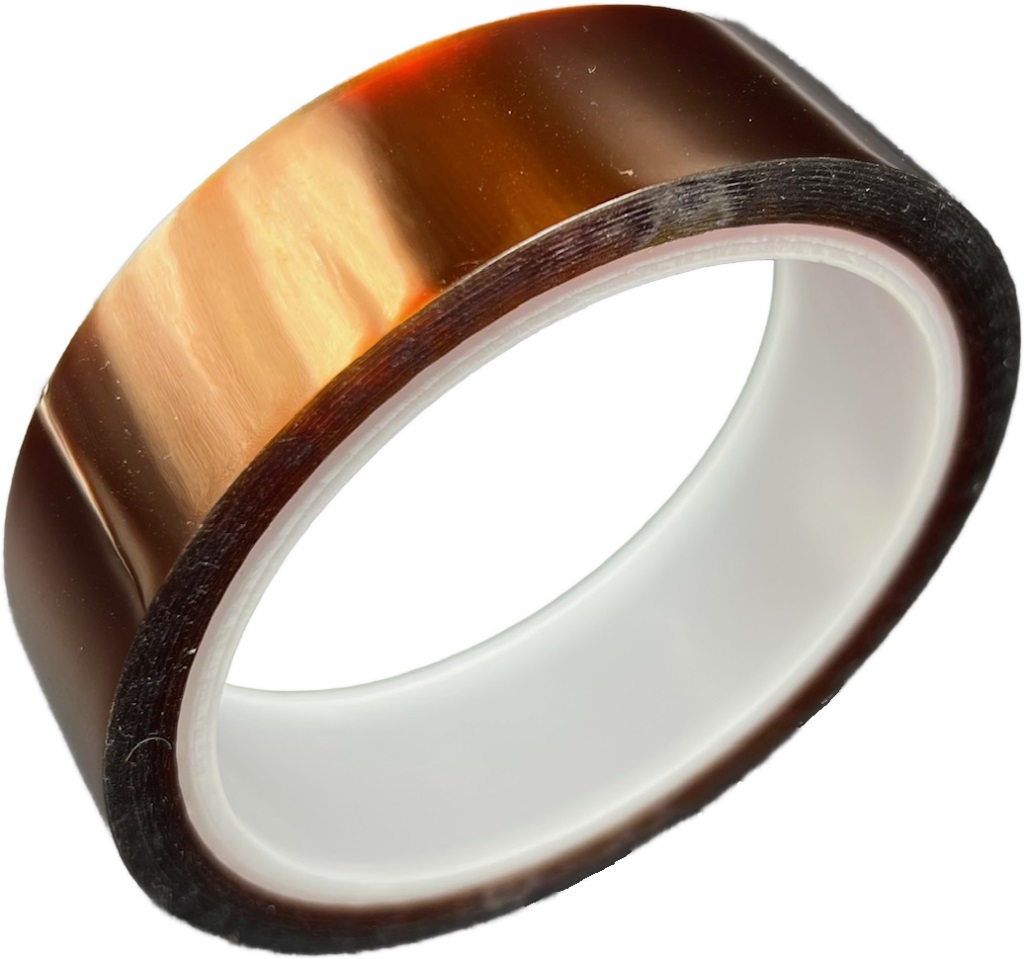
Custom Polyimide Films and Adhesives
Standard Kapton variants are a good fit for many tasks, but real-world applications often call for bespoke combinations of film thickness, surface treatment, metallization, or adhesive chemistry. Suppliers will often provide custom polyimide film constructed for low outgassing, enhanced flex-life, or improved metal adhesion for EMI shielding. Similarly, Acrylic adhesive Kapton tape is commonly used when a reliable bond and later clean removal are both priorities, while silicone adhesives may be chosen for higher operating temperatures or different substrate compatibility.
Kapton Tape for 3D Printing
Desktop and industrial 3D printers benefit from Kapton’s predictable adhesion and thermal resistance. Applied to the print bed, Kapton reduces first-layer warping across common thermoplastics; however, surface prep, correct bed temperature, and filament choice are critical. Kapton is best used as one validated element of a complete bed system rather than a universal cure-all.
Implementing Kapton Successfully — Practical Guidance
• Specify the right grade: match polyimide film thickness, dielectric strength, and adhesive type to the assembly or service environment.
• Use data sheets: require supplier datasheets (e.g., DuPont Kapton technical specs) to verify rated temperatures, outgassing, and mechanical limits.
• Test in-application: thermal cycling, solder float, and vibration testing are essential before production adoption.
• Combine solutions: when heat dissipation is critical, pair Kapton with thermal pads, metallized films, or heat spreaders rather than relying on Kapton alone.
• Documentation: retain lot numbers, material certificates, and handling instructions with component documentation for QA and audits.
Kapton’s combination of high-temperature durability, electrical insulation, and adaptability through custom polyimide film formulations makes it a long-standing industry staple. For assembly engineers and product designers, Kapton often provides a compact, reliable solution where tolerance to thermal cycling and long-term dielectric performance are required. Selecting the correct adhesive system — including Acrylic adhesive Kapton tape when appropriate — and validating materials in the target environment are essential steps to ensuring success.
As electronics become denser and operating environments more thermally demanding, engineered films like Kapton will continue to expand their role. Innovations in thin-film metallization, adhesive chemistry, and tailored custom polyimide film grades will keep Kapton-related products relevant for NVMe modules, advanced aerospace systems, specialized 3D printing workflows, and next-generation automotive electronics.
Q1: What is Kapton tape used for in electronics?
Kapton tape is primarily used for electrical insulation, masking during soldering, and protecting components from thermal exposure during assembly and operation.
Q2: Can Kapton tape be used in high-temperature environments?
Yes — Kapton and related polyimide film products are specified for extreme temperatures and are commonly used across electronics and aerospace applications.
Q3: What are the benefits of using custom Kapton polyimide films?
Custom polyimide film variants allow tailored thicknesses, surface treatments, and adhesives that solve unique adhesion, outgassing, or flex-life requirements.
Q4: Is Kapton tape used in automotive applications?
Yes. Kapton finds use in insulating wiring harnesses, protecting sensors near hot components, and wherever high-temperature dielectric materials are needed.
Q5: How does Kapton tape contribute to the performance of NVMe SSDs?
NVMe SSD Kapton tape may be used during assembly and as part of a composite thermal solution to insulate and protect components while enabling safe attachment of conductive heat spreaders.