
info@jxgreentape.com
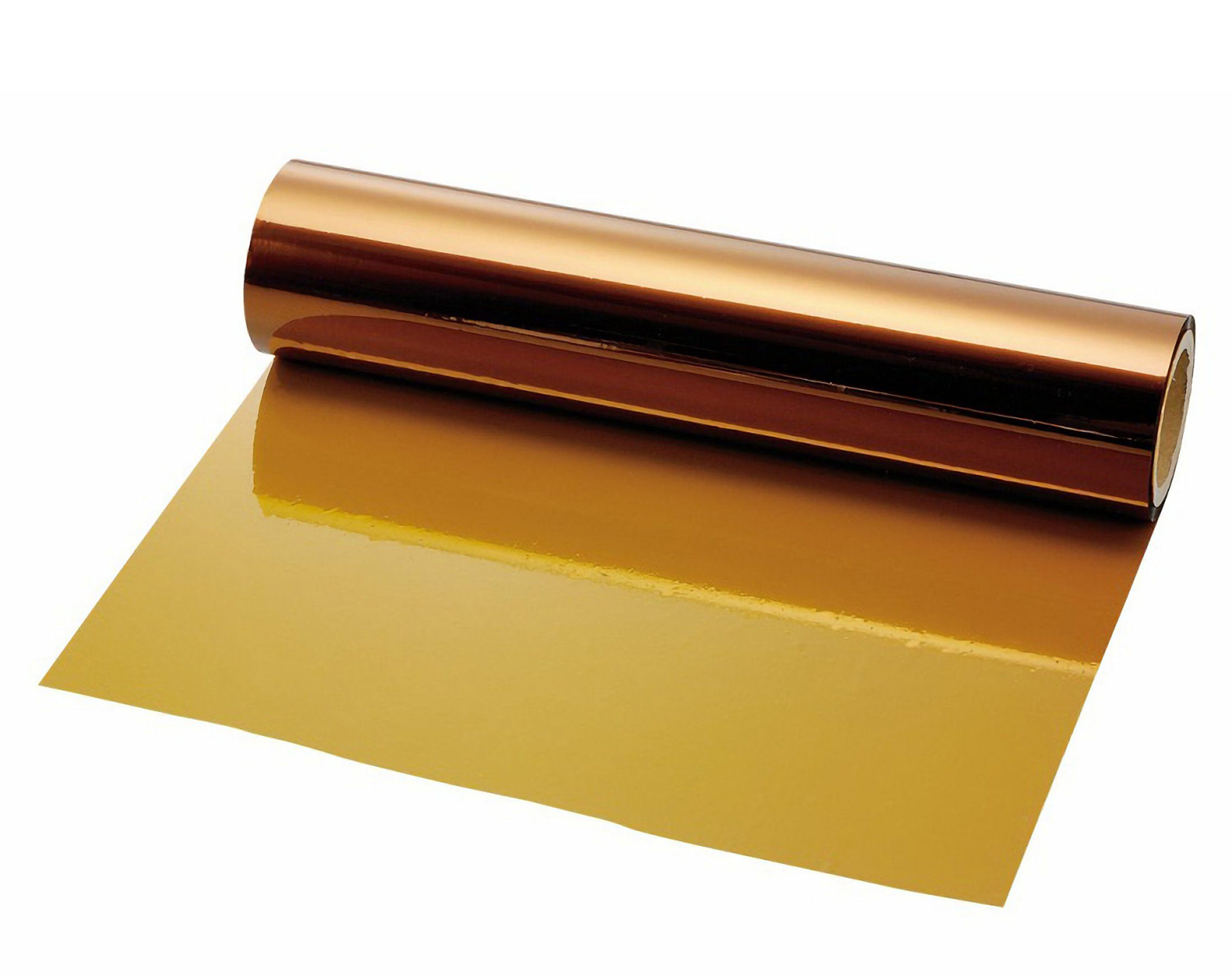
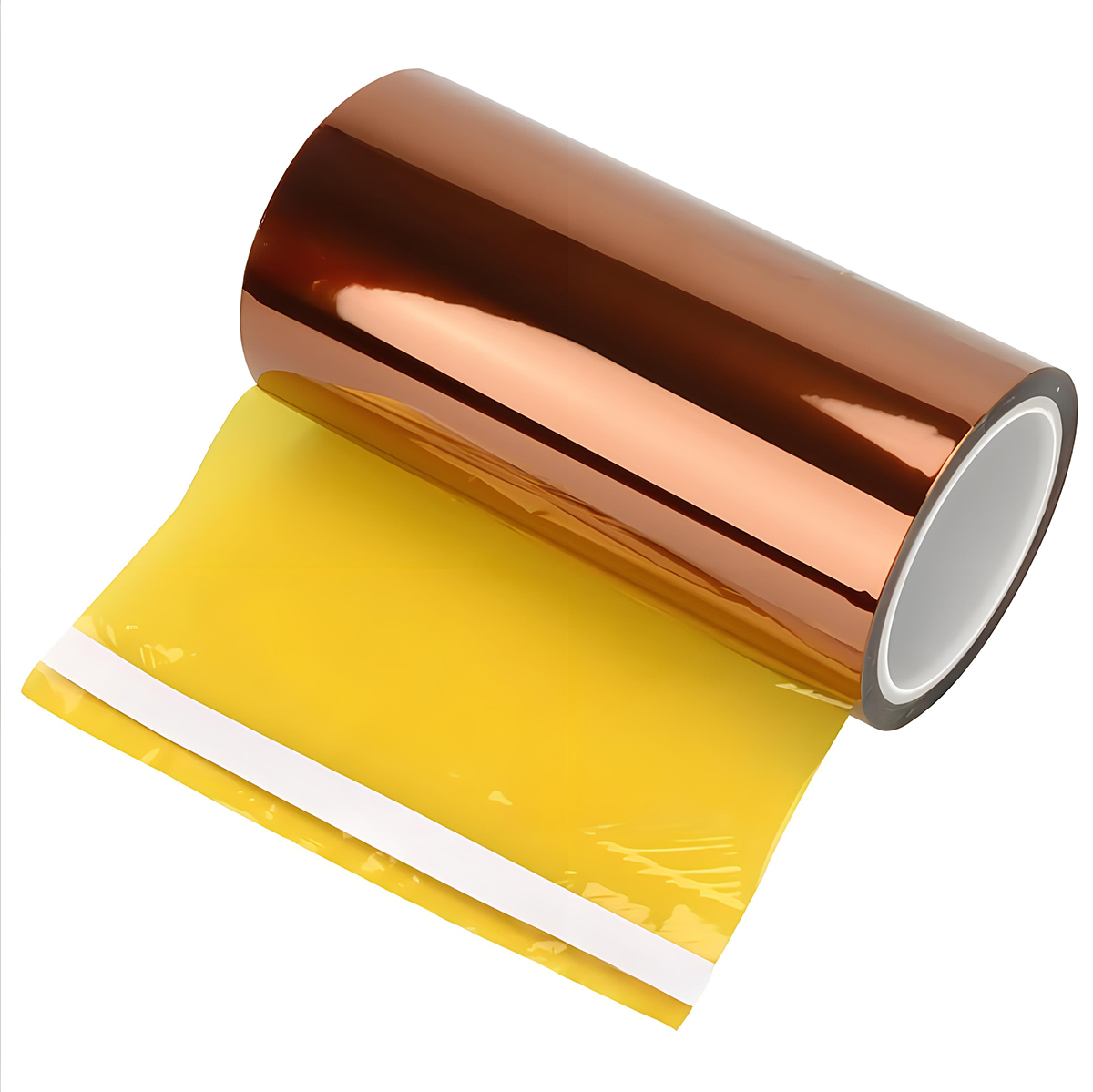
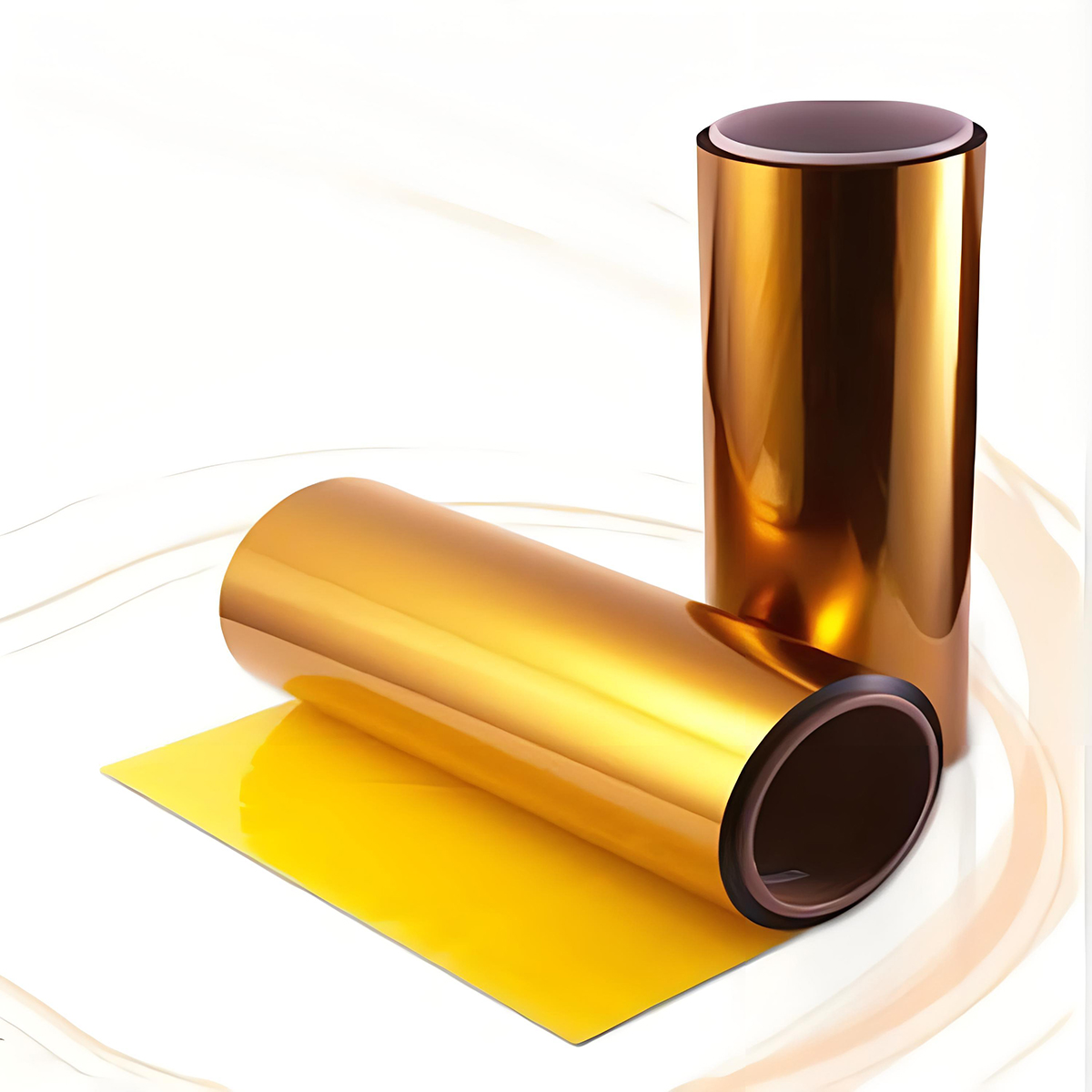
J-6302 is an uncoated amber polyimide film for electrical insulation and industrial converting. It is available in thicknesses from 25 μm to 200 μm, with standard web widths of 500 mm and 1,040 mm and roll lengths of 1,000 m, 2,000 m and 3,000 m. Customized widths and roll lengths are available. J-6302 contains no pressure-sensitive adhesive.
J-6302 is an uncoated amber polyimide film supplied as roll material for electrical insulation, laminating and industrial converting. The film contains no pressure-sensitive adhesive and is intended for buyers who require polyimide film as an insulation layer, converting substrate or backing material rather than a finished adhesive tape.
The product range covers eight thicknesses from 25 μm to 200 μm. This allows engineers and purchasing teams to select a film thickness according to insulation build, flexibility, mechanical handling and downstream processing requirements. Machine-direction and transverse-direction tensile specifications are provided for each thickness.
Typical processing methods include slitting, sheeting, die cutting, laminating, wrapping and subsequent adhesive coating. Final material approval should consider the required dielectric performance, thermal exposure, dimensional stability, bend radius and mechanical loading of the finished component.
| Property | 25 μm | 50 μm | 75 μm | 100 μm | 125 μm | 150 μm | 175 μm | 200 μm |
| Product ID | J-6302 | J-6302 | J-6302 | J-6302 | J-6302 | J-6302 | J-6302 | J-6302 |
| Tensile Strength – Machine Direction | ≥165 MPa | ≥160 MPa | ≥150 MPa | ≥150 MPa | ≥140 MPa | ≥140 MPa | ≥140 MPa | ≥120 MPa |
| Tensile Strength – Transverse Direction | ≥165 MPa | ≥140 MPa | ≥150 MPa | ≥130 MPa | ≥120 MPa | ≥120 MPa | ≥120 MPa | ≥110 MPa |
| Elongation at Break | ≥40% | ≥50% | ≥50% | ≥55% | ≥60% | ≥65% | ≥70% | ≥75% |
| Supply Item | Available Specification |
| Width | 500 mm / 1,040 mm / Customized |
| Roll Length | 1,000 m / 2,000 m / 3,000 m / Customized |
For engineering approval, the required test methods, dimensional tolerances and inspection documents should be confirmed before ordering.
J-6302 can be converted into insulation layers, barriers, spacers and die-cut parts for motors, generators, transformers, coils and other electrical equipment. The film should be evaluated as part of the complete electrical insulation system rather than approved only by material name or thickness.
Polyimide film can be used as a wrapping, separating or laminating layer in wire and cable constructions that require thin insulation material. Because J-6302 is supplied without adhesive, the required wrapping retention, heat-sealing layer or laminating adhesive must be specified separately.
Polyimide film is commonly used as a base material for flexible printed circuits, coverlay constructions and related laminates. Projects involving flexible circuits should confirm film thickness tolerance, thermal shrinkage, coefficient of thermal expansion, web flatness and compatibility with the selected copper foil or laminating adhesive.
The film can be slit, sheeted or die-cut into insulation barriers, spacers, shims and custom shapes for electrical and electronic assemblies. Buyers should provide drawings, dimensions, tolerances and handling requirements when requesting converted parts.
J-6302 can serve as a polyimide backing material for subsequent adhesive coating. Adhesive chemistry, coating thickness, curing conditions and finished tape performance must be validated according to the intended application.
The film is suitable for further processing into multilayer insulation constructions and other industrial laminates. Surface preparation, adhesive compatibility, temperature profile and winding tension should be evaluated during process development.
Thinner polyimide film is generally considered when low insulation build, flexibility or tight-space conversion is required. Thicker film provides a higher-gauge construction for parts requiring easier handling or a more substantial physical barrier.
The final thickness should not be selected by mechanical strength alone. Buyers should also evaluate dielectric requirements, bend radius, puncture risk, dimensional tolerance and the number of insulation layers in the finished design.
For new projects, sample testing under the actual converting and operating conditions is recommended before bulk production.
J-6302 is a bare polyimide film and does not bond to a surface by itself. It is intended for insulation conversion, lamination, wrapping or use as a backing material.
Applications requiring self-adhesion, temporary masking, component holding or removable surface protection require a polyimide film coated with an appropriate pressure-sensitive adhesive. For these applications, review our Polyimide Adhesive Tape range.
| Product Form | Construction | Typical Purchasing Purpose |
| J-6302 Polyimide Film | Uncoated polyimide film | Insulation layers, laminating, die cutting and further coating |
| Polyimide Adhesive Tape | Polyimide backing with pressure-sensitive adhesive | Masking, temporary fixing, wrapping and bonded insulation |
The acceptable operating temperature of polyimide film depends on exposure time, atmosphere, mechanical loading and the level of property retention required by the finished product. Continuous operating temperature, short-term process temperature and thermal decomposition temperature are different specifications and should not be treated as interchangeable.
For temperature-critical applications, buyers should provide the continuous operating temperature, peak temperature, exposure duration and environmental conditions when requesting technical confirmation.
Electrical insulation performance also depends on film thickness, voltage, frequency, humidity, electrode configuration and the complete insulation system. Where dielectric strength, dielectric constant, volume resistivity or a specific insulation class is required, the applicable test standard and acceptance value should be confirmed before ordering.
Explore our Electrical Insulation Solutions for related material and application information.
Store the polyimide film in its original packaging in a clean and dry indoor environment. Protect roll edges from impact and avoid creasing, contamination or excessive winding pressure during handling.
For moisture-sensitive laminating or high-temperature processes, establish suitable conditioning or drying requirements through process trials. Allow the material to reach the processing environment before opening the packaging if condensation may occur.
Please include the following information when requesting a quotation or sample:
Providing these details helps confirm whether the standard J-6302 construction is suitable or whether customized slitting, roll length or converting is required.
No. J-6302 is supplied as uncoated polyimide film without adhesive. It can be used as an insulation layer, laminating substrate or backing material for subsequent adhesive coating. Applications requiring immediate self-adhesion should use a suitable Polyimide Adhesive Tape.
Film manufacturing can produce different mechanical behavior in the machine direction and transverse direction. This difference should be considered when arranging slit rolls or die-cut parts, especially where the finished component will be folded, wrapped or loaded mainly in one direction.
Not necessarily when tensile strength is expressed in MPa. MPa represents stress per unit cross-sectional area, not the total breaking force of a strip. Actual load capacity also depends on film thickness, strip width, loading direction, edge quality and converting damage. Buyers should not compare thickness grades using the MPa value alone.
The term “polyimide film” does not establish one universal operating temperature. Qualification should distinguish continuous operating temperature from short-term process temperature and should consider exposure duration, atmosphere, mechanical loading and acceptable property retention. Temperature-critical projects should be evaluated using grade-specific test data.
Depending on the application, buyers may need to confirm dielectric strength at the selected thickness, volume resistivity, dielectric constant, thermal aging behavior, dimensional stability, thermal shrinkage, flammability and compatibility with the complete insulation system. Required standards and acceptance values should be specified before approval.
Polyimide film is commonly used in flexible circuit materials, but suitability cannot be determined from polymer type alone. FPC projects should verify thickness tolerance, web flatness, thermal shrinkage, coefficient of thermal expansion, surface condition, laminate adhesion and any applicable IPC specification before production approval.