
info@jxgreentape.com
If film keeps sticking to a sealing jaw, resin builds up on a mold edge, or a roller starts leaving marks on the web, switching to “any PTFE tape” may not fix the problem.
A heat-sealing bar, a guide rail, a roller, and a mold edge do not fail in the same way. Some surfaces need a tougher, fabric-reinforced release layer. Others need a smoother, lower-friction PTFE film surface.
This page focuses on two practical tape families:
The main idea is simple: use PTFE glass cloth tape when heat, pressure, and wear are the main problems; use PTFE film tape when smoothness, low friction, and low profile matter more.
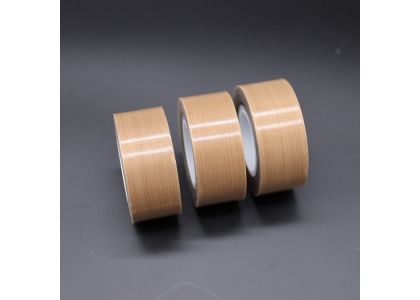
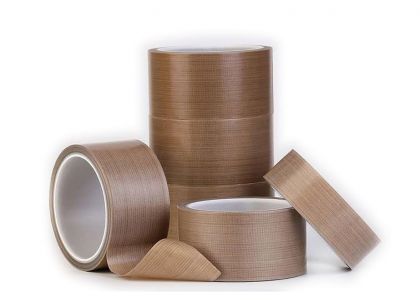
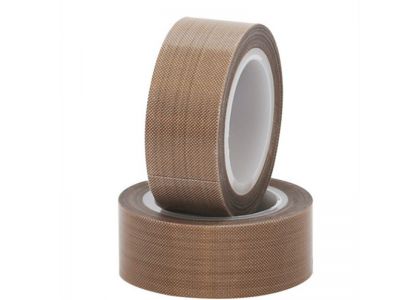
PTFE glass cloth tape uses a woven fiberglass base coated with PTFE, usually with pressure-sensitive adhesive. It is commonly used on heat sealing bars, packaging jaws, hot plates, mold edges, and contact surfaces exposed to repeated heat, pressure, and wear.
It is often the safer starting point when durability matters more than surface smoothness. The trade-off is that the fabric-reinforced structure may not be ideal where a very smooth surface finish is required.
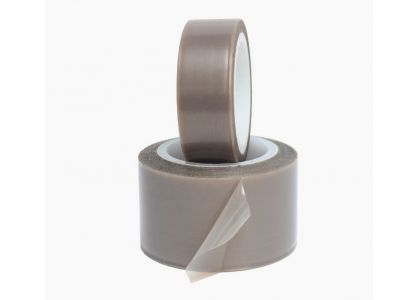
PTFE film tape uses a smoother PTFE film backing with adhesive. It is usually thinner and smoother than PTFE glass cloth tape.
It is commonly used on rollers, guide rails, web paths, sliding surfaces, and areas where fabric texture may leave marks. It is often the better starting point when smoothness, low friction, and lower profile matter more than heavy-duty wear resistance.
The tape choice should start from the problem seen on the line.
|
Production Problem |
Better Starting Point |
Why |
|
Packaging film sticks to heat sealing jaw |
PTFE glass cloth tape |
Durable release layer for heat, pressure, and repeated jaw contact |
|
Tape wears quickly on sealing bar |
PTFE glass cloth tape |
Reinforced structure usually handles cycling and abrasion better |
|
Film shows fabric marks or surface imprint |
PTFE film tape |
Smoother backing may reduce texture transfer |
|
Roller creates drag or web marks |
PTFE film tape |
Low-profile, smooth surface suits sliding contact |
|
Resin builds up on mold edge |
Depends on process |
Glass cloth for durability; film for smoother surface finish |
|
Tape edge lifts under heat |
Check full tape construction |
Adhesive, surface prep, pressure, and dwell time may be the real issue |
|
Food packaging contact concern |
Check documentation and contact condition |
Finished tape suitability matters more than a generic “food grade” claim |
For heat sealing equipment, PTFE glass cloth tape is usually the first sample to review. It gives the sealing surface a non-stick layer while the glass cloth base helps with repeated heat, pressure, and jaw movement.
If the package shows surface marks or texture transfer, PTFE film tape or a smoother PTFE surface may also need testing.
For rollers, web paths, and sliding surfaces, buyers often care more about smooth movement, lower drag, fewer film marks, and reduced edge catching.
In these cases, PTFE film tape is often the better starting point. If the tape is lifting, wearing unevenly, or leaving marks, use the roller and web path failure guide for deeper troubleshooting.
For mold edges, hot plates, or resin-contact areas, both tape types may be used. PTFE glass cloth tape is usually stronger where pressure and wear are higher. PTFE film tape may be preferred where a smoother release surface matters more.
If resin quickly flows under the tape edge or builds up again after cleaning, the issue may also involve edge sealing, surface preparation, pressure, or cleaning practice.
For food packaging equipment, do not choose PTFE tape only by the phrase “food grade.” The safer approach is to check the real contact condition: heat, pressure, cleaning, abrasion, and documentation needs.
For detailed checks, use the food packaging guide linked below.
For release and heat sealing applications, the highest temperature number is not enough to choose the right tape.
A finished PTFE tape includes the PTFE surface, backing structure, adhesive system, total thickness, and liner. In real production, failure may come from edge lift, adhesive softening, wear, pressure, or dwell time — not from the PTFE layer alone.
Instead of asking only “What is the maximum temperature?”, ask whether the finished tape construction has been used under similar heat, pressure, contact material, and cycle conditions.
For a deeper explanation, see the guide on evaluating temperature ratings for high-temperature PTFE tape.
You do not need a complete technical file before asking for PTFE tape samples. In many cases, a few practical details are enough for an initial recommendation.
Please send any of the following if available:
· a photo of the machine part, such as a sealing jaw, roller, guide rail, or mold edge;
· a photo of the current tape failure, such as sticking, wear, edge lift, residue, or film marks;
· the current tape size or roll width;
· the working temperature, if known;
· the material touching the tape, such as packaging film, resin, fabric, rubber, or paper;
· any food-contact or documentation requirement, if applicable.
If you are not sure which tape type to test first, that is fine. A short description and one or two photos are often enough to decide whether PTFE glass cloth tape or PTFE film tape should be the first sample option.
Use the guides below based on the problem you are trying to solve.
Start here if you need a basic overview of PTFE glass cloth tape and common release applications.
Read this if your application involves food packaging equipment, contact conditions, or documentation checks.
Use this guide if your main issue is resin build-up, mold edge release, surface finish, or cleaning downtime.
Read this before choosing by temperature rating alone.
Use this troubleshooting guide if your problem is roller drag, film marks, edge lift, or premature PTFE film tape failure.
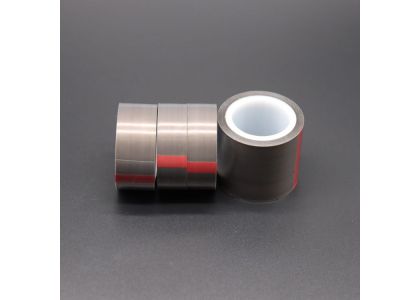
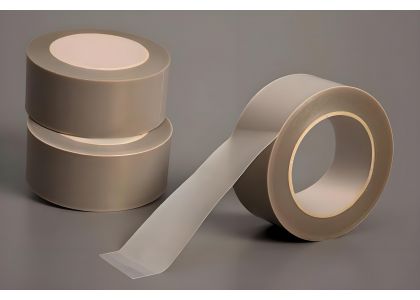
If you are still comparing options, preparing a sample request, or troubleshooting a tape failure, you can also browse our buying guides, material comparisons, failure analysis, and technical guides. These resources can help you define specifications, compare PTFE glass cloth tape with PTFE film tape, understand failure causes, and prepare clearer RFQ information before ordering samples.
Need help choosing between PTFE glass cloth tape and PTFE film tape?
Send us your machine photo, current tape specification, failure mode, operating temperature if known, contact material, and required tape size. If you are not sure which tape type to test first, we can help review the process and recommend sample options for comparison.