
info@jxgreentape.com
Power and distribution transformer insulation is not selected from one material name. A transformer may need tape or flexible insulation for coil holding, lead fixing, coil banding, layer support, phase separation, conductor wrapping, oil-filled service, or assembly protection.
Those are different jobs.
A tape that works well for mechanical holding may not be suitable for layer insulation. A flexible insulation paper that works in a dry-type design may not automatically be qualified for oil-filled transformer service. A reinforced tape may hold a winding firmly during assembly, but that does not make it a complete transformer insulation system.
This page focuses on adhesive tape and flexible insulation materials used in power and distribution transformer assembly, including filament-reinforced electrical tape, PET fiberglass tape, glass cloth tape, Nomex® / aramid insulation paper tape, and DMD insulation paper.
It does not replace transformer insulation design. Power transformer insulation systems may also include pressboard, insulating paper, aramid materials, varnish, resin, transformer oil, spacers, barriers, and other qualified components. The purpose of this page is more practical: to help engineers and buyers choose the right material family for sample testing in a defined transformer position.
A useful transformer insulation tape discussion starts with location.
Where will the material be used?
If it is used for coil holding or banding, tensile strength, low stretch, and dimensional stability matter. If it is used for lead fixing, wrapping stability and insulation support matter. If it is used for layer insulation, controlled thickness and dielectric separation become more important. If the material will face transformer oil, oil compatibility must be checked by exact grade.
This is why one “strong insulation tape” cannot cover every position. The material must match the function: hold, wrap, separate, protect, or support.
Tape and flexible insulation should support the transformer insulation system. They should not be treated as shortcuts around insulation coordination, oil compatibility testing, factory qualification, or customer approval.
Use this table as a first screening tool. It is not a final specification, but it helps narrow the material family before samples are requested.
|
Transformer Position |
Main Requirement |
Better Starting Materials |
|
Coil holding / banding |
Tensile holding, low stretch, dimensional stability |
Filament-reinforced electrical tape, PET fiberglass tape |
|
Lead fixing |
Wrapping stability, insulation support, mechanical holding |
Filament-reinforced tape, glass cloth tape, aramid paper tape |
|
Coil covering / crossover support |
Reinforcement, controlled wrapping, assembly stability |
PET fiberglass tape, glass cloth tape |
|
Layer / interlayer insulation |
Controlled thickness, dielectric separation, clean build-up |
DMD insulation paper, aramid insulation paper tape |
|
Phase separation support |
Mechanical and thermal stability, insulation barrier support |
Glass cloth tape, aramid paper tape, DMD where applicable |
|
Oil-filled transformer use |
Oil compatibility, long-term material stability |
Oil-compatible aramid tape or qualified reinforced tape |
|
Dry-type transformer assembly |
Heat aging, resin / varnish exposure, mechanical support |
Glass cloth tape, DMD, aramid paper tape, PET fiberglass tape |
|
Assembly protection |
Temporary holding, abrasion control, surface protection |
Selected by removability and surface risk |
The table shows why product names alone can mislead. PET fiberglass tape and PET electrical tape are not the same. Ordinary packaging filament tape and filament-reinforced electrical tape are not the same. Aramid paper tape and DMD insulation paper also serve different insulation roles.
Filament-reinforced electrical tape is usually considered when insulation support and mechanical holding must work together.
In transformer assembly, this may include coil holding, lead wire anchoring, banding, end-turn support, and winding stabilization. The glass fiber reinforcement helps reduce stretch and improve holding stability. That can matter when the tape must keep a wire, coil section, or wrap in position during production.
This product family should not be confused with ordinary filament strapping tape. Packaging tape may be strong, but strength alone does not prove electrical suitability, oil compatibility, or insulation performance.
For transformer use, buyers should check the exact TDS, backing construction, adhesive type, thickness, tensile strength, elongation, dielectric data if available, and the intended service condition. If the tape will be used in oil-filled transformer service, oil compatibility must be confirmed by exact grade.
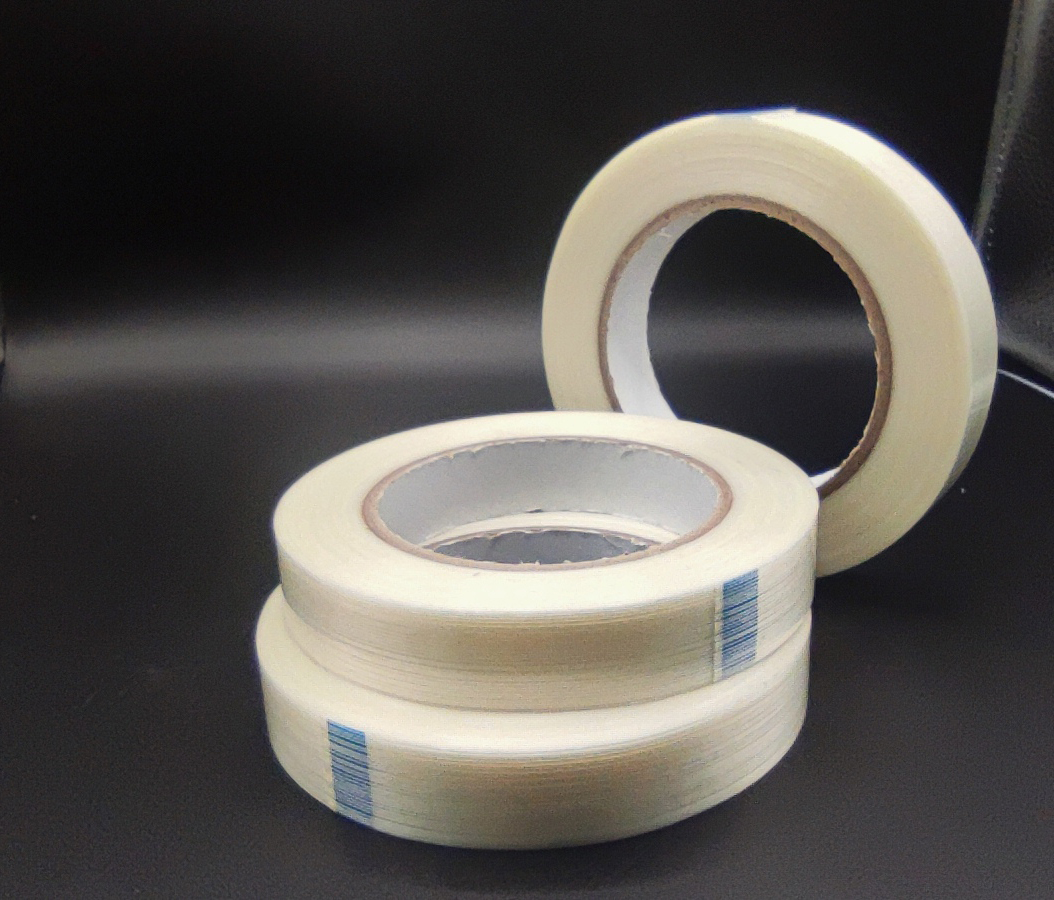
PET fiberglass tape, also called polyester glass filament tape or polyester film glass filament tape, is useful where film insulation support and mechanical reinforcement are both needed.
Typical transformer-related uses may include coil covering, coil banding, crossover insulation support, wire harness winding, anchoring, and reinforced assembly wrapping. Its value comes from the combination of polyester film and glass filament reinforcement: the film supports insulation and processing stability, while the glass filament improves tensile strength and dimensional control.
This makes PET fiberglass tape more relevant to transformer assembly than ordinary PET electrical tape.
Still, it must be positioned correctly. PET fiberglass tape should not be described as a complete transformer insulation system by itself. It is a reinforced insulation and holding material for defined locations. Dry-type and oil-filled service should also be treated differently. A grade that works for dry-type assembly support should not automatically be promoted for oil-filled transformer use unless compatibility data supports it.
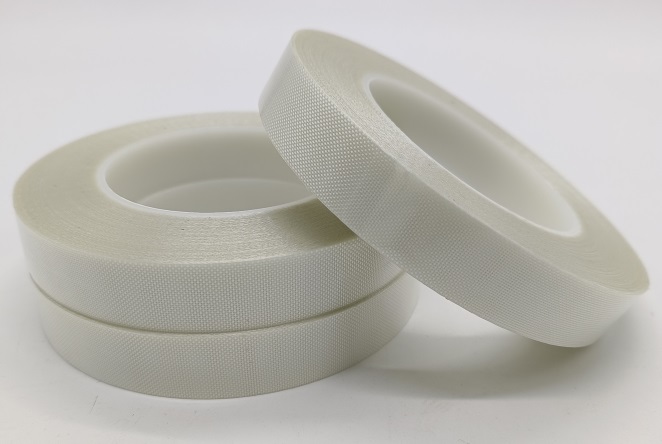
Glass cloth tape becomes useful when the position needs heat resistance, abrasion protection, tear resistance, and mechanical protection.
In transformer applications, it may be considered for lead protection, phase separation support, high-temperature wrapping areas, outer wrapping, and locations where a fabric-based backing is preferred. The woven glass cloth structure gives the tape toughness and resistance to tearing.
Glass cloth tape should not be selected only because it sounds “high temperature.” The adhesive system, tape thickness, flexibility, varnish or resin exposure, and actual insulation position still need to be checked.
For dry-type transformer or varnish-treated assemblies, glass cloth tape may be evaluated where wrapping strength, heat aging, and resin or varnish interaction are part of the process. For tight layer insulation, however, a thinner flexible insulation material may be more appropriate.
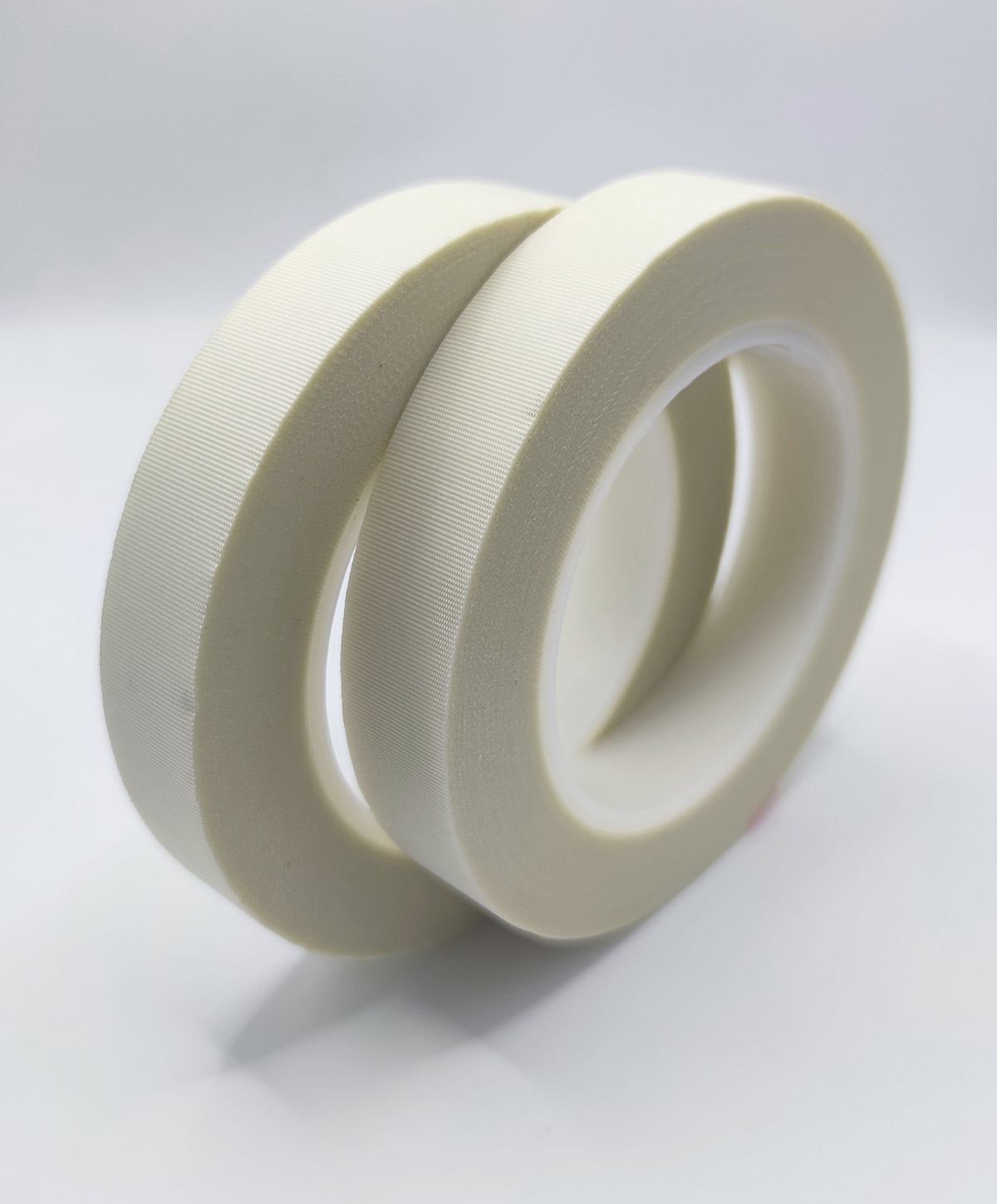
Nomex®-type aramid insulation paper tape, or aramid insulation paper tape, belongs closer to the transformer insulation material family than ordinary adhesive tape.
It may be used where higher thermal stability, dielectric support, conductor wrapping, lead protection, barrier support, or layer insulation support is required. In power and distribution transformer contexts, aramid-based insulation materials are often taken seriously because they are tied to demanding electrical and thermal environments.
If the product is made with genuine Nomex® material, the material source should be clearly stated. If it is an aramid paper alternative, the page should say aramid insulation paper tape instead of using Nomex as a generic word.
This product family is highly relevant to transformer insulation, but it still needs grade-level confirmation. Buyers should check thickness, dielectric properties, adhesive system if adhesive-backed, thermal class data if claimed, oil compatibility if used in liquid-immersed designs, and customer qualification requirements.
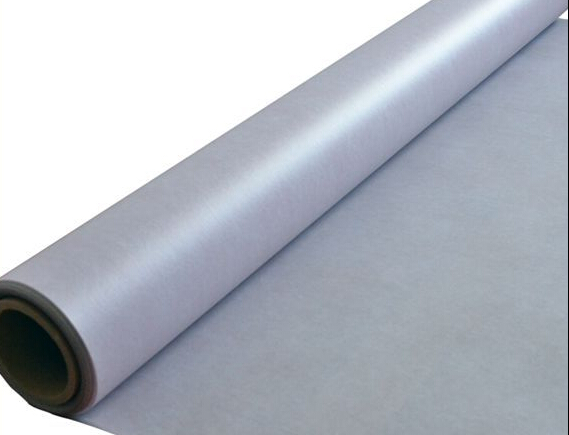
DMD insulation paper is a flexible composite insulation material, usually understood as polyester nonwoven / polyester film / polyester nonwoven structure.
It is more relevant to dry-type transformers, distribution transformers, coils, motors, and flexible insulation positions than to every large oil-filled power transformer design. That does not make it unimportant. It simply means the application must be defined correctly.
DMD insulation paper may be considered for layer insulation support, coil insulation support, liner insulation, phase insulation support, and assembly areas where flexibility, controlled build-up, and electrical separation are needed.
It should not be described as a replacement for pressboard, aramid paper, or a complete transformer insulation system. It is one flexible insulation option within a wider design. Buyers should confirm thickness, dielectric properties, temperature class if claimed, resin or varnish behavior, and transformer type before approval.
Dry-type and oil-filled transformers create different questions for tape and flexible insulation materials.
For dry-type transformer assembly, buyers often focus on heat aging, resin or varnish exposure, wrapping stability, mechanical support, and insulation build-up. Materials may need to tolerate winding pressure, curing, impregnation, or long-term thermal stress.
For oil-filled transformer use, the question changes. A material may be exposed to transformer oil over long periods. That means oil compatibility, adhesive stability, and material interaction with the fluid become critical. Do not assume that every reinforced tape, aramid tape, or flexible laminate is suitable for oil-filled service.
Oil compatibility is a grade-level issue. If oil-filled transformer service is involved, buyers should request oil compatibility data, transformer-fluid exposure information, or customer qualification records for the exact product grade. ASTM D3455 is often referenced for screening compatibility between construction materials and electrical insulating oil, but actual test conditions and acceptance criteria should come from the report, specification, or factory approval process.
The safe rule is simple: if the material will contact transformer oil, say so before requesting samples.
Transformer buyers often ask for thickness and dielectric strength first. These are important, but they do not tell the whole story.
Actual performance also depends on overlap, number of layers, winding pressure, edge condition, thermal aging, oil exposure, resin or varnish exposure, adhesive behavior, and the role of the material in the insulation system.
A material used for coil banding may be chosen mainly for holding force and dimensional stability. A material used for interlayer insulation may be chosen for controlled thickness and dielectric separation. A material used for phase separation may need mechanical stability and insulation barrier support.
So the better question is not only:
Which material has the highest dielectric strength?
The better question is:
Does this tape or flexible insulation material fit the required transformer position, service environment, and assembly process?
Transformer tape and flexible insulation materials should be selected by position, service environment, and qualification requirements. The points below are common places where sourcing decisions can go wrong.
|
Selection Risk |
Why It Matters |
What to Check |
|
Using packaging filament tape in an electrical position |
Packaging strength does not prove dielectric performance, oil compatibility, or insulation suitability. |
Confirm whether the tape is electrical-grade and request the exact TDS. |
|
Treating PET electrical tape and PET fiberglass tape as the same product |
They may both involve polyester, but the structure, reinforcement, and transformer use case are different. |
Check backing structure, reinforcement, thickness, dielectric data, and application position. |
|
Assuming DMD or aramid paper tape replaces the insulation system |
These materials support the transformer insulation system; they do not replace transformer design or factory qualification. |
Confirm the material role: layer support, phase support, conductor wrapping, barrier support, or assembly protection. |
|
Using Nomex® as a generic material name |
Nomex® is a specific branded aramid material. If required, the material source and grade should be confirmed. |
Ask whether the product uses genuine Nomex® material or another aramid insulation paper. |
|
Guessing oil compatibility |
Oil-filled transformer use is grade-specific, not product-family-specific. |
Request oil compatibility data, transformer-fluid exposure information, or customer qualification records for the exact grade. |
|
Selecting by one TDS value only |
Dielectric strength, tensile strength, thickness, and temperature data need transformer-position context. |
Review the full application: winding pressure, overlap, oil or varnish exposure, heat aging, adhesive behavior, and insulation duty. |
If you are still narrowing down the material choice, these related resources can support the next step:
· Buying Guides: preparing transformer tape and flexible insulation RFQ details.
· Material Comparisons: comparing filament-reinforced tape, PET fiberglass tape, glass cloth tape, aramid paper tape, and DMD insulation paper.
· Failure Analysis: diagnosing edge lift, adhesive softening, oil exposure problems, coil loosening, tape cracking, or insulation build-up issues.
· Technical Guides: reading dielectric strength, tensile strength, adhesion, thickness, oil compatibility, and material construction data.
These resources help buyers move from a broad transformer insulation inquiry to a more accurate sample request.
Need help choosing tape or flexible insulation materials for transformer assembly?
Send us your transformer type, application position, current material if available, and whether the material is used for coil holding, lead fixing, layer insulation, phase separation, conductor wrapping, dry-type assembly, or oil-filled transformer service.
We can help recommend whether filament-reinforced electrical tape, PET fiberglass tape, glass cloth tape, Nomex® / aramid insulation paper tape, DMD insulation paper, or another qualified insulation material should be tested first.
Filament-Reinforced Electrical Tape vs Glass Cloth Tape: Transformer Buyer Checks
What Is Tape Used for in Transformers? Adhesive Tapes for Power Transformer Insulation Materials
Filament Tape for Transformer Insulation: Uses, Limits, and Buyer Checks
Transformer Insulation Tape Thickness and Dielectric Strength: What Buyers Should Really Check
Why Ordinary Filament Tape Can Fail in Oil-Filled Transformers