
info@jxgreentape.com
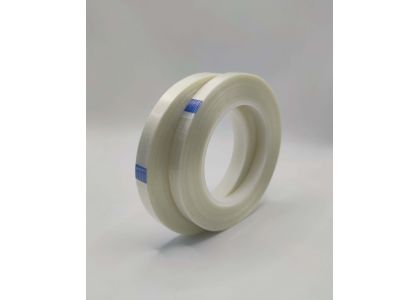
A filament tape can look strong on the bench and still be the wrong choice inside an oil-filled transformer. The problem is not only whether the tape can hold a coil today. The harder question is whether its adhesive can stay stable after long exposure to hot transformer oil.
That is why oil compatible filament tape for transformers should be reviewed as a system material, not just as a reinforced tape. Tensile strength matters for coil banding, lead holding, and winding fixation, but it does not qualify the tape by itself.
In oil-filled transformers, the real test is different: will the adhesive soften, migrate, lose bonding power, contaminate the oil, or allow the tape edge to lift after aging? If the supplier cannot answer those questions with product-specific data, the tape should not be approved only because it is “strong.”
Dry-type and oil-filled transformers expose tape to different risks. In dry-type applications, buyers usually check heat, varnish, resin, winding pressure, vibration, and bake-cycle behavior. Those are valid checks, but they are not the same as long-term oil immersion.
Oil-filled transformers add another filter. The tape may contact mineral oil, ester oil, pressboard, insulation paper, conductor insulation, and other materials inside the insulation system. The adhesive and backing must remain stable enough to keep their function without creating new problems.
This is where dry-type experience can mislead buyers. A filament electrical tape for oil-filled transformers should not be selected only because a similar tape worked in a dry coil. Dry-type approved does not mean oil-filled approved. Oil immersion, thermal aging, adhesive stability, and oil contamination risk need their own review.
For B2B purchasing, this means one practical thing: before discussing bulk price, confirm whether the tape construction is actually designed and documented for oil-filled transformer use.
“Oil-compatible” should not be treated as a casual label. It is not the same as waterproof, moisture resistant, or simply oil resistant in a general industrial sense.
For transformer work, a transformer oil compatible tape should be designed so that its adhesive system and backing construction remain suitable when exposed to transformer oil under the intended conditions. Buyers should look for evidence that the tape is not expected to soften excessively, release adhesive components, migrate into nearby insulation materials, or lose holding power during service or aging.
That does not mean every oil compatible filament tape behaves the same way. A paper-backed tape, PET filament tape, glass filament reinforced tape, or glass cloth laminate may be designed for different transformer positions. Some constructions are better suited for holding down leads or magnet wire. Others may be used for coil banding, outer wrapping, or temporary fixation during assembly.
The key is not the name alone. “Oil resistant filament tape” is not enough. Buyers need to know the construction, adhesive type, intended use, and test evidence.

The most common problem is adhesive softening. A tape may bond well at room temperature, but in transformer oil and heat, the adhesive can lose firmness. Once that happens, the tape may no longer hold leads, insulation parts, or winding components as intended.
Adhesive migration is another concern. If adhesive components move into the oil or into adjacent insulation materials, the tape may lose bonding performance and may also create contamination concerns. This does not mean every unapproved tape will immediately damage a transformer, but it is a risk that should not be ignored in engineering approval.
Flagging is also a practical failure mode. The tape edge or end lifts after wrapping, especially if the adhesive loses grip or the tape was applied under too much tension. In a dry workshop, that may look like a small handling issue. Inside an oil-filled transformer, edge lifting can reduce mechanical stability and weaken the holding function of the tape.
Oil contamination is the larger B2B concern. Transformer oil is not just a passive liquid. It supports insulation and cooling. If incompatible tape materials affect the oil or leave residues, the issue may go beyond the tape itself.
Finally, there is loss of mechanical holding. Filament tape is often chosen because of reinforcement and tensile strength. If aging reduces adhesion, the tape may keep its reinforced backing but lose its ability to hold the component in place. That is a classic transformer tape failure: the tape is still strong as a material, but no longer useful in the assembly.
For oil-filled transformers, the key question is not simply whether the tape uses a “strong adhesive.” The real question is whether that adhesive is designed to remain stable in transformer oil.
Oil-compatible acrylic adhesive is commonly seen in documented filament tape constructions for oil-filled transformer applications. In some designs, electrical-grade paper backing, glass filament reinforcement, and oil-compatible pressure-sensitive acrylic adhesive work together as a specific construction. The point is not that every acrylic adhesive is automatically suitable. The point is that the adhesive must be supported by product-specific data.
Rubber-based adhesives may appear in general filament tapes, but they should not be assumed suitable for oil-filled transformer use unless the supplier can provide evidence. Heat-resistant adhesive language is also not enough. A tape can tolerate heat in one environment and still be unsuitable for transformer oil exposure.
So the buyer’s question should be direct: is this adhesive system intended for oil-filled transformer insulation tape, and what data supports that claim?
Adhesive is critical, but backing construction also matters. A tape that looks like ordinary filament tape may use PET film backing, electrical-grade paper backing, glass filament reinforcement, or a glass cloth laminate. These constructions can behave differently during wrapping, oil exposure, and aging.
PET filament tape may offer dimensional stability and mechanical support, depending on grade and adhesive system. Electrical-grade paper-backed tape may be selected in certain oil-filled transformer applications because the construction is designed to work with the insulation environment. Glass filament reinforcement helps with tensile strength and holding, but reinforcement alone does not make the tape oil-compatible.
This is why buyers should avoid approving a tape by one word: “filament.” The tape construction must match the application position. Lead anchoring, coil banding, winding fixation, and outer wrapping can have different requirements, even inside the same transformer.
Before approving oil-filled transformer insulation tape, ask for more than a product name.
|
Data to Request |
Why It Matters |
|
Adhesive system |
Determines oil and heat behavior |
|
Backing construction |
Affects dimensional stability and oil exposure behavior |
|
Oil compatibility data |
Confirms the tape is intended for transformer oil exposure |
|
Aging condition |
Shows what kind of exposure was tested |
|
Peel adhesion after exposure |
Checks bonding retention after oil or heat aging |
|
Tensile strength |
Supports banding, holding, and fixation |
|
Dielectric breakdown |
Confirms electrical property under test conditions |
|
TDS / SDS |
Supports engineering and safety review |
|
Sample rolls |
Allows process trial before bulk approval |
A supplier that can only say “high temperature,” “oil resistant,” or “strong filament tape” is not giving enough information for engineering approval.
ASTM D3455 is commonly referenced when discussing compatibility between electrical insulating materials and petroleum-based electrical insulating oil. For buyers, it is useful because it points attention to how materials may affect oil properties and how the material itself changes after exposure.
However, do not treat ASTM D3455 as a casual marketing phrase. A supplier should not claim compliance unless there is supporting documentation. Buyers may ask whether the tape has been evaluated for compatibility with transformer oil using relevant compatibility test methods, such as ASTM D3455 or customer-specific aging tests.
This is the safe way to use the standard in sourcing discussions: as a request for evidence, not as an assumption.
Also remember that mineral oil and ester oil should not be treated as the same environment by default. If your transformer uses ester fluid, ask whether the tape has been reviewed for that oil type or whether additional sample testing is needed.
The same tape may perform differently in dry-type and oil-filled transformers.
|
Condition |
Dry-Type Transformer |
Oil-Filled Transformer |
|
Main exposure |
Heat, varnish, resin, vibration |
Transformer oil, heat, aging |
|
Main tape risk |
Flagging, embrittlement, residue |
Adhesive migration, softening, oil contamination |
|
Key check |
Varnish or resin compatibility |
Transformer oil compatibility |
|
Buyer action |
Test after bake or process exposure |
Test after oil aging |
This comparison does not mean one environment is always harder than the other. It means the failure risks are different. A tape that survives varnish exposure may not be the right oil-filled transformer insulation tape. A tape designed for oil may still need a separate review if the dry-type process involves resin, curing, or unusual surface conditions.
A few supplier claims should make buyers slow down. These claims are not always wrong, but they are incomplete unless supported by product-specific data.
“High temperature” without a TDS is not enough. Heat rating does not prove oil compatibility.
“Oil resistant” without a test condition is weak. What oil? What temperature? What duration? What property was checked after exposure?
“For transformer” is useful only when the application position is clear. A tape for lead holding may not be suitable for layer insulation or outer wrapping.
“Strong filament tape” is incomplete. Tensile strength matters, but so do adhesion, dielectric data, oil exposure behavior, and backing construction.
“Longer transformer life” should be treated with caution unless supported by real test data or field evidence. Without evidence, it is marketing, not engineering.
Start by sending application details, not just asking for the cheapest roll. Include transformer type, oil-filled environment, tape position, contacted insulation material, required width, thickness target, and oil type.
Next, ask for the construction, not only the price. Request the backing, adhesive system, reinforcement, total thickness, TDS, SDS, and oil compatibility information.
Then check whether the tape is actually intended for oil-filled transformer use. A general “strong filament tape” is not the same as oil compatible filament tape for transformers.
Request sample rolls before bulk approval. Test wrapping, unwind, cutting, adhesion, flagging, and fit on the real insulation material. If oil or heat aging data is available, compare it with your approval requirement. If it is not available, run internal sample testing before committing to volume.
For transformer production, a small trial batch is safer than switching directly to large-volume purchasing. Approve the tape by construction and performance, not by product name.
Can ordinary filament tape be used in oil-filled transformers?
Not automatically. Ordinary filament tape may have good tensile strength, but oil-filled transformer use requires review of adhesive system, backing construction, oil compatibility data, and performance after exposure.
What makes a filament tape oil-compatible?
An oil-compatible filament tape should be designed and documented for transformer oil exposure. The adhesive and backing should resist excessive softening, migration, loss of bonding, or other changes that affect the tape’s holding function.
Is oil-resistant tape the same as oil-compatible tape?
Not always. “Oil resistant” can be a broad claim. For transformers, buyers should ask for product-specific compatibility data, test conditions, oil type, and intended application guidance.
What adhesive is suitable for transformer oil exposure?
Do not approve by adhesive name alone. Oil-compatible acrylic adhesive is commonly used in documented oil-filled transformer filament tape constructions, but the supplier still needs to provide product-specific TDS and oil compatibility evidence.
What test data should buyers request for oil-filled transformer tape?
Ask for oil compatibility information, aging conditions, peel adhesion or bonding retention after exposure, tensile strength, dielectric breakdown data, TDS, SDS, and sample rolls. If the transformer uses ester oil, ask whether that oil type has been reviewed separately.
Can a dry-type transformer tape be used in oil-filled transformers?
Only if the product has suitable oil compatibility evidence. Dry-type experience with heat, varnish, or resin does not automatically qualify the tape for transformer oil exposure.
· ASTM D3455 — commonly used to screen the compatibility of construction materials with petroleum-based electrical insulating oil. It helps buyers review whether a material may affect oil properties such as electrical performance, color, interfacial tension, acidity, or whether the specimen itself shows changes such as swelling or discoloration.
· ASTM D149 — a reference method for dielectric breakdown voltage and dielectric strength of solid electrical insulating materials. It can support review of dielectric data, but it does not replace transformer-level insulation system approval.
· ASTM D3330/D3330M — a peel adhesion test method for pressure-sensitive tapes. For transformer tape review, buyers can use peel adhesion data to compare bonding behavior before and after exposure, when the test conditions are clearly stated.
· ASTM D3654/D3654M — a shear adhesion test method for pressure-sensitive tapes under constant load. This can help buyers review holding performance, but standard steel-panel data may not fully represent adhesion on insulation paper, pressboard, or other transformer materials
If you are evaluating filament tape for oil-filled transformer coils, lead anchoring, or winding fixation, send your oil type, tape position, contacted insulation material, width, thickness target, and approval requirements. We can help review whether the tape construction is suitable before sample approval or bulk ordering.