
info@jxgreentape.com
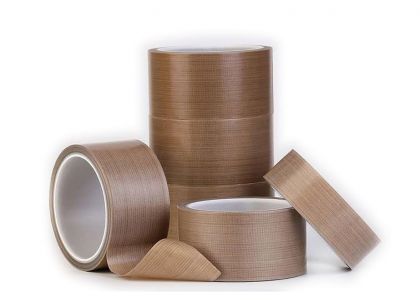
A strip of PTFE glass cloth tape for food packaging on a heat sealing jaw may look like a simple consumable. In a food packaging line, however, that small part can raise several serious questions: does it touch only the outer packaging film, or can it reach an open food zone? Is the adhesive fully hidden, or can it become exposed at a worn edge? If a customer asks for food-contact documentation, does the statement cover the finished tape, the PTFE surface only, or something else entirely?
That is why food packaging buyers should not select tape by temperature rating alone.
Heat resistance matters. Sealing jaws, shrink wrapping equipment, bag sealing lines, and film processing areas all expose tape to heat, pressure, and repeated movement. But in food packaging, the real selection issue is broader: where is the tape installed, what can it touch, how does it wear, and what documentation supports that exact use?
A strip of PTFE tape for food packaging placed outside the food zone is not the same risk as a tape surface near unpackaged food. A PTFE-coated release surface is not the same as the adhesive layer underneath it. A new tape is not the same as a tape with lifted edges, exposed adhesive, burned residue, or cleaning damage.
For QA teams and engineers, the question is not simply “Is this PTFE?” A better question is: Is this exact tape construction suitable for this exact contact condition?
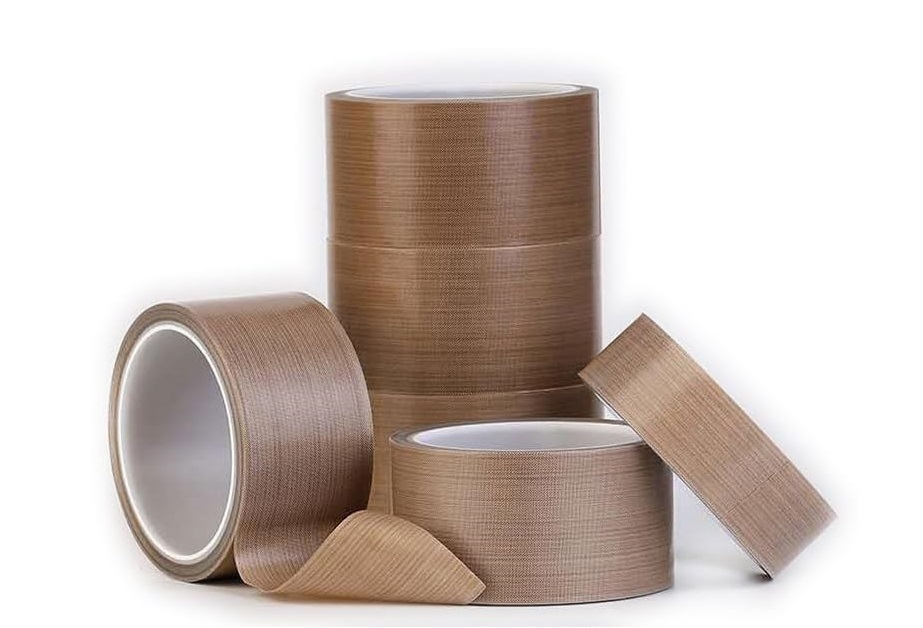
ptfe glass cloth tape is commonly used where a low-friction, non-stick, or release surface is needed on packaging equipment. In many cases, the tape is made from PTFE-coated glass fabric with a pressure-sensitive adhesive on the back. The PTFE surface helps reduce sticking from hot packaging film, melted polymer, sealant layers, labels, or process residue.
Typical use areas, depending on machine design, may include heat sealing jaws, impulse sealers, L-bar sealers, bag-making machines, form-fill-seal equipment, guide or chute surfaces, film contact areas, release surfaces, and protective wear strips.
A food packaging heat sealing tape may be applied to the jaw surface so that packaging film does not stick during repeated sealing. A PTFE release tape for packaging may be used where plastic film, laminated pouch material, or adhesive-backed labels need to pass smoothly across a machine surface. In some packaging lines, related PTFE-coated fabric sheets, rather than narrow adhesive tapes, may also be used as removable non-stick liners or release covers.
These applications sound similar, but the contact risk can be very different. A tape used behind a wrapped film layer may never touch food. Another tape may sit near an open product zone where crumbs, oil, powder, liquid, or cleaning fluid can reach the surface. A tape on a sealing jaw may only touch the outside of a finished pouch, while a tape used near fresh bakery, meat, dairy, or confectionery products may require stricter QA review.
So the application name alone is not enough. “Packaging tape” does not automatically mean “food contact tape.”
Before discussing compliance wording, buyers should map the tape location on the machine. A simple photo or marked drawing is often more useful than a long email. Show the tape position, product flow direction, packaging film path, heat zone, cleaning zone, and any point where the tape edge may lift or wear.
On many heat sealing machines, the tape touches only the outside of the packaging film. The food is already inside a pouch, bag, wrapper, or laminated structure. In this case, the main concerns may be release performance, residue control, heat stability, film marking, and clean replacement.
In other machines, the tape is located near an open food zone. Routine food contact may not be intended, but incidental contact could happen during product loading, misfeeds, line stops, maintenance, or cleaning. This is where QA teams usually ask for more detail.
The tape may also act as an equipment surface where food particles, powder, oil, moisture, or cleaning liquid can land on it. That does not automatically mean direct food contact in the strictest sense, but it does mean cleaning, wear, and possible transfer risks need to be reviewed.
The highest concern is when the tape surface directly touches unpackaged food, semi-finished food, or food ingredients during normal production. In that situation, a generic datasheet or verbal “food grade” claim is not enough. The exact finished tape construction and supporting documentation need to be checked.
This location-based approach prevents a common sourcing problem: asking the supplier a vague question like “Is your tape food safe?” without explaining the real use condition.
The following terms are useful for purchasing and QA communication. They should not be treated as a universal regulatory classification.
Direct contact means the tape surface is expected to touch food during normal production. This may include contact with unpackaged food, semi-finished food, or ingredients. This condition usually requires the strictest document review.
Incidental contact means contact is not the intended function, but it can reasonably happen. For example, the tape is near an open product area, or food may touch it during a jam, misalignment, cleaning operation, or maintenance task.
Equipment surface use means the tape is used as part of the machine surface, usually for release, sliding, or protection. The key questions are whether the surface can transfer residue, whether edges can lift, whether adhesive can become exposed, and whether worn tape is replaced before it becomes a contamination concern.
These descriptions help the supplier understand the application. For the U.S. market, food-contact suitability depends on authorized substances and specified conditions of use. For the EU market, food contact materials sit under a framework that includes safety, inertness, good manufacturing practice, and, where relevant, specific rules for plastic materials (FDA food-contact substance framework; EU Regulation (EC) No 1935/2004; EU Regulation (EC) No 2023/2006; EU Regulation (EU) No 10/2011).
A material name is not enough for QA review. The supplier needs the intended contact condition before they can provide meaningful documentation.
A PTFE coated fabric tape used in food processing or packaging normally has more than one layer. There may be a PTFE coating, glass fabric reinforcement, adhesive, release liner, and sometimes surface treatment or primer between layers. The food-facing side, machine-facing side, cut edge, and worn area may not carry the same risk.
The PTFE surface may provide good release performance, but that does not automatically answer questions about the adhesive. If the tape is applied correctly and remains intact, the adhesive may stay hidden between the tape and the machine surface. But if the tape edge lifts, if the strip is cut poorly, if the adhesive softens under heat, or if cleaning chemicals attack the bond, the adhesive can become exposed.
That is why buyers should ask about the full tape construction, not only the top surface (FDA 21 CFR Part 175 — Adhesives and Components of Coatings). Silicone adhesive, acrylic adhesive, or other adhesive systems may behave differently under heat, cleaning, oil exposure, and mechanical rubbing. A PTFE surface that is acceptable for a certain use does not automatically make the full adhesive tape suitable for every food packaging condition (FDA 21 CFR 177.1550 — Perfluorocarbon Resins, under defined conditions of use).
For sealing applications, also check whether adhesive squeeze-out can occur at edges under pressure and temperature. On high-cycle packaging machines, the edge condition may become the failure point before the PTFE surface itself is fully worn.
Documentation should match the use condition and target market. A catalog page is useful, but it is not the same as a compliance statement.
At minimum, buyers should ask for a product datasheet showing construction, thickness, adhesive type, recommended service conditions, and application notes. The datasheet helps engineering teams check whether the tape fits the machine, but it should not be treated as proof of food-contact suitability.
If the tape may have food contact, ask for a food-contact compliance statement or Declaration of Compliance, if applicable and if required for the market (EU Regulation (EC) No 1935/2004; EU Regulation (EU) No 10/2011, where applicable). The wording should identify the product, material scope, intended contact condition, test basis or regulatory basis where relevant, and any limitations.
Buyers should also ask for adhesive information. This does not always mean the supplier will disclose a full formulation, but they should be able to clarify adhesive type, intended use, and whether the adhesive side is included or excluded from any food-contact statement.
For larger factories or regulated customers, lot traceability may also matter. Ask whether the supplier can provide batch number control, production records, and consistent document revision control.
RoHS and REACH documents may be useful for environmental and restricted-substance requests in some supply chains, but they do not replace food-contact compliance documents (RoHS applies to restricted substances in electrical and electronic equipment; it is not a food-contact approval). If requested, they should be treated as restricted-substance or chemical management documents, not as proof of food-contact suitability.
Food packaging lines rarely operate under perfect lab conditions. Tapes may face heat cycling, pressure, film drag, oil, steam, water vapor, sugar dust, powder, product residue, alcohol wiping, detergent cleaning, or repeated manual scraping.
This does not mean every PTFE coated fabric tape will fail quickly. It means the actual cleaning and operating conditions must be reviewed before purchase.
Avoid broad claims such as “resistant to all cleaning agents.” That is not a serious engineering statement. Instead, provide the supplier with your cleaning method: dry wipe, wet wipe, alcohol wipe, detergent, alkaline cleaner, acidic cleaner, steam exposure, cleaning frequency, and whether the tape is cleaned while hot or cold.
Also check replacement interval. In many packaging plants, tape is treated as a consumable. That is acceptable if the replacement schedule is controlled. It becomes a problem when operators wait until the tape is burned, frayed, curled, or adhesive-contaminated before replacing it.
A practical wear limit should be defined before production starts. Replace the tape when edges lift, the surface becomes deeply scored, film release becomes unstable, adhesive is visible, or cleaning no longer restores the surface.
One frequent selection error is checking only the PTFE surface. The top surface matters, but the adhesive, edge condition, backing fabric, and wear behavior also matter.
Another error is using color as a shortcut for compliance. Brown, black, white, blue, or gray tape color does not automatically prove anything about food-contact suitability. Color may help visibility or process control, but it is not a compliance document.
Some buyers ask for “FDA compliant PTFE tape” without defining the contact condition. That wording is too loose. Does the buyer mean the PTFE resin, the finished tape, the adhesive side, direct food contact, film contact only, or incidental equipment contact? These are different questions.
A non-stick tape for food processing should also not be transferred from one machine to another without review. A bakery line, frozen food bagging machine, vacuum packaging line, and high-speed snack wrapper may have different heat, oil, moisture, cleaning, and wear conditions.
Skipping a machine trial is another avoidable risk. Even when documentation looks acceptable, the tape still needs to perform mechanically. Adhesion, release, wear, film marking, edge lifting, and residue behavior should be checked on the actual equipment.
A supplier can give a better recommendation when the application is described clearly. The following details are more useful than simply asking for “food grade PTFE tape.”
|
Information to provide |
Why it matters |
|
Tape location on the machine |
Confirms whether the tape touches packaging film, equipment surfaces, or an open food zone |
|
Contact condition |
Helps separate film contact, incidental contact, equipment surface use, and direct food-contact risk |
|
Packaging material |
PE, PP, PET laminate, foil laminate, paper-based packaging, shrink film, and coated films may behave differently |
|
Operating conditions |
Heat, pressure, dwell time, and line speed affect release performance and adhesive stability |
|
Cleaning method |
Detergents, alcohol wiping, steam, wet cleaning, or dry wiping may affect tape life |
|
Wear pattern |
Edge lifting, scoring, residue, or adhesive exposure changes the risk profile |
For an existing machine, send a photo showing the tape position and surrounding product path. For a new project, send a drawing or short application note. This helps avoid a common misunderstanding: a supplier may recommend a tape for film release, while the buyer actually needs review for possible open-food contact.
Technical information and compliance information should not be mixed together. Ask for the documents that match the application and target market.
Useful documents may include:
· Product datasheet
· Finished-product food-contact statement, if applicable
· Declaration of Compliance, if required for the target market
· Adhesive-side clarification, especially whether any statement covers only the PTFE surface or the full tape construction
· Lot traceability or batch documentation, if required by the customer
· RoHS / REACH documents, if requested as restricted-substance documents
· Customer-specific forms or declarations, if required by the buyer’s QA system
Tell the supplier the destination market early. A buyer serving the U.S., EU, UK, Japanese, or other market may need different wording, document formats, or compliance references.
No. Suitability depends on the exact product construction, adhesive system, contact condition, temperature, cleaning method, and supplier documentation. “PTFE” alone is not enough.
Can PTFE tape for food packaging touch food directly?
Only if the specific finished tape is supported by suitable documentation for that intended contact condition. Direct food contact should never be assumed from the material name.
Is FDA compliant PTFE tape the same as food safe heat seal tape?
Not necessarily. “FDA compliant” should be tied to a specific product, substance, regulation, and condition of use. Heat seal performance and food-contact suitability are separate checks.
What should I ask before buying food packaging heat sealing tape?
Ask where the tape is installed, what it touches, whether adhesive can be exposed, the working temperature, contact time, cleaning process, target market, and required documents.
Does RoHS or REACH prove food-contact compliance?
No. RoHS and REACH may support chemical or restricted-substance requests, but they do not replace food-contact documentation for packaging or food processing use.
How often should PTFE release tape for packaging be replaced?
There is no universal interval. Replacement should be based on wear, edge lifting, release performance, visible adhesive, cleaning damage, and the plant’s QA requirements.
Choosing PTFE coated fabric tape for food packaging is not about finding the most attractive “food grade” label. The safer approach is to define the tape location, contact condition, adhesive exposure risk, cleaning method, and document requirements before selecting a product.
For low-risk film-contact areas, the main focus may be release performance, heat stability, clean removal, and replacement interval. For incidental or direct food-contact areas, the buyer should slow down and review the finished tape construction, adhesive side, target-market documents, and cleaning compatibility.
A good specification should not stop at the material name. It should describe the actual machine condition.