
info@jxgreentape.com
Jiaxing Risure New Material Co., Ltd. manufactures and supplies fiberglass-reinforced tapes for carton reinforcement, industrial bundling, transport-securing support, foam lamination and non-structural component bonding.
Our range includes three single-sided filament strapping tapes and two double-sided reinforced tapes. Buyers can select by application function, load direction, packaging risk, adhesive system, release liner and converting method rather than relying on tensile strength alone.
Available B2B support includes custom slit widths, roll-format options, samples, technical data and specification confirmation for bulk orders.
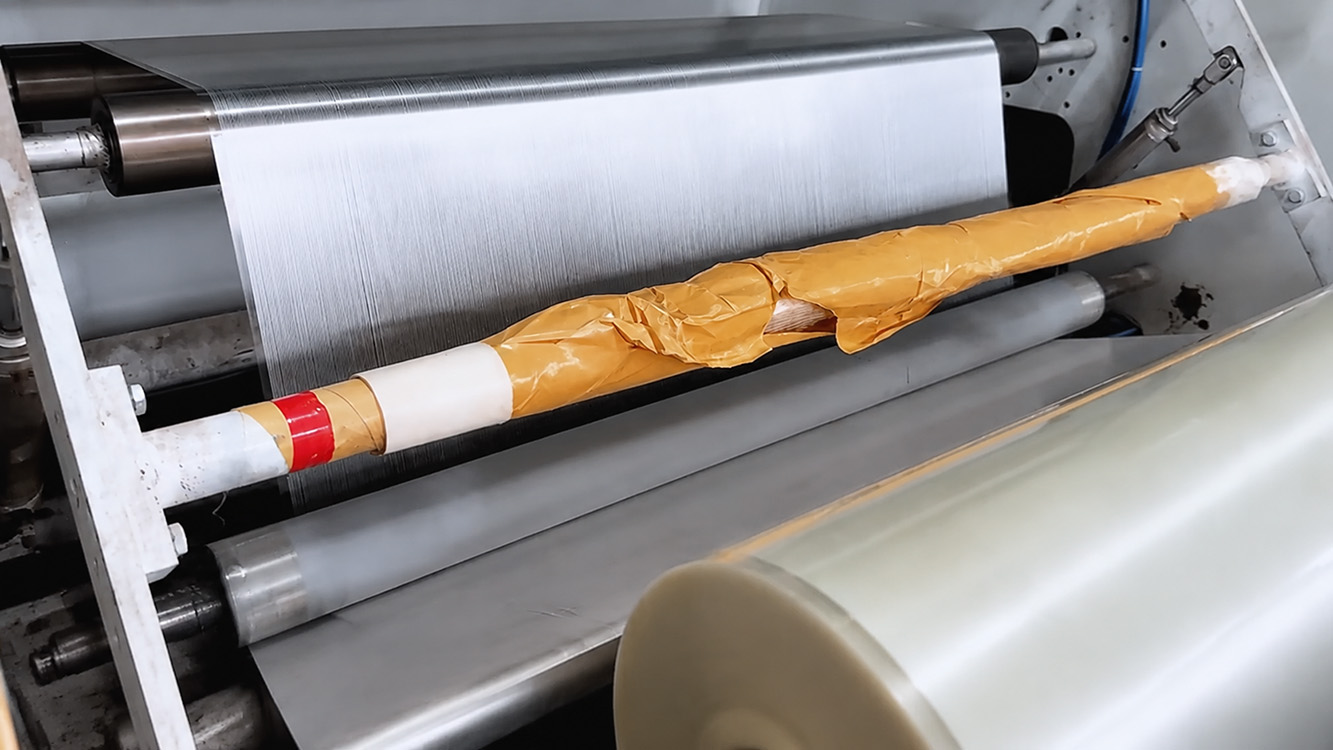
The five products in this range perform two different functions. The first step is to determine whether your application requires external package reinforcement or bonding between two materials.
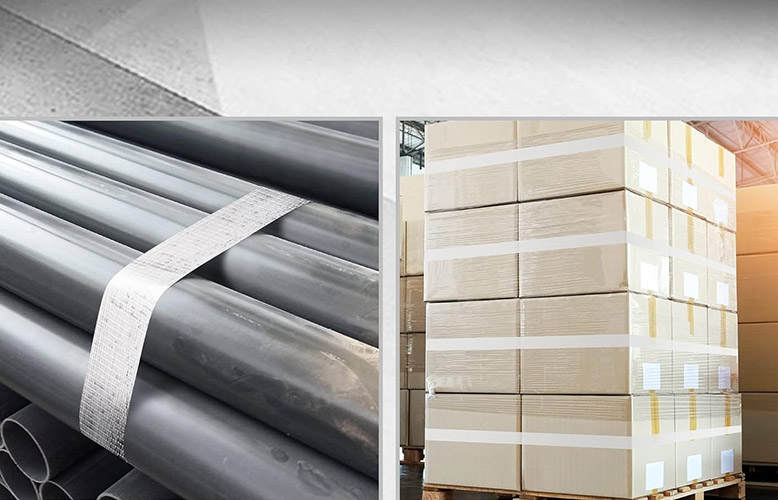
Choose single-sided filament strapping tape when the tape is applied to the outside of a carton, bundle or packaging component.
Typical requirements include:

Available grades:
Choose double-sided filament tape when the tape is positioned between two materials to provide reinforced bonding, dimensional stability or improved handling during converting.
Typical requirements include:
Available grades:
Single-sided filament strapping tape combines a film backing, fiberglass reinforcement and pressure-sensitive adhesive. The fiberglass controls stretching and carries tensile force, while the adhesive holds the tape to the packaging surface.
Mono-directional and bi-directional structures serve different load patterns. A higher tensile value is not automatically the best choice for every package.
J-3702S is the standard mono-directional grade for industrial packaging where ordinary packing tape does not provide enough reinforcement but a heavy-duty grade may be unnecessary.
The fiberglass filaments run mainly along the tape length, making J-3702S a practical starting point when the pulling force is predominantly linear.
Typical applications include:
Typical product data:
|
Property |
J-3702S |
|
Adhesive |
Synthetic rubber |
|
Total thickness |
0.11 mm |
|
Peel strength |
25 N/25 mm |
|
Tensile strength |
450 N/25 mm |
|
Elongation at break |
6% |
|
Maximum service temperature |
70°C |
|
Standard roll length |
50 m |
|
Custom widths |
Available upon request |
J-3702S is normally the first grade to evaluate when the load is moderate, the main force runs along the tape length and material-cost control is important.
J-3702H is a higher-strength mono-directional grade for packaging and bundling applications that place greater longitudinal tension on the tape.
It uses a thicker film-backed construction and high-density longitudinal fiberglass reinforcement. It is intended for conditions where a standard filament tape may stretch, split or break during demanding transport and handling.
Typical applications include:
Typical product data:
|
Property |
J-3702H |
|
Adhesive |
Synthetic rubber |
|
Reinforcement |
High-density mono-directional fiberglass |
|
Total thickness |
0.15 mm |
|
Peel strength |
20 N/25 mm |
|
Tensile strength |
1500 N/25 mm |
|
Elongation at break |
8% |
|
Standard roll length |
50 m / 55 m |
|
Custom widths |
Available upon request |
J-3702H should be evaluated when the packaging problem is primarily related to higher longitudinal tension. It should not be selected only because it has the highest tensile value. Carton construction, tape width, application position and transport conditions remain important.
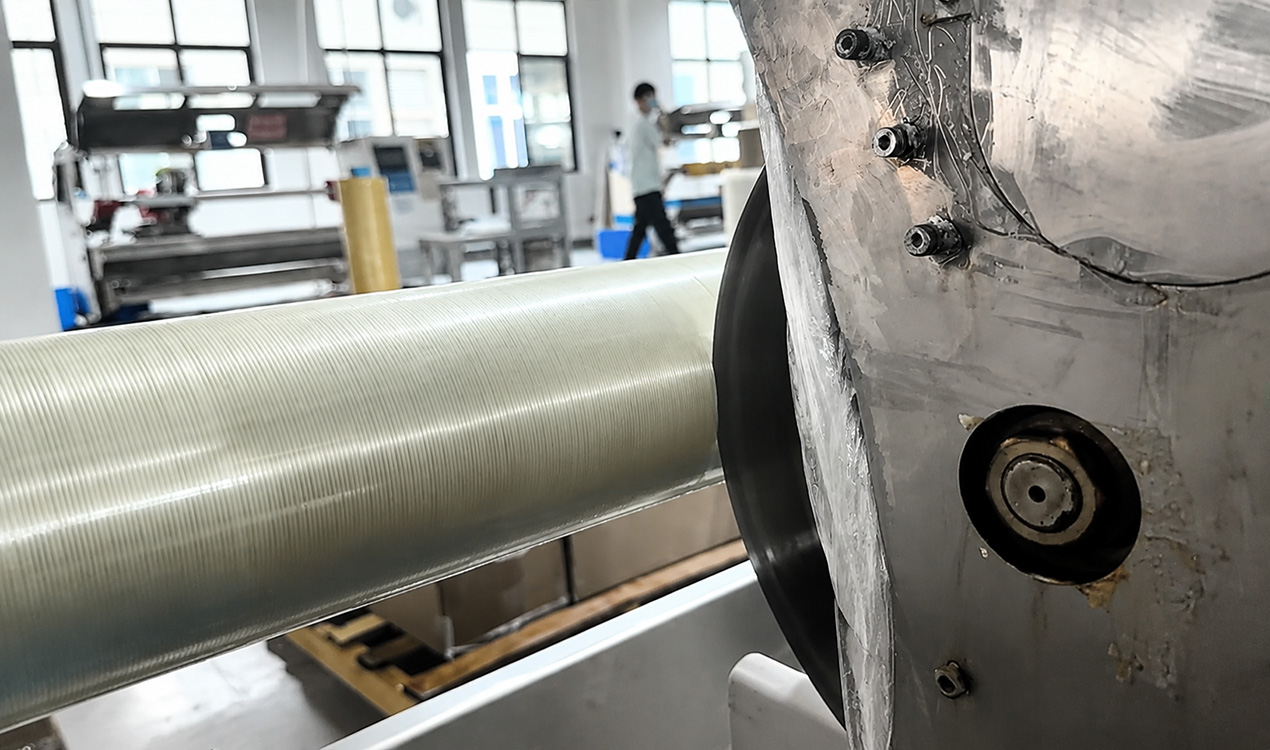
J-3702M contains fiberglass reinforcement in both the machine and cross directions. This construction is intended for packages exposed to cross-direction tearing, corner stress, twisting or less predictable load movement.
Compared with mono filament tape, the bi-directional structure is a better starting point when the package does not experience force in only one direction.
Typical applications include:
Typical product data:
|
Property |
J-3702M |
|
Adhesive |
Synthetic rubber |
|
Reinforcement |
Bi-directional fiberglass |
|
Total thickness |
0.14 mm |
|
Adhesion to steel |
20 N/25 mm |
|
Tensile strength |
600 N/25 mm |
|
Elongation at break |
6% |
|
Recommended operating temperature |
Up to 70°C |
|
Standard roll length |
50 m |
|
Custom widths |
Available |
J-3702M is not automatically stronger than J-3702H in the longitudinal direction. Its advantage is reinforcement in more than one direction, helping support carton corners, cross seams and irregular loads.
|
Selection Factor |
J-3702S |
J-3702H |
J-3702M |
|
Product position |
Cost-effective standard grade |
Heavy-duty mono grade |
Bi-directional grade |
|
Reinforcement |
Mono-directional |
High-density mono-directional |
Machine and cross direction |
|
Total thickness |
0.11 mm |
0.15 mm |
0.14 mm |
|
Published tensile strength |
450 N/25 mm |
1500 N/25 mm |
600 N/25 mm |
|
Elongation at break |
6% |
8% |
6% |
|
Best starting point |
Regular reinforcement and cost control |
Higher longitudinal tension |
Cross tearing and irregular loads |
|
Typical uses |
Cartons, packaging parts and regular bundles |
Heavy cartons, metal parts and demanding transport |
Corners, cross seams and multi-directional stress |
Values shown are typical product data. Final specifications, test methods, tolerances and acceptance requirements should be confirmed in the current grade-specific TDS or agreed purchase specification.
Tensile strength should not be converted directly into a guaranteed package-weight limit. Package performance also depends on tape width, number of strips or wraps, carton strength, surface condition, application pressure, overlap, storage environment and transport method.
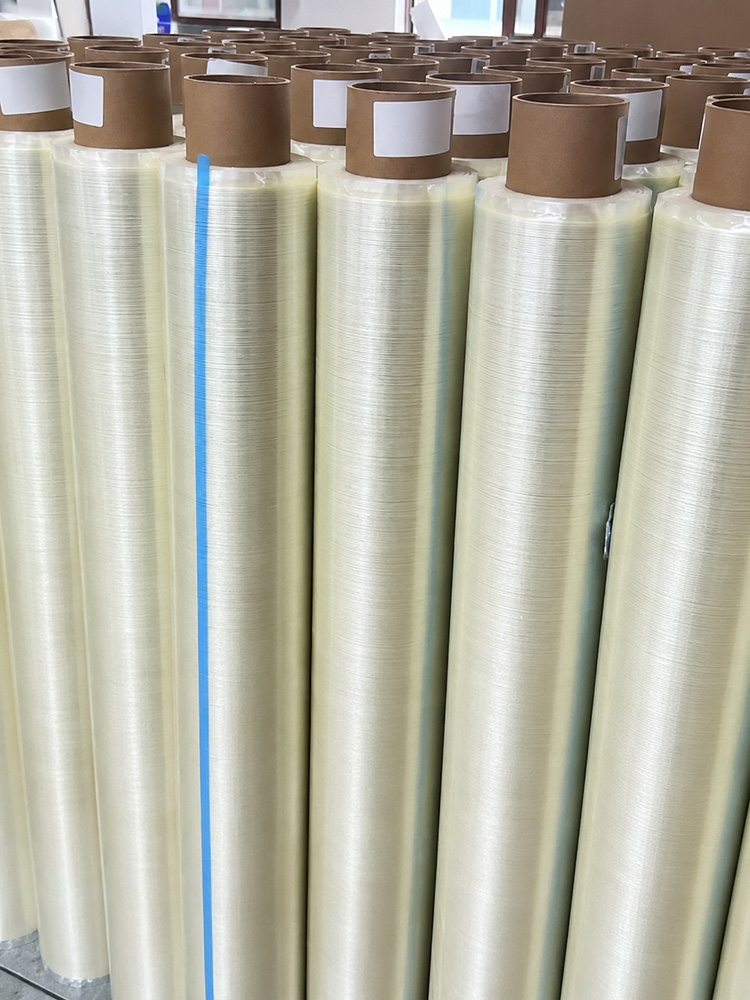
Double-sided filament tape is designed for reinforced bonding rather than external package strapping. The fiberglass construction helps reduce stretching, splitting and distortion when the tape is slit, positioned, die-cut or laminated to flexible materials.
D920 and D980 use different adhesive and release-liner systems. The correct choice depends on the substrate and converting process rather than liner price alone.
D920 combines bi-directional fiberglass reinforcement, a high-tack synthetic rubber pressure-sensitive adhesive and a glassine paper release liner.
The rubber adhesive provides fast initial grab on many common industrial materials. The glassine liner is a practical option for manual application, standard slitting and general die-cutting or lamination.
Typical applications include:
Typical product data:
|
Property |
D920 |
|
Product type |
Bi-directional double-sided filament tape |
|
Adhesive |
Synthetic rubber pressure-sensitive adhesive |
|
Release liner |
Glassine paper |
|
Total construction thickness including liner |
0.20 mm |
|
Peel strength |
25 N/25 mm |
|
Breaking strength |
300 N/25 mm |
|
Elongation at break |
6% |
|
Standard roll length |
50 m |
|
Custom widths |
Available upon request |
D920 is a practical starting point for general bonding and converting where high initial tack and a glassine paper liner suit the customer’s application method.
Its 0.20 mm value refers to the total construction thickness including the glassine release liner. Final thickness tolerance and other acceptance requirements should be confirmed in the current TDS or purchase specification.
D980 uses bi-directional fiberglass reinforcement, a pressure-sensitive acrylic adhesive and a tear-resistant PET film release liner.
Compared with a paper liner, PET film provides better tear resistance and more stable handling during precision placement, die-cutting and automated or semi-automated lamination. It can be considered when liner breakage, dimensional variation or unstable web handling creates production waste.
Typical applications include:
Typical product data:
|
Property |
D980 |
|
Product type |
Double-sided filament tape |
|
Adh
|