
info@jxgreentape.com
Risure manufactures and converts PET silicone adhesive tape for powder coating, high-temperature paint masking and metal finishing protection. The J-350 series combines a green polyester film backing with pressure-sensitive silicone adhesive and is available in 0.05 mm, 0.06 mm and 0.08 mm total thicknesses.
Custom slit widths, 33 m and 66 m standard roll lengths, sample evaluation and order-specific packaging can be reviewed for industrial buyers, coating operations, distributors and tape converters.
Selecting a PET silicone tape is not only a matter of choosing a maximum temperature. Bake time, part material, surface preparation, masking geometry and removal timing can all affect edge hold, film stability and adhesive transfer. We recommend qualifying the selected construction under the buyer's actual process conditions before bulk approval.
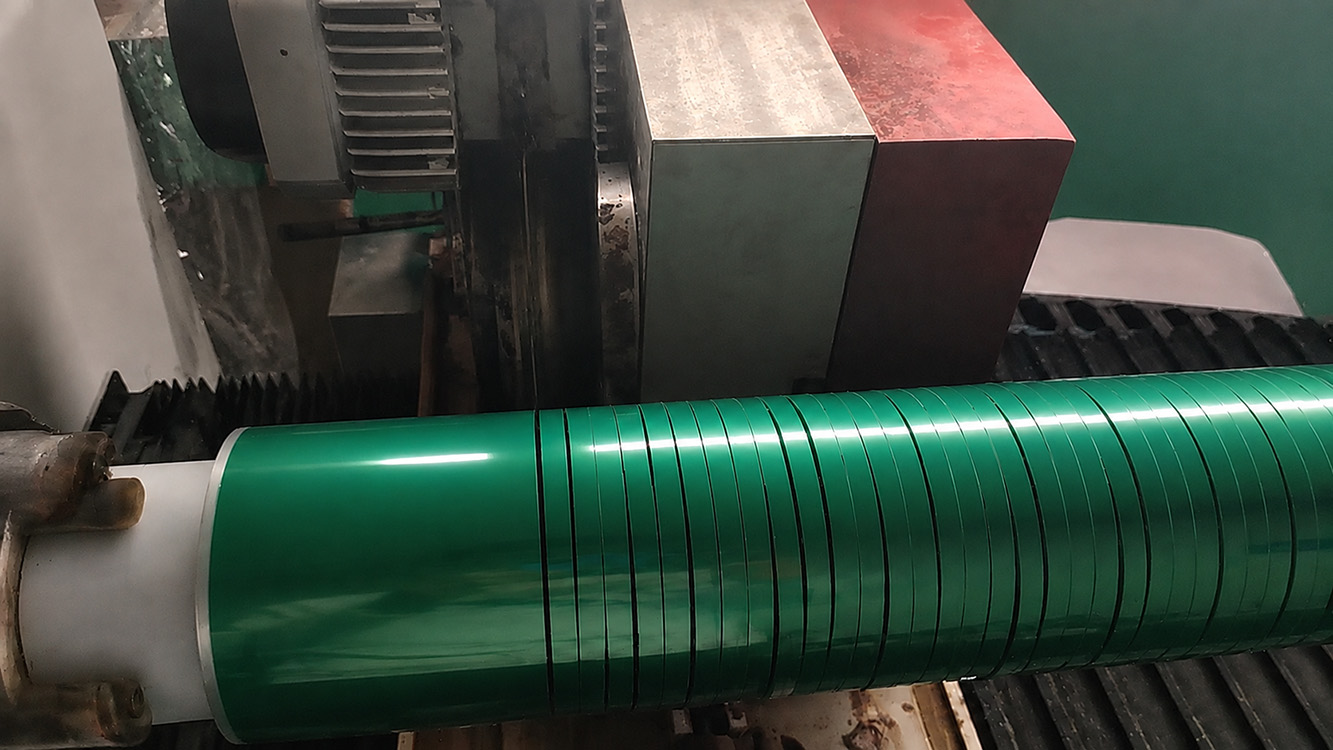
Product references
• 0.05 mm / 0.06 mm / 0.08 mm total thicknesses
• Green PET film with silicone pressure-sensitive adhesive
• 200°C temperature reference
• 33 m / 66 m standard roll lengths
• Custom slitting and sample evaluation
Request a Sample | Discuss a Custom Specification | View J-350 Technical Data
A masking tape may appear suitable from its backing, adhesive and temperature value, but production performance depends on how those properties interact with the actual part and process. Qualification should consider four practical risks.
A temperature value without an exposure time is incomplete. A short oven cycle, repeated bake cycles and continuous heat exposure can produce different results. Part thickness and oven profile can also affect how quickly the masked surface reaches temperature.
For J-350, 200°C should be treated as the main temperature reference unless a more specific time-temperature condition is confirmed in the latest approved technical data. Processes operating above this reference or for extended dwell times require application testing.
Masking failure can begin before the part enters the oven. Surface contamination, insufficient application pressure, a tight radius, excessive tape width or a backing that is too stiff for the geometry can create a small gap at the edge. During coating and curing, that gap may allow powder or paint to reach the protected area.
A higher adhesion value is not automatically the solution. It may improve edge hold on one surface while increasing removal force or residue risk on another. The most difficult edge, hole, curve or textured area should be included in the sample trial.
Clean removal is a process result rather than an unconditional product promise. Temperature, dwell time, surface roughness, oil, moisture, pretreatment residue, coating chemistry, peel angle and removal timing may all change the result.
For visible or high-value components, evaluate the tape on the actual surface and compare removal after the intended cooling period. Record adhesive transfer, film breakage, stringing and paint-line quality before approving the product.
If the protected surface will later be painted, bonded, sealed or coated again, the complete downstream process should be included in qualification. Silicone adhesive systems can require additional compatibility checks where surface cleanliness and subsequent wetting are critical.
PET silicone tape is a single-sided pressure-sensitive tape consisting of a polyester film backing and a silicone adhesive layer. The two components perform different functions and must be evaluated as a finished construction.
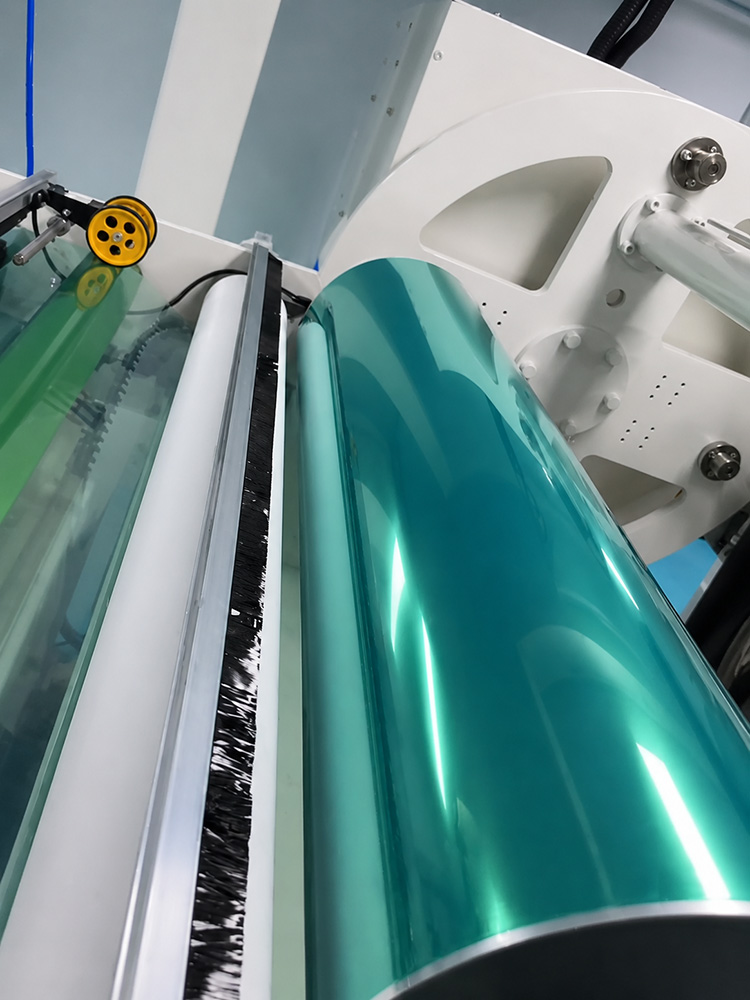
The PET film provides the mechanical body of the tape. Within a suitable process window, it supports:
• Dimensional stability during application and baking
• Clean, controlled masking lines
• Resistance to tearing during handling
• Visibility on metal parts
• One-piece removal potential after processing
Backing thickness also affects handling. A thinner construction may follow narrow lines and small details more easily, while a thicker construction may provide a firmer feel over wider masking areas. Actual conformability and removal behavior should be confirmed on the part.
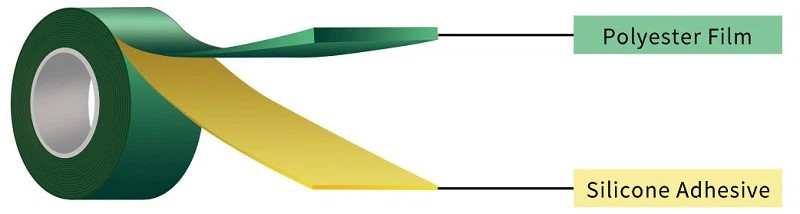
The silicone adhesive is selected for heat-resistant masking and temporary process protection. Its performance depends on contact with the substrate, application pressure, surface condition and the complete heat cycle.
The adhesive should provide enough contact to resist edge lifting without creating unacceptable removal force or adhesive transfer after baking. Because these outcomes vary by surface and process, adhesion-to-steel data should be used as a controlled comparison value rather than a guarantee on every production material.
The temperature capability of the finished tape depends on both the PET backing and the silicone adhesive system. The adhesive's theoretical heat resistance should not be treated as the temperature rating of the complete tape.
The J-350 series provides three total-thickness options. The table below is intended to help buyers select a starting sample; it is not a substitute for the latest product specification or application testing.
|
Item No. |
Total Thickness |
Adhesion to Steel |
Temperature Status |
Initial Selection Direction |
|
J-350-50 |
0.05 mm |
6.8 N/25 mm |
200°C |
Narrow masking lines and parts where flexibility is important |
|
J-350-60 |
0.06 mm |
8.8 N/25 mm |
200°C |
General powder coating evaluation and balanced handling |
|
J-350-80 |
0.08 mm |
9.8 N/25 mm |
200°C |
Wider masking areas and applications requiring a firmer backing |
The values above are typical product references. Test methods, conditioning procedures and acceptance limits should be confirmed in the latest J-350 technical data before production approval.
Thickness should not be selected in isolation. Consider the masking width, part radius, surface texture, operator handling, required edge definition and preferred removal method. If more than one grade appears suitable, testing two constructions on the same part provides a more useful comparison than evaluating them on different surfaces or oven cycles.
Review the complete J-350 product page and technical selection notes.
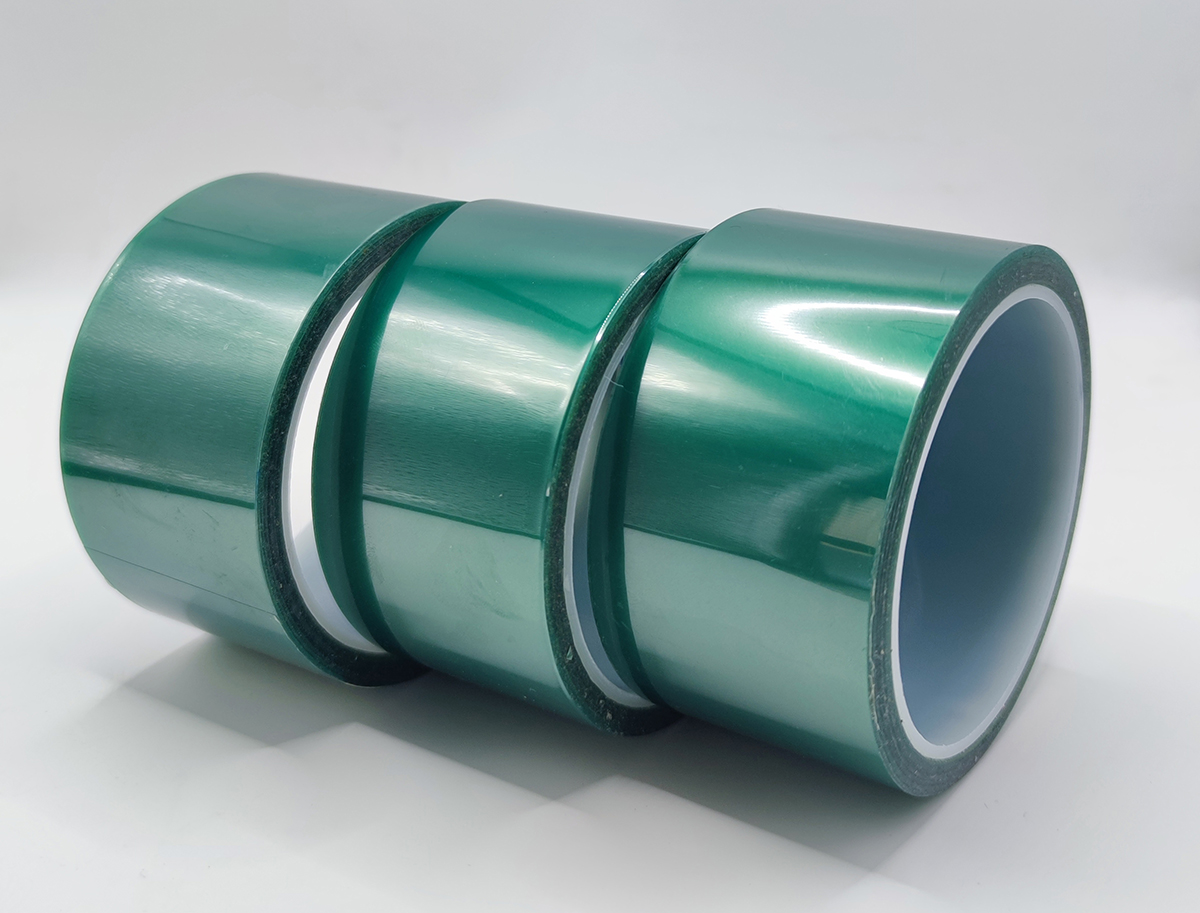
Powder coating is the primary application for the J-350 series. PET silicone tape may be used to protect areas that must remain free from coating, including:
• Threaded areas
• Grounding and electrical contact points
• Mating surfaces
• Machined edges
• Flange surfaces
• Connection zones
• Selected holes, tabs and narrow masking lines
The tape should remain in contact during powder application and baking, then remove without creating unnecessary cleaning or rework. Qualification should examine both the protected area and the coating edge. Edge lift, powder penetration, film shrinkage and adhesive transfer are separate failure modes and should be recorded separately.
J-350 may also be evaluated for selected high-temperature paint-masking processes. Liquid-paint chemistry, solvent exposure, film build, bake schedule and removal timing can differ from powder coating, so performance should not be assumed from a dry powder-coating trial alone.
Where a sharp visible paint line is critical, test the production surface and the actual coating system. Include the removal method used by operators and inspect for paint bridging, edge tearing and adhesive transfer.
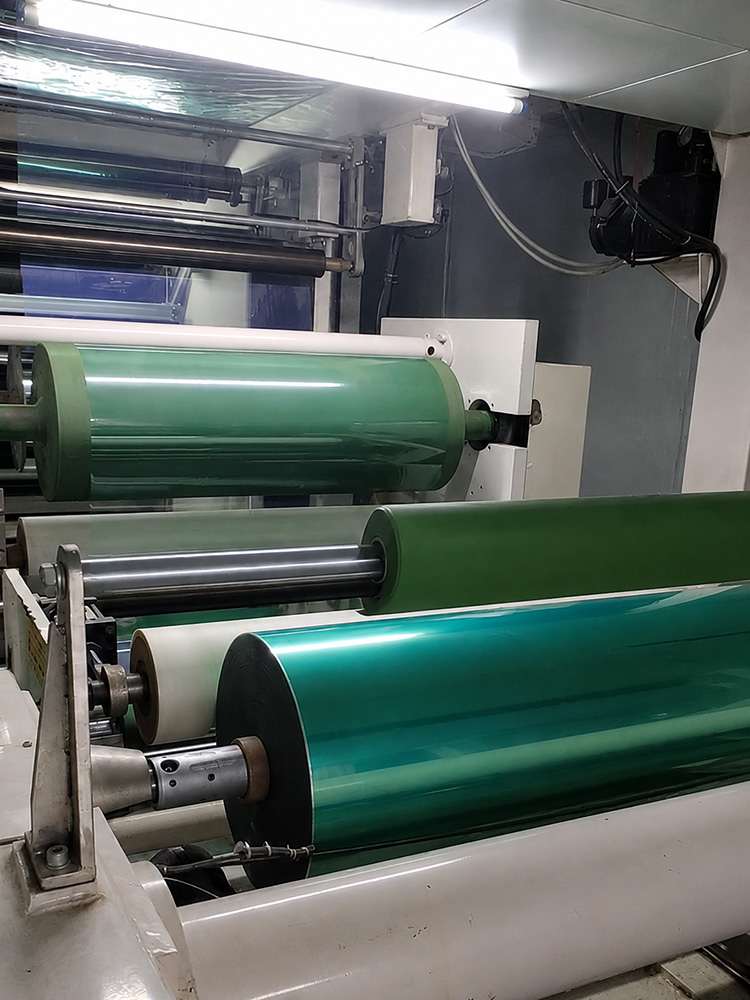
PET silicone tape can be evaluated for temporary protection of aluminum profiles, steel chassis, appliance housings, fabricated metal parts and automotive metal components during selected finishing operations.
For flat or gently curved surfaces, tape width and application pressure often have a direct effect on line consistency. Textured castings, blasted surfaces and tight curves require additional attention because they can reduce edge contact or increase backing stress.
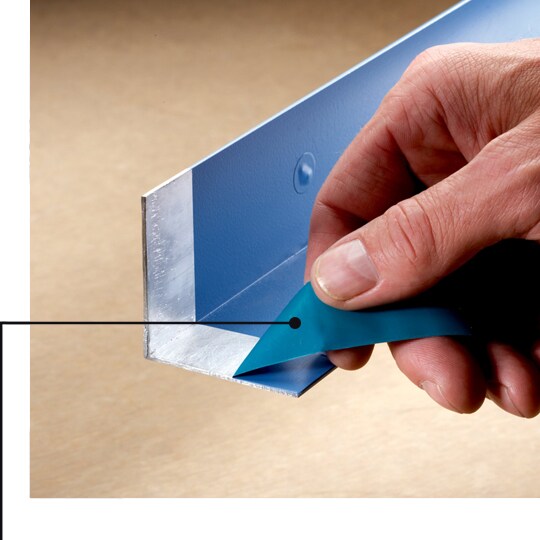
PET film and silicone adhesive constructions are also used in selected holding and splicing processes where heat resistance or adhesion to silicone-treated materials is required. J-350 should only be approved for these applications after confirming the substrate, line speed, splice load, temperature and required holding time.
For silicone liner or release-film splicing, adhesion-to-steel data is not sufficient. Buyers should request application-specific data or test a production splice under the intended web tension and processing conditions.
Anodizing, plating, e-coating and chemical immersion should be treated as separate qualification projects. A tape that performs in a dry powder-coating oven may not provide the same edge seal or chemical resistance in an acid, alkaline or cleaning bath.
The following applications require process-level testing before approval:
• Bake cycles above the verified J-350 range
• Extended or repeated high-temperature exposure
• Anodizing, plating or e-coating baths
• Contact with acids, alkalis, solvents or aggressive cleaners
• Masked surfaces that will later be bonded, sealed or repainted
• High-value cosmetic surfaces with strict residue limits
• Splicing of silicone-treated films or papers
J-350 should not be positioned as a primary electrical insulation tape, a permanent masking material or an automatic substitute for polyimide tape in soldering and electronics applications.
Industrial buyers often need a finished roll specification rather than a standard off-the-shelf width. Our PET silicone tape program supports specification review, custom slitting, roll conversion and packaging coordination for production use and distribution.
|
Requirement |
Available Supply Direction |
|
Product construction |
Green PET film with silicone pressure-sensitive adhesive |
|
Total thickness |
0.05 mm, 0.06 mm and 0.08 mm |
|
Tape width |
Custom slitting according to the confirmed production requirement |
|
Standard roll length |
33 m and 66 m |
|
Custom roll configuration |
Reviewed according to width, winding, quantity and converting feasibility |
|
Core, label and carton |
Confirmed with the selected roll specification and order quantity |
|
Samples |
Available for application and process evaluation |
|
Packaging requirements |
Neutral or buyer-specific requirements can be reviewed before quotation |
A custom order should define more than width and length. Buyers should also confirm acceptable tolerance, edge quality, winding condition, label content, carton quantity and any critical incoming-inspection properties.
If the tape will be used in a dispenser or automated process, provide the equipment type, unwind direction, maximum roll diameter and core requirement. These details can affect whether a roll that is acceptable for manual use will run consistently on the production line.
We can review an existing PET silicone tape by product number, technical data sheet or physical sample. A proposed alternative should be compared by construction and test method rather than color or total thickness alone.
Useful comparison points include:
• PET backing and total tape thickness
• Silicone adhesive type
• Adhesion under a comparable test method
• Tensile strength and elongation
• Temperature definition and exposure time
• Removal behavior after the actual bake cycle
• Slit width, tolerance and winding quality
• Required documentation and packaging
No alternative should be described as a 100% replacement before it passes the buyer's process and acceptance criteria.
Consistent converting and inspection are important when the same tape is applied across repeated coating runs or multiple production sites. A purchase specification can define the properties that matter to the buyer's process and the method used to verify them.
Inspection controls may include:
• Product and batch identification
• Total tape thickness
• Adhesion to steel
• Tensile strength and elongation
• Slit width and width tolerance
• Edge quality and visible defects
• Roll winding and telescoping
• Roll length and core alignment
• Surface appearance and contamination
• Packaging and label verification
A meaningful heat test should document the complete procedure rather than state only an oven temperature. The evaluation record should include:
|
Test Variable |
Information to Record |
|
Tape grade |
Product number, thickness and batch |
|
Substrate |
Aluminum, steel, coated metal or actual production part |
|
Surface preparation |
Cleaning and pretreatment condition |
|
Application |
Tape width, pressure, overlap and masked geometry |
|
Heat cycle |
Oven set point, part-temperature profile and dwell time |
|
Cooling and removal |
Hot, warm or room-temperature removal; peel direction |
|
Result |
Edge lift, shrinkage, paint bleed, residue, film breakage and paint-line quality |
Where ASTM D3652, ASTM D3330 or ASTM D3759 is required, the corresponding property should be tested according to the confirmed method and conditioning procedure. A standard number should not be added to historical data unless that method was actually used.
Typical product data should not automatically be treated as a guaranteed acceptance limit. Where a property is critical to incoming inspection, the buyer and supplier should agree on the unit, test method, conditioning procedure and acceptance range before bulk production.
1. Share Your Process Conditions
Provide the part material, surface preparation, masking area, required tape width, preferred thickness, oven temperature, dwell time, removal condition and estimated quantity. If the protected surface will later be painted, bonded or sealed, include that downstream step.
If you are replacing an existing tape, provide its product number, TDS or sample and describe the reason for change. Price, residue, edge lifting, supply stability and converting dimensions may lead to different replacement strategies.
2. Test the Recommended Construction
Apply the sample to the actual part or a test panel with the same material, texture and pretreatment. Run the normal production cycle and include the most difficult masking area rather than relying only on a clean, flat panel.
Inspect initial adhesion, edge hold, paint bleed, film shrinkage, adhesive transfer, tape breakage and downstream compatibility where applicable. Record the removal temperature and method so the result can be reproduced.
3. Confirm the Purchasing Specification
After sample approval, confirm the tape grade, total thickness, slit width, tolerance, roll length, core, packaging and critical inspection requirements. Required technical, compliance and batch documents should also be agreed before bulk production.
This three-step process keeps qualification practical while reducing the risk of approving a tape based only on a catalog value.
Document availability should be confirmed for the exact J-350 grade and order specification. Depending on the buyer's qualification requirements, the review package may include:
• J-350 Technical Data Sheet
• Product specification sheet
• Available test or inspection report
• SDS or Article Information Sheet, where applicable
• RoHS or REACH documentation covering the supplied grade
• Approved sample record
• Packaging and label specification
• Agreed batch inspection requirements
Certification or compliance documents for another tape grade should not be used as evidence for J-350. Buyers with mandatory regulatory, industry or customer-specific requirements should identify them before sample approval.