
info@jxgreentape.com
JX Green Tape supplies PTFE film adhesive tape and PTFE-coated glass cloth adhesive tape for heat-sealing equipment, roller wrapping, guide rails and industrial release surfaces.
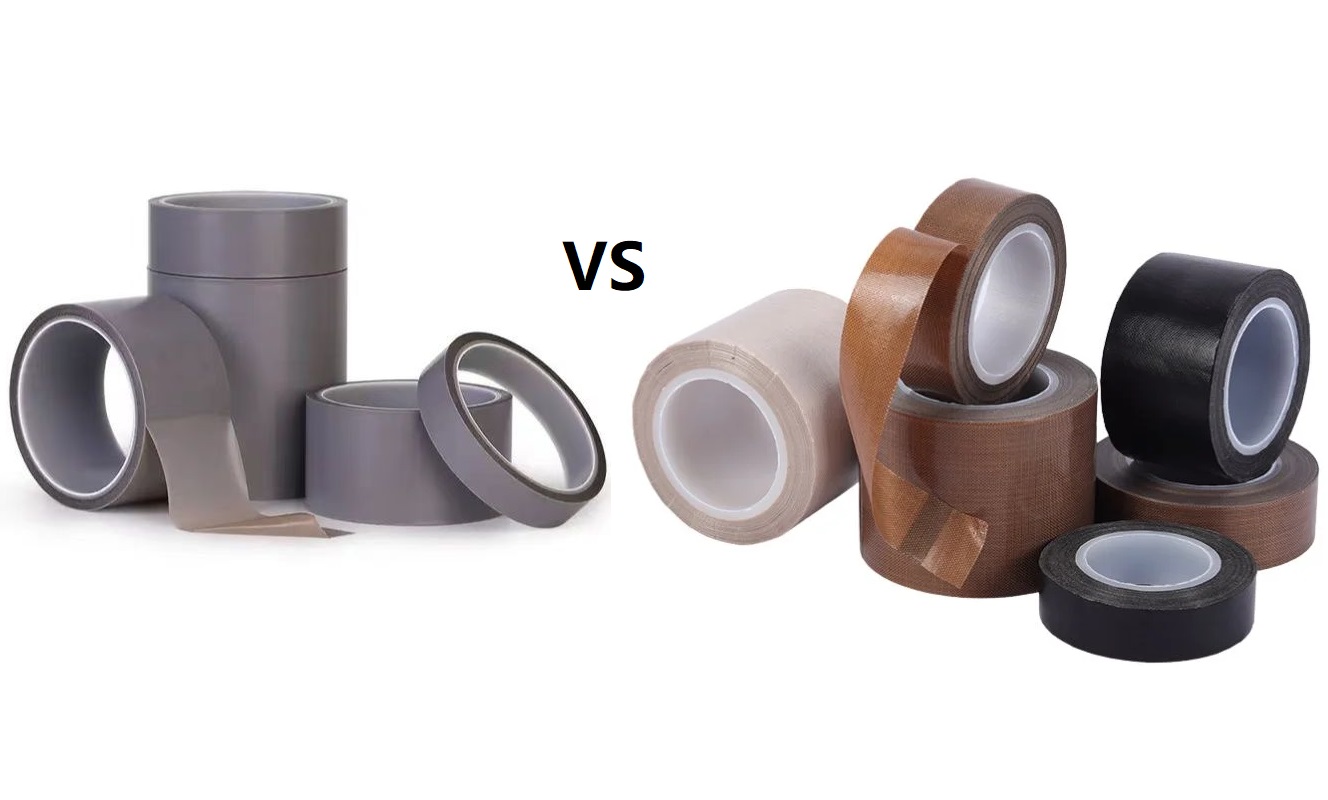
The two constructions address different operating conditions. PTFE film provides a smooth, low-profile contact surface. PTFE-coated glass cloth adds mechanical strength and dimensional stability where repeated pressure, abrasion or puncture is more likely.
Custom-width slit rolls, application samples and bulk-order packaging are available. Product selection is based on the equipment position, operating temperature, pressure, contact material and current failure mode.
View PTFE Adhesive Tape Products
Selecting an adhesive tape only from its maximum temperature can lead to poor results. Backing construction, thickness, surface profile, adhesive performance and mechanical loading all affect installation and service life.
This construction uses woven fiberglass fabric coated or impregnated with PTFE and coated on one side with silicone pressure-sensitive adhesive.
The fiberglass reinforcement improves dimensional stability and resistance to tearing, puncture and abrasion. It is generally the more suitable starting point for sealing bars, sealing jaws and other equipment surfaces exposed to repeated pressure or mechanical wear.
The woven reinforcement produces a different surface profile from unsupported PTFE film. Where seal appearance or surface marking is critical, the construction should be evaluated on the actual processed material.
This construction uses a smooth PTFE film backing coated on one side with silicone pressure-sensitive adhesive.
Its low-profile surface and conformability make it suitable for roller wrapping, guide rails, sliding components and release surfaces where fabric texture is undesirable.
PTFE film adhesive tape is not automatically a substitute for reinforced glass cloth construction on heavily loaded sealing bars. Wear, pressure, surface finish and equipment geometry must still be considered.
|
Selection factor |
PTFE Film Adhesive Tape |
PTFE-Coated Glass Cloth Adhesive Tape |
|
Backing |
PTFE film |
PTFE-coated woven fiberglass |
|
Surface |
Smooth and low profile |
Reinforced surface with a cloth structure |
|
Conformability |
Suitable for many curved surfaces |
Depends on thickness and cloth construction |
|
Mechanical strength |
Intended for lighter mechanical loading |
Better resistance to tearing and puncture |
|
Dimensional stability |
Can be affected by installation tension |
Reinforced by woven fiberglass |
|
Typical position |
Rollers, guide rails and sliding surfaces |
Sealing bars, jaws and higher-wear surfaces |
|
JX Green Tape product |
J-730 |
J-710 |
Not sure which construction fits your equipment?
Send the current adhesive tape reference, equipment position and failure mode for an initial technical review.
Request a Technical Review
The following data provide a product-family overview. Complete values, test methods and specification limits should be confirmed against the current product TDS or an agreed purchase specification.
|
Product |
Total thickness |
Adhesive |
Adhesion to steel |
Tensile strength |
|
J-710 PTFE-Coated Glass Cloth Adhesive Tape |
0.13 / 0.18 / 0.25 / 0.30 mm |
Silicone PSA |
21–24 N/100 mm |
900–2750 N/100 mm |
|
J-730 PTFE Film Adhesive Tape |
0.05 / 0.08 / 0.13 / 0.18 / 0.25 mm |
Silicone PSA |
6–12 N/25 mm |
Refer to the current grade-specific TDS |
The values use the units currently published for each product family and should not be compared directly without reviewing the applicable test method.
Service-temperature limits are provided on the current grade-specific TDS. The temperature capability of a finished adhesive tape is determined by the backing, adhesive and complete construction—not by the PTFE surface alone.
J-710 combines a PTFE release surface with woven fiberglass reinforcement and silicone pressure-sensitive adhesive.
The product is intended for industrial surfaces where release performance must be combined with mechanical strength. Typical positions include heat-sealing bars, sealing jaws, packaging-machine contact surfaces, guide rails and other areas exposed to repeated wear.
J-710 is supplied in a self-wound construction without a separate release liner. Available width, roll length, core and packaging requirements should be confirmed at the quotation stage.
Request the Current J-710 TDS
J-730 uses a smooth PTFE film backing with silicone pressure-sensitive adhesive. It is intended for low-friction release surfaces where a thin, conformable construction is preferred over woven reinforcement.
Typical positions include rollers, guide rails, sliding plates, web-handling components and machine surfaces where adhesive or processed material tends to accumulate.
Where the application involves repeated puncture, sharp edges or high mechanical wear, J-710 should also be included in the sample comparison.
Request the Current J-730 TDS
Both product families are available through the PTFE Adhesive Tape product collection.
PTFE-coated glass cloth adhesive tape is generally the first construction to evaluate on sealing bars and jaws exposed to repeated pressure and wear.
The PTFE surface helps separate the heated machine component from molten packaging film and adhesive contamination. As the surface wears, sticking may return even when the fiberglass backing has not visibly broken.
Thickness also affects heat transfer. Changing from one thickness or construction to another may require adjustments to sealing temperature, pressure or dwell time. Approval should include seal strength, seal appearance and production consistency under normal operating conditions.
PTFE film adhesive tape is generally preferred where a smooth, low-friction surface and low edge profile are important.
Selection should account for:
· Roller diameter and rotational speed
· Contact material
· Surface temperature
· Wrapping direction
· Joint position
· Installation tension
· Expected wear and replacement interval
The roller or guide surface should be clean, dry and free from oil and old adhesive. Excessive tension can stretch the film or place continuous peeling stress on the joint.
PTFE film adhesive tape can provide a smooth contact surface on guide rails and sliding parts. PTFE-coated glass cloth adhesive tape may be more appropriate where the surface experiences greater abrasion, impact or repeated mechanical contact.
The exposed edge should not face continuous material travel where avoidable. Repeated contact with an exposed edge can initiate lifting even when initial adhesion appears satisfactory.
Applications involving resins, aggressive cleaning chemicals or unusual process conditions require a sample trial. The chemical resistance of the PTFE surface does not automatically define the performance of the silicone adhesive or exposed edges.
Detailed application and failure guidance is available in our PTFE Release and Heat-Sealing Solutions guide.
|
Operating condition |
Recommended starting point |
|
Repeated pressure, puncture or edge wear |
Evaluate J-710 first |
|
Smooth roller or guide surface |
Evaluate J-730 first |
|
Cloth texture affects the processed material |
Compare J-730 with the existing construction |
|
Edge lifting or adhesive residue occurs |
Review temperature, surface preparation and installation before changing thickness |
These recommendations are starting points rather than fixed rules. Final approval should be based on actual production conditions.
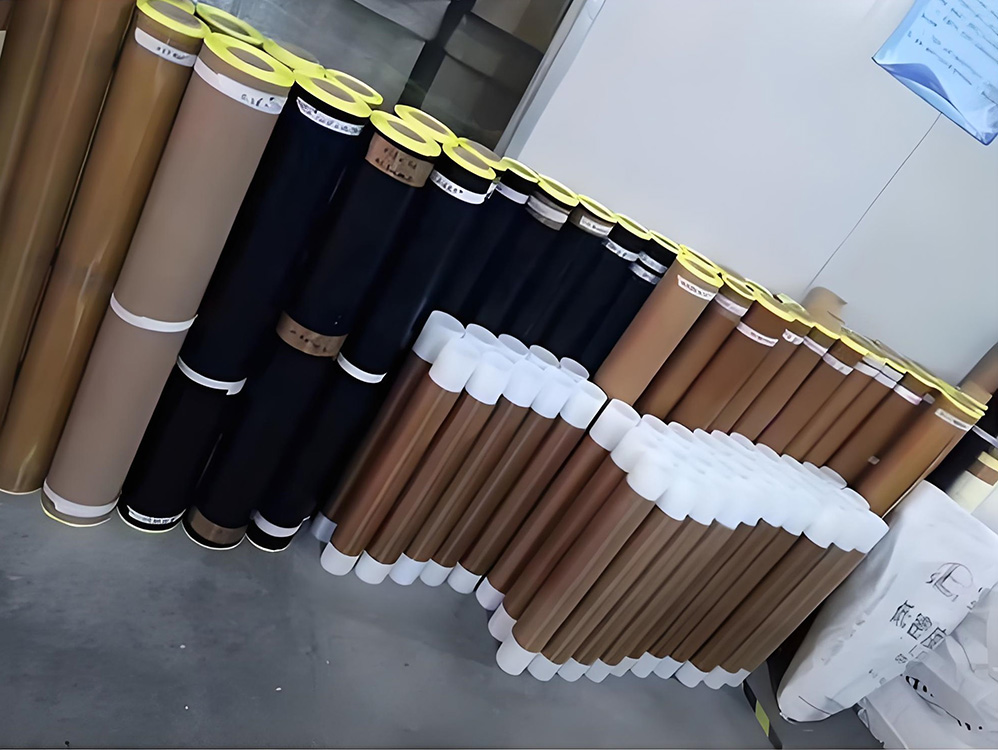
JX Green Tape provides roll converting for industrial customers requiring dimensions and packaging formats suited to their equipment or purchasing system.
Available options include:
· Custom-width slit rolls
· Standard and custom roll lengths
· Self-wound roll formats
· Core and label options
· Export packaging
· Private-label packaging subject to order review
· Sample rolls for equipment qualification
· Batch identification for repeat orders
Available dimensions depend on the selected backing, thickness, source roll and order quantity. Width tolerance, maximum roll size and packaging requirements should be confirmed in the agreed specification.
Our PTFE adhesive tape program does not include die-cut parts or custom-shaped pieces.
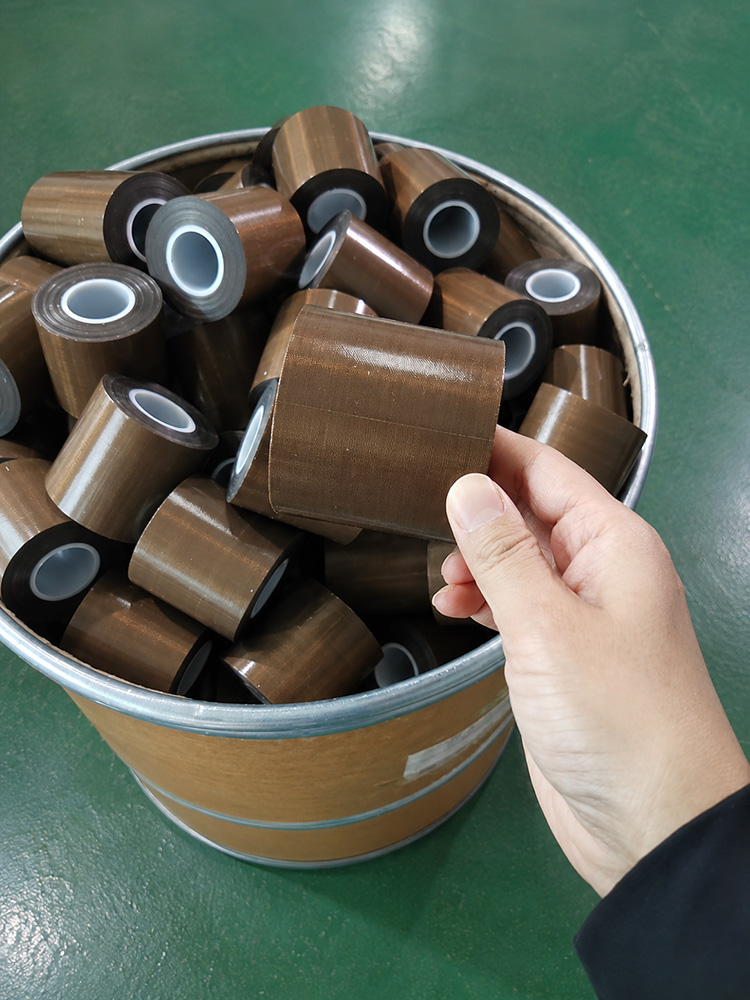
Depending on the selected product and order specification, inspection items may include:
· Total thickness
· Backing thickness
· Adhesion to steel
· Tensile strength and elongation
· Roll width and length
· Edge and winding condition
· PTFE surface appearance
· Core, label and packaging
· Batch identification
Technical values should be identified as either typical data or agreed specification limits. Where a property is used for incoming inspection, the test method, sample conditioning, unit and acceptance range should be agreed before production.
Available documentation depends on the selected product and order requirements:
· Technical Data Sheet
· Safety Data Sheet, where applicable
· RoHS or REACH documentation
· Material declaration
· Certificate of Analysis or batch inspection report, where agreed
Compliance documents apply only to the product and construction identified in the document. Use on food-packaging, electrical or other regulated equipment does not by itself establish direct-contact or product-level certification.
Provide the equipment type, application position, required width and length, continuous and peak temperatures, contact material and current failure mode.
For heat-sealing equipment, include the sealing-bar dimensions, packaging material, pressure and cycle frequency. For roller wrapping, include the roller diameter, speed and wrapping method.
Compare the two constructions according to surface smoothness, mechanical wear, dimensional stability and thickness.
When replacing an existing product, provide its reference number, construction or sample whenever possible. Appearance and color alone are not sufficient for replacement selection.
Evaluate the sample under the normal production temperature, pressure, speed and contact material.
Record:
· Installation and edge condition
· Release performance
· Sealing consistency
· Surface wear
· Adhesive residue
· Replacement interval
A short no-load trial can identify installation problems, but it cannot establish production life.
Thickness affects heat transfer and may require changes to temperature, pressure or dwell time. Confirm seal strength and appearance whenever the construction or thickness changes.
Choose PTFE film adhesive tape for smooth, low-profile surfaces such as rollers and guide rails. Use PTFE-coated glass cloth adhesive tape where pressure, tearing, puncture or abrasion is more significant.