
info@jxgreentape.com
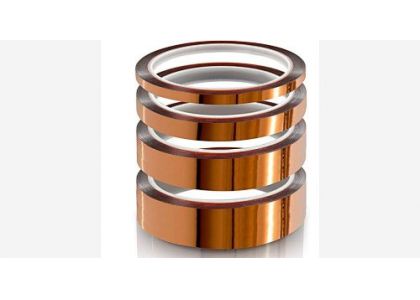
When sourcing Kapton tape for industrial or electronics projects, the real challenge is rarely whether polyimide tape works—it is whether the material performs consistently once you move to Kapton tape in bulk. Buyers evaluating custom Kapton polyimide film for electronics, automotive, or thermal management applications often discover that polyimide tape uses expand quickly across departments, while issues such as Kapton tape thermal conductivity, polyimide tape adhesive stability, and batch-to-batch variation become far more visible at scale. This is why purchasing Kapton tape is less about selecting a specification on paper and more about understanding how the tape behaves across production runs, environments, and quality control checkpoints.
Kapton tape is a high-performance polyimide-based adhesive tape known for thermal stability, dielectric strength, and mechanical integrity. While these properties are widely documented, industrial buyers quickly learn that nominal specifications do not fully describe real-world behavior—especially when transitioning from sample rolls to full-scale procurement.
In practice, Kapton tape performance is defined not only by film thickness or temperature rating, but by tolerance control, adhesive uniformity, and long-term stability under heat and pressure. These factors directly affect yield, rework rates, and downstream reliability.
One of the most common procurement failures occurs when a small trial sample performs well, but the bulk shipment introduces unexpected variability.
Typical causes include:
These issues rarely show up in short tests, but become costly when hundreds of meters are applied across PCBs, cable harnesses, or thermal interfaces.
Discussions around Kapton tape thermal conductivity often stop at general claims of heat resistance. For buyers, the more relevant question is how consistently heat is managed across contact surfaces.
Choosing custom Kapton polyimide film becomes necessary when standard products introduce inefficiencies or waste. Customization typically focuses on:
Common polyimide tape uses include:
Across these applications, failures often arise not from temperature limits, but from:
The polyimide tape adhesive layer is frequently the most unstable variable in bulk orders. Acrylic systems dominate the market, but performance can vary significantly due to:
This is where experienced buyers differentiate themselves.
A practical incoming inspection typically includes:
When buying Kapton tape in bulk, supplier capability outweighs price differences. Key indicators include:
Reliable suppliers reduce hidden costs associated with rework, scrap, and line stoppages.Buying Kapton tape at scale is not a material selection exercise—it is a risk management decision. Understanding how film tolerances, adhesive behavior, and inspection practices interact allows industrial buyers to avoid costly surprises. When evaluated correctly, Kapton tape remains one of the most versatile and dependable polyimide solutions available, provided that procurement decisions extend beyond surface-level specifications.
Small samples rarely reveal batch-level variation. In bulk orders, minor differences in film thickness tolerance or adhesive coating weight can accumulate across dozens of rolls, leading to inconsistent peel force, residue after removal, or unexpected thermal behavior during long production runs.
Not necessarily. In many electronics and SSD applications, uneven adhesive thickness or poor surface conformity can reduce effective heat transfer, even if the base material has acceptable thermal conductivity. Consistency often matters more than headline thermal ratings.
Adhesive inconsistency is the most frequent problem. Variations in peel strength, aging behavior after heat exposure, or residue upon removal tend to cause more rework and scrap than film failure itself.
Implementing a basic incoming inspection—checking thickness consistency, peel force variation, heat exposure response, and residue after removal—can significantly reduce deployment risk without changing suppliers or material grades.