
info@jxgreentape.com
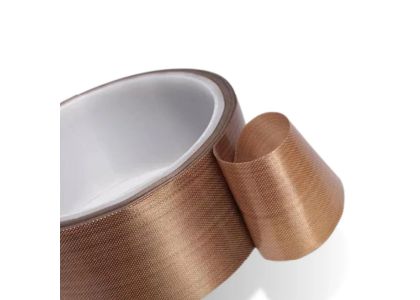
Moving parts are the heartbeat of any 3D printer. Smooth filament feed from the spool, low-resistance spool rotation, quiet linear slides and stable motion across belts and bearings are essential to consistent print quality. Yet many workshop fixes for noisy spool holders and sticky slide rails are temporary: they use oils that attract dust, tapes that shear, or adhesives that gum up after a few cycles. For reliable, long-lived fixes, PTFE tape solutions — especially those based on PTFE-coated fiberglass cloth — offer a compelling balance: low friction coefficients, high wear resistance, and heat tolerance for filament spools located near heated enclosures.
If you plan to buy PTFE Glass Cloth Tape for a set of retrofit kits or want to negotiate PTFE Glass Cloth Tape wholesale price for a makerspace or small factory, it’s important to choose the right construction and adhesive. Many purchasers source from PTFE Coated Fiberglass Cloth Tape china manufacturers, or work through regional Teflon Fiberglass Cloth Tape china manufacturers with shorter lead times. Whatever the source, sizing, slitting and adhesive selection matter: for moving parts you want minimal adhesive transfer and stable friction over thousands of cycles — traits you’ll only verify through testing.
This guide covers how PTFE tape reduces friction on spool holders and sliding parts, how to specify the right tape construction, and how to run practical pilots. It includes short, realistic case studies and a procurement checklist you can use to get reliable parts from PTFE Glass Cloth Tape in China or local distributors
PTFE (polytetrafluoroethylene) is famous for its extremely low surface energy and low coefficient of friction. In motion applications, these attributes yield three tangible benefits:
Low static and dynamic friction
PTFE provides smooth initial release and sustained sliding behavior. For spool holders, this reduces stick-slip that causes filament tension pulses. For sliding guides it reduces required actuation torque.
Abrasion resistance and dimensional stability
When PTFE is bonded to a woven glass cloth carrier, the tape resists tearing and edge damage better than thin films. The glass-cloth substrate stabilizes the PTFE and maintains consistent thickness under load — a key factor in repeatable friction performance.
Thermal and chemical resilience
Printer enclosures, heated beds and nearby hot ends create elevated ambient zones. High-quality PTFE constructions maintain their surface properties across typical printer temperatures, unlike some polymer films that soften or adhesives that flow.
For these reasons, many shops use PTFE-coated glass cloth as a thin liner on spool machining surfaces, as wear pads under linear slides, and to wrap spool-arbors where necessary. Compared with powdered lubricants, PTFE tape avoids dust entrapment and reduces maintenance frequency — a practical advantage for busy labs and shared makerspaces.
PTFE tape is not one-size-fits-all. For motion use, construction choices influence friction, wear, and adhesive behavior.
Key construction elements
PTFE topcoat thickness: thicker PTFE layers (10–30 µm) increase release and long-term life; thinner coatings conform better to irregular surfaces but may abrade sooner.
Glass cloth weight/weave: heavier, tighter weaves resist fray and abrasion; choose cloth tailored to the expected contact pressure.
Adhesive type: pressure-sensitive adhesives (PSAs) in silicone or modified acrylic varieties are common. For moving applications, low-transfer, high-shear adhesives (silicone-modified or fluorosilicone) are preferred.
Interlayer and lamination: some products use a thin adhesive interlayer laminated under PTFE to improve shear retention without increasing surface tack.
Liner or pre-cut pads: for spool-arbors and small wear pads, pre-cut linered pads simplify application; roll goods suit larger retrofit runs.
Recommended constructions by application
Spool arbor liners: moderate PTFE thickness, tight weave cloth, silicone-modified PSA for easy replacement and low residue on arbors.
Bearing wear pads / guide strips: heavier cloth (higher gsm), thicker PTFE coat and adhesive interlayer to resist shear during repeated sliding.
Low-pressure slide surfaces (printer bed guides): thinner PTFE, lower-tack PSA to avoid buildup and facilitate periodic replacement.
Performance trade-offs
Heavier PTFE coat = longer life but increased stiffness; may raise runout if applied unevenly to arbors.
Stronger adhesives = improved hold under vibration, but harder removal and greater risk of residue on metal shafts. Balance adhesive strength with maintenance requirements.
Application technique is crucial for friction consistency and service life.
Preparation
Clean contact surfaces (arbors, shafts, guide plates) with IPA to remove oils and particulates. For rough metal work, lightly deburr to avoid cutting the tape.
Use a dust-free area for application to avoid trapped contamination that accelerates wear.
Mounting spool-arbor liners
Cut pre-sized rings or strips to match your spool bore. Line the arbor with a continuous wrap, overlapping slightly (1–2 mm) to maintain continuous contact. Apply with a low-tension roller to seat adhesive evenly. For arbors that must slip on/off, use linered die-cuts for faster swaps.
For spool hubs with flanges, extend the PTFE strip slightly to the flange edges, avoiding bulges that cause wobble.
Installing sliding wear pads
Keep pads rectangular or with chamfered edges to avoid catching debris. Bond with adequate dwell time per adhesive spec to reach full bond strength. For removable pads, use lower-tack adhesive and secure with mechanical clips if necessary.
Trimming and edge finishing
Use sharp knives or rotary cutters to trim edges cleanly. Frayed edges create abrasive particulate. For high-use components, apply edge seals (thin silicone caulk) around tapes to prevent peeling and fiber unraveling.
Maintenance and replacement
Inspect wear pads weekly on production printers. Look for thinning or surface glazing. Replace before thickness falls below design minimum. For spool arbor liners, inspect for adhesive creep after 100–500 spool revolutions depending on load.
Use pre-cut replacement kits to speed service. If you buy PTFE Glass Cloth Tape in volume PTFE Glass Cloth Tape lots, pre-allocate strips for each machine.
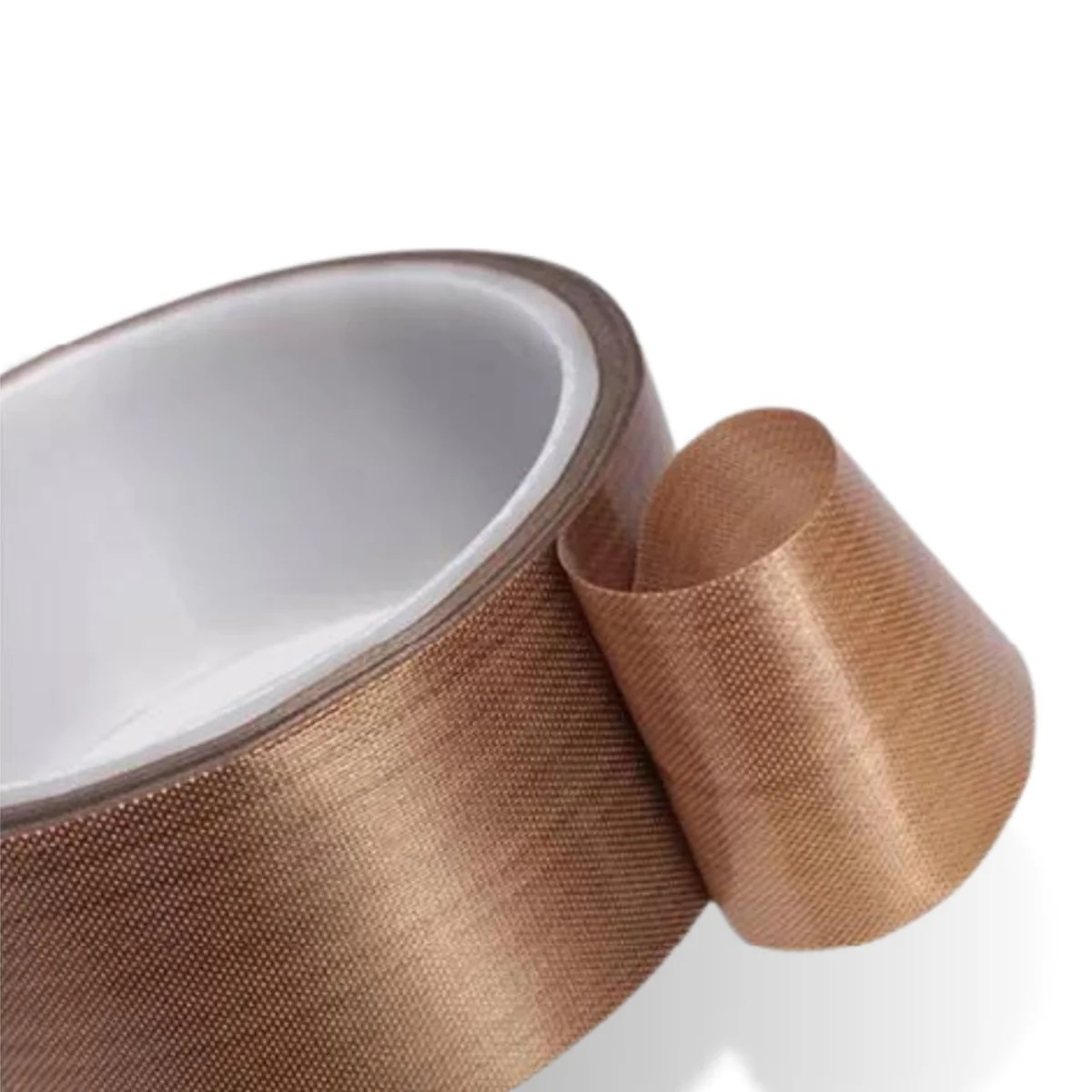
Quantified tests separate long-term solutions from quick hacks. For motion applications, request the following tests from suppliers or perform them in-house:
Coefficient of friction (COF)
Static and dynamic COF measured between PTFE face and mating surface (steel, aluminum, PTFE-coated surfaces) under expected normal load. For spool arbors, measure at low RPM and expected filament tension loads.
Wear & abrasion tests
Pin-on-disk or reciprocating wear tests simulating expected contact geometry and cycles. Record µm lost per 10,000 cycles and surface mass loss.
Shear retention and peel
Shear dwell test under load and temperature; tape must resist creeping off shafts or pads. Peel tests on the substrate to determine whether adhesive strength or cohesive failure occurs.
Adhesive transfer after cycles
Measure adhesive transfer mg/cm² after cycling at the ambient and elevated temperatures expected. Low-transfer adhesives minimize contamination on arbors and prevent filament fouling.
Particle generation and lint tests
Quantify particle release under simulated scraper contact to ensure fibers won’t contaminate filament or bearings. For clean-room or optical printers, require certifications or measured particulate counts.
Fatigue & cyclic performance
Measure COF after defined cycle counts (e.g., 50k rotations for spool holders) to see how friction evolves.
If you source from PTFE Coated Fiberglass Cloth Tape china manufacturers or Teflon Fiberglass Cloth Tape china manufacturers, request independent lab reports or run in-house tests. These numbers inform replacement intervals and total cost of ownership.
Case 1 — Community makerspace spool upgrade (simulated)
A busy makerspace had noisy spools that caused inconsistent filament feed during long prints. They trialed pre-cut arbor liners made from PTFE-coated glass cloth purchased from a local Teflon Fiberglass Cloth Tape china manufacturers partner. After installing the liners on ten printers and logging spool tension and failed prints over three months, the makerspace reduced feed-related failures by 85% and reported quieter operation. The chosen tape balanced easy removal with low adhesive transfer; the space then moved to volume PTFE Glass Cloth Tape purchases for cost savings. (Simulated example.)
Case 2 — Small OEM assembly line for consumer accessories (realistic-style)
A small manufacturer with a 12-printer cell needed consistent spool tension for producing plastic parts. They sourced a heavier weave PTFE cloth with thick PTFE coat from a PTFE Coated Fiberglass Cloth Tape china supplier and negotiated an OEM contract for pre-cut arbor rings. The result: reduced scrap due to tension variation, a predictable maintenance schedule, and a lower per-unit cost thanks to PTFE Glass Cloth Tape wholesale price terms. (Realistic-style example.)
Case 3 — Research lab precision slide pads (simulated)
A research group printing optical jigs required near-zero particulate and stable slides. They worked with a PTFE Glass Cloth Tape in China vendor that provided clean-room slitting and IL-rated adhesive. The lab implemented a weekly inspection protocol and changed pads every 4,000 cycles. Particle counts fell to acceptable levels and printing uptime increased. (Simulated example.)
Problem: Tape creeps or shifts on shaft during operation
Diagnosis: adhesive shear strength insufficient for the applied torque/vibration at operating temp.
Remedies: select higher-shear adhesive, use adhesive interlayer, or add a mechanical retention clip to act as a backup.
Problem: Adhesive residue on spool hub or filament
Diagnosis: adhesive transfer due to high temperatures or wrong adhesive chemistry.
Remedies: switch to low-transfer silicone-modified adhesive, shorten dwell times, or clean drums more frequently. Validate with adhesive-transfer mg/cm² measurements.
Problem: Fraying and lint generation
Diagnosis: low-quality slitting or open-weave cloth.
Remedies: require clean-room slitting from supplier, switch to tighter-weave cloth, seal edges.
Problem: Elevated friction after many cycles
Diagnosis: surface glazing or contamination accumulation (dust, filament particles).
Remedies: schedule cleaning with recommended solvent, replace worn pads, consider a slightly thicker PTFE topcoat for longer life.
Problem: Tape delaminates after environmental exposure
Diagnosis: adhesives not rated for humidity/temperature profile.
Remedies: select adhesives certified for humidity cycling and request vendor ageing data.
For makerspaces and small OEMs, procurement should balance cost, lead-time and quality. Here’s how:
Sample-first approach
Order sample kits including pre-cut arbor rings and small rolls. If you buy PTFE Glass Cloth Tape from PTFE Coated Fiberglass Cloth Tape china manufacturers, request low-MOQ pilot runs. Validate with your motion tests before scaling.
Negotiating volume and wholesale terms
For facility-wide rollouts, ask for PTFE Glass Cloth Tape wholesale price tiers tied to forecasted volumes. Suppliers typically offer discounts for volume PTFE Glass Cloth Tape commitments. Include acceptance tests and retained-sample requirements in contracts.
Local vs offshore sourcing
Local Teflon Fiberglass Cloth Tape distributors provide faster lead times and easier returns for small buys. PTFE Glass Cloth Tape in China or PTFE Coated Fiberglass Cloth Tape china suppliers can offer lower unit costs for large runs but require lead-time planning and sample validation.
RFQ essentials
Specify PTFE coat thickness, cloth GSM/weave, adhesive family, slit tolerances, pre-cut dimensions, and required test data (COF, wear cycles, adhesive transfer mg/cm²). Ask for a standard pilot-kit price and the PTFE Glass Cloth Tape price per roll at forecasted volumes.
Logistics & packaging
For pre-cut kits, require protective liners and clear labeling by machine model. For roll goods, expect core sizes that fit your dispensers.
Warranty and support
Insist on a retained-sample policy and remediation terms if material fails acceptance tests. For critical operations, negotiate a second-source clause to reduce risk.
Pilot setup
Define target metrics: acceptable COF range, wear per 10k cycles, max adhesive transfer mg/cm².
Order at least two constructions (different PTFE coat weights or adhesives) and 20 pre-cut samples for hands-on tests.
Installation checklist
Clean arbor/guide surfaces with IPA, deburr edges.
Apply tape with a roller, ensuring no bubbles; overlap seams minimally.
Trim edges cleanly; apply edge seal if high wear area.
Maintenance schedule
Inspect weekly for first month, then biweekly once stable.
Replace parts when wear equals design minimum or COF increases beyond threshold.
Keep pre-cut spare kits labeled by machine and batch.
KPIs to monitor
Average spool torque, failed prints due to feed error, pad wear µm per 10k cycles, replacement interval days, and particle counts near feed path.
Procurement action list
Prepare RFQ with technical specs and pilot acceptance criteria.
Source one local distributor for emergency needs and one offshore producer for lowest cost if volume justifies.
Negotiate wholesale tiers and a retained-sample clause.
Use appropriate PPE when applying tapes near moving parts. Keep solvents in well-ventilated areas and follow manufacturer guidelines. Label pre-cut kits with lot numbers and install dates for traceability. Avoid metal scrapers for cleaning pads — use plastic or soft tools to prevent cutting cloth.
If you want, I can now:
A) generate an RFQ template you can send to PTFE Coated Fiberglass Cloth Tape china manufacturers or local Teflon Fiberglass Cloth Tape distributors with exact test requests;
B) create a printable SOP for spool-arbor installation and replacement; or
C) produce a simple spreadsheet template to log wear, COF and replacement intervals for your printer farm.