
info@jxgreentape.com
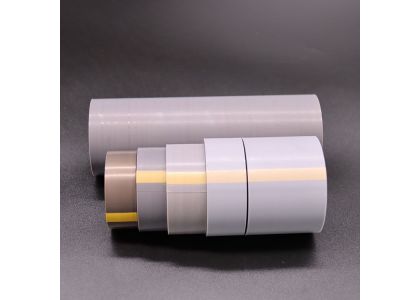
In medical device projects, material selection rarely fails at the concept stage—it fails during audit, validation, or late QA review. In several programs we have supported, Pure PTFE Film Adhesive Tape was introduced as a secondary component for sealing or insulation, sourced either through a PTFE Film tape distributor or directly from PTFE Skived Film Tape suppliers. On paper, the use of Teflon Film Tape, PTFE Adhesive Film Tape, or Heat sealing PTFE tape appeared compliant, especially when scaled via Bulk order PTFE heat-resistant film tape programs. In practice, however, validation questions around sterilization limits and biocompatibility scope often surfaced only after design freeze, forcing teams to re-evaluate whether the tape itself—or the assumptions behind its use—were compatible with medical regulatory expectations.
What follows is not a material overview. It is a practical discussion of where Pure PTFE Film Adhesive Tape works in medical devices, where it starts to fail validation expectations, and where its use should be deliberately limited.
Sterilization is not a single event in medical manufacturing; it is a repeated stress applied to the same structure. The critical question for QA is never “can this tape survive sterilization,” but “how many cycles, under what conditions, before behavior changes.”
In a 2024 disposable surgical accessory project, a 0.05 mm PTFE film adhesive tape structure was evaluated under steam sterilization at 121 °C for 30 minutes per cycle. The tape passed the first 20 cycles with no visible change. By cycle 30, edge adhesion began to soften. After cycle 40, partial edge lifting was observed at seal transitions, triggering a nonconformance report.
In EtO-based processes, the same tape showed no mechanical degradation, but residual analysis raised concerns around adhesive system interaction with post-sterilization aeration timelines. Gamma exposure introduced no immediate failure, but long-term adhesion stability was not accepted without additional aging data.
The key takeaway is that Pure PTFE Film Adhesive Tape can be compatible with sterilization, but only within a defined number of cycles and under tightly controlled parameters. Treating sterilization resistance as a binary property is one of the most common causes of late-stage validation failure.
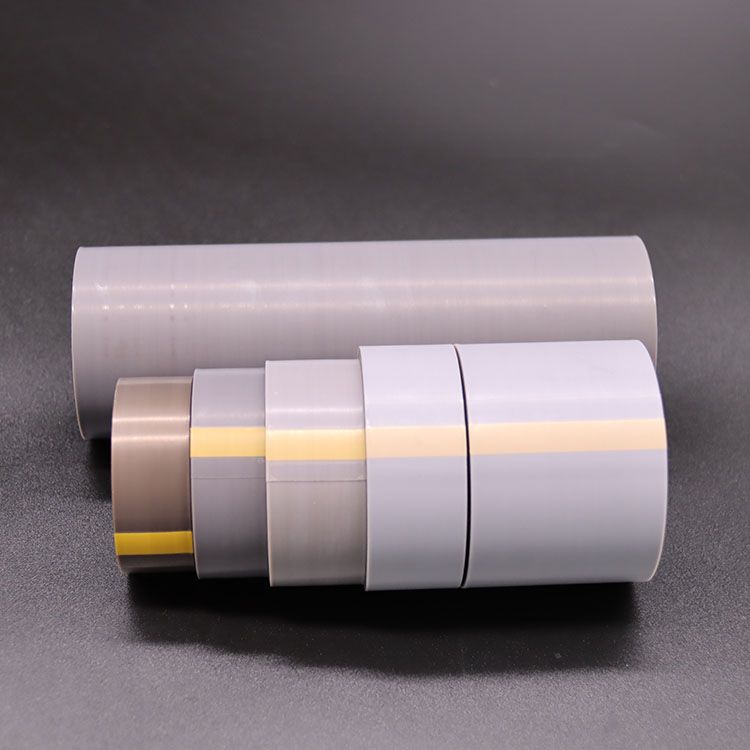
One of the most dangerous assumptions in medical design is that a biocompatible base material automatically makes a finished structure acceptable. PTFE as a polymer has a long history of biocompatibility, but that history does not extend by default to adhesive-backed constructions.
In real projects, biocompatibility questions are not framed as “is PTFE biocompatible,” but rather:
In our experience, relying solely on supplier declarations for ISO 10993 compliance is a common shortcut that later fails review. In one wearable medical device program, the PTFE film itself passed ISO 10993-5 cytotoxicity testing, but the assembled structure failed due to extractables introduced by the adhesive under prolonged skin contact simulation.
For this reason, responsible use of PTFE Adhesive Film Tape requires biocompatibility testing in the final device configuration, not just acceptance of material-level certificates.
Despite these constraints, PTFE-based adhesive films do offer real advantages when used deliberately. In catheter assemblies, PTFE film layers are often applied in non-critical zones to provide low-friction interfaces during insertion. In cleanroom packaging, heat sealing PTFE tape is frequently used to protect sealing jaws and prevent polymer transfer during pouch closure.
Electrical insulation in diagnostic equipment also benefits from PTFE’s thermal stability and dielectric performance, particularly where intermittent heat exposure occurs during assembly or sterilization preparation.
The common thread across successful applications is that PTFE tape is used where failure does not directly compromise patient safety or primary device function, and where removal or replacement remains possible.
When evaluating Pure PTFE Film Adhesive Tape, manufacturers should define limits before committing to volume sourcing. Critical questions include:
Working directly with a PTFE Film tape distributor or PTFE Skived Film Tape supplier who understands medical validation requirements significantly reduces late-stage surprises. Bulk order PTFE heat-resistant film tape should only be placed after sterilization and biocompatibility limits are explicitly documented.
A global surgical instrument manufacturer encountered recurring seal integrity issues after autoclaving. Initial material selection focused on heat resistance, but validation revealed that after repeated steam cycles, seal edges softened enough to fail peel-strength requirements.
By switching to a heat sealing PTFE tape with a lower initial tack but improved stability over repeated sterilization, and by limiting reuse cycles, the manufacturer achieved consistent validation outcomes. Importantly, the solution was approved only for single-use packaging, not for reusable instrument systems.
This distinction allowed the project to pass QA review without overstating material capability.
Based on accumulated project experience, PTFE film adhesive tape is generally not recommended for:
In these scenarios, molded or overmolded solutions are typically more reliable, even if initial tooling cost is higher.
Pure PTFE Film Adhesive Tape can be an effective component in medical device manufacturing, but only when its limits are acknowledged upfront. Sterilization compatibility is conditional, biocompatibility is structure-dependent, and validation success depends more on boundary definition than on material strength.
Teams that treat PTFE tape as a controlled-risk component, rather than a universal solution, are far more likely to pass QA review without redesigns or late-stage concessions.