
info@jxgreentape.com
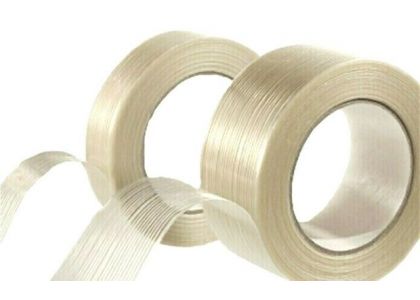
A carton seam opens after two warehouse transfers. A bundle of metal parts arrives loose. A pallet looks stable in the packing area, but shifts after forklift handling. In many cases, the tape gets blamed first. Sometimes that is fair. But in heavy-duty packaging, filament tape failure is often the last visible symptom of a larger packaging problem.
Filament tape for heavy-duty packaging should not be selected by tensile strength alone. Breakage, edge lift, carton opening, and load shift each point to a different cause. A packaging engineer may need a stronger fiberglass reinforced tape. A buyer may need a wider roll. A warehouse team may simply need better rub-down pressure, cleaner board, or a different reinforcement pattern.
The useful question is not “which tape is strongest?” It is “what failed first, and why?”
Filament strapping tape is used when standard carton sealing tape is not enough. The fiberglass reinforcement helps the tape resist stretching and breaking under load, while the pressure-sensitive adhesive bonds the tape to corrugated board, plastic, metal, or other packaging surfaces.
In heavy-duty packaging, filament tape is often used for carton seam reinforcement, bottom flap support, bundling long or heavy parts, handle hole reinforcement, edge support, and selected pallet unitizing tasks. It is not meant to replace the whole packaging system. Stretch film, plastic strapping, corner boards, carton grade, and pallet layout still matter.
Where tape ends and the rest of the packaging system begins is covered in our industrial packaging applications page.
Tape breakage looks easy to diagnose, but the cause is not always poor quality. The tape may be too narrow for the load. The reinforcement may be aligned in the wrong direction. A sharp carton edge or metal part may cut into the fiberglass yarn. In automated or semi-automatic packing, excessive application tension can also leave the tape with very little safety margin before the package even leaves the line.
On bundling lines, a tape can look tight and neat immediately after wrapping, but fail later because it was applied under too much tension around a hard edge.
If the tape breaks cleanly across the width, review tensile strength, elongation, tape width, backing thickness, and reinforcement direction together. These properties are commonly compared through breaking strength and elongation tests for pressure-sensitive tapes (ASTM D3759).
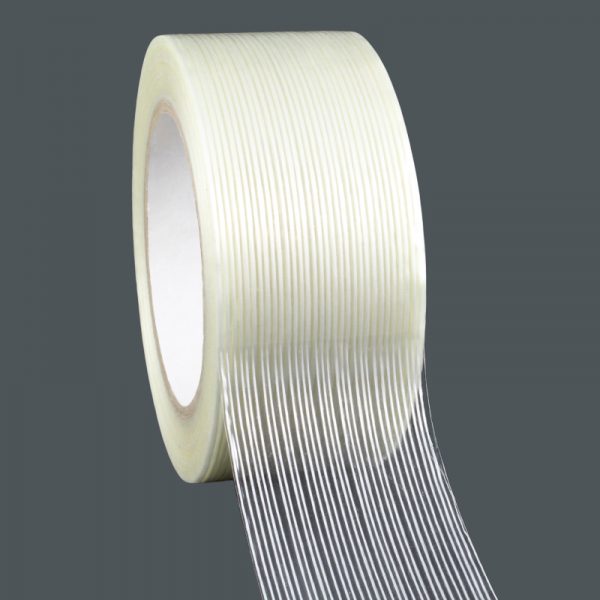
For directional loads, mono filament tape often makes sense because its fiberglass reinforcement is concentrated along one primary axis. For edge reinforcement or mixed stress areas, cross filament tape may be a better starting point.
Edge lift, also called flagging, is frustrating because the tape may look fine at first. Then, after storage, handling, or vibration, the end starts lifting. In export packaging, this is not just cosmetic.
The root cause is often adhesion, not tensile strength. Corrugated board can be dusty, recycled, rough, coated, or slightly damp. A pressure-sensitive adhesive needs enough pressure to wet out onto the surface. If workers apply the tape quickly without rubbing it down, even a strong heavy-duty packaging tape may not bond well.
Recycled corrugated board can make this problem worse. Loose fibers, surface dust, moisture, and rough texture can reduce adhesive wet-out. The tape may be sticking to a weak surface layer rather than to solid board.
Buyers should review peel adhesion, holding power, adhesive type, carton surface condition, and real carton testing. Peel adhesion is commonly compared through pressure-sensitive tape peel tests (ASTM D3330). Holding power or shear adhesion is commonly reviewed when the concern is slow movement under sustained stress (ASTM D3654).
Sometimes the tape does not break and does not lift, but the carton still opens. This is where packaging teams need to be honest. The carton board may be too weak. The product may be dense and concentrated near the bottom flap. The H-seal pattern may not cover the real stress point. Or the box may be stacked in a way that loads the sidewall rather than the reinforced seam.
Filament tape can reinforce a carton, but it cannot turn poor carton design into a reliable export pack. If bottom flaps open repeatedly, check the carton structure, product weight distribution, board grade, and tape placement before simply ordering a stronger tape.
Pallet load shift is often blamed on tape, but it is usually a system problem. Filament tape can support selected unitizing tasks, especially for bundles or key restraint points. But it should not be expected to replace stretch film, plastic strapping, corner boards, slip sheets, proper pallet pattern, or load-locking methods.
If the entire pallet moves during braking, forklift handling, warehouse transfers, or container transport, the first question is not “which tape is stronger?” It is “what is supposed to stop the load from moving?” Tape can support the answer, but it may not be the whole answer.
A tape that works in a clean packing room may behave differently during winter shipping, cold storage, sea freight, or repeated warehouse transfers. Low temperature can reduce adhesive wet-out for some adhesive systems. Humidity can soften or weaken corrugated board. Long routes add vibration, compression, stacking pressure, and more handling cycles.
The approval test should match the route. If goods move through cold storage, humid ports, or long ocean routes, test the tape on cartons from the actual line, not only on a clean sample panel.
There is no single winner between mono filament tape and cross filament tape. The better choice depends on where the stress comes from.
If a seam opens mainly in one direction, mono filament tape is often a practical starting point. It provides directional tensile support and can be cost-effective for straight seam reinforcement or bundling long parts.
If handle holes tear, corners break, or the package faces stress from several directions, cross filament tape is often worth testing. The cross-weave reinforcement spreads force more broadly and can improve tear resistance around weak zones.
In practice, many packaging teams start with this rule of thumb: choose mono filament tape when the load path is clear and directional; test cross filament tape when the package fails around edges, holes, corners, or mixed stress points.
Before approving bulk orders, buyers should check more than roll price and tape width. Useful items include tape construction, reinforcement type, backing thickness, adhesive type, tensile strength, elongation, peel adhesion, holding power, roll length tolerance, and unwind behavior.
|
Property |
Why It Matters in Heavy-Duty Packaging |
|
Tensile strength |
Helps compare whether the tape can resist pulling force before breaking. |
|
Elongation |
Shows whether the tape may stretch too much under load. |
|
Peel adhesion |
Indicates how well the adhesive bonds to carton surfaces. |
|
Holding power |
Helps evaluate whether the tape stays in place under sustained stress. |
|
Tape width |
A wider tape may distribute stress better on weak carton areas. |
|
Reinforcement type |
Mono supports directional loads; cross supports broader stress areas. |
Lab data is useful, but the final check should still be on your own carton surface and packing route. Apply the tape with normal workers, normal pressure, normal cartons, and the same reinforcement pattern used in production. Then check whether the tape breaks, lifts, slides, tears the board surface, or allows the carton to deform.
A useful recommendation does not need a long technical report. Five details are usually enough to start: carton size and load weight, the first failure point, carton surface type, shipping route, and current tape width if available.
Photos are helpful. A clear image of the failed seam, lifted edge, torn handle hole, bottom flap, or shifted pallet can explain the problem faster than a long email. If you have a current tape sample, roll label, or data sheet, that also helps us compare whether the issue is tape grade, application method, or reinforcement pattern.
Send us your carton size, load weight, failure point, shipping route, and current tape width if available. We can help review whether mono filament tape, cross filament tape, a wider slit roll, or another reinforcement pattern is a better starting point for testing. Technical data sheets, sample roll support, custom slit widths, and repeat-order traceability can be provided according to the selected grade.
Why does filament tape break during shipping?
Filament tape may break because the tape is too narrow, the tensile strength is not suitable, the package has sharp edges, or the load direction does not match the reinforcement direction.
Why does filament tape lift from corrugated boxes?
Edge lift usually comes from poor adhesive wet-out, dusty or recycled carton board, low application pressure, cold conditions, humidity, or a mismatch between adhesive and carton surface.
Is cross filament tape always better than mono filament tape?
No. Cross filament tape is useful for multidirectional stress, corners, handle holes, and mixed failure areas. Mono filament tape can be better for directional seam support or bundling.
Can filament tape stop pallet load shift?
Filament tape can help with selected unitizing and restraint points, but it should not replace stretch film, strapping, corner boards, proper pallet pattern, or other load-securing methods.
What test data should B2B buyers review before ordering filament tape?
Useful data includes tensile strength, elongation, peel adhesion, holding power, backing thickness, adhesive type, tape width, and roll length. Real carton trials should still be done before bulk approval.
Related Articles:
Standard vs Heavy Duty Mono Filament Tape: When to Upgrade
How to Choose the Right Filament Tape for Bundling, Palletizing, and Transport Securing