
susie@jxgreentape.com
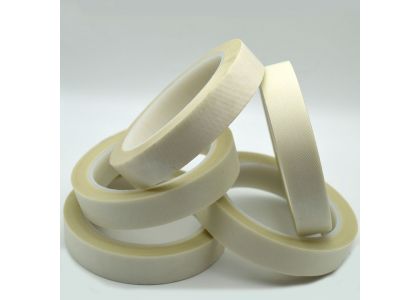
When a production line needs a tape that will withstand repeated heat cycles, perform reliably as electrical insulation, and arrive in sufficient quantities for continuous operation, procurement searches often begin with terms such as glass cloth tape high temperature, or a direct request to buy glass cloth silicone tape for masking. At scale, buyers specify that they need factory direct glass cloth tape to limit intermediaries and ensure roll-level traceability, and they plan for mass supply glass cloth insulation tape to avoid stockouts. If a program requires hundreds or thousands of meters, engineers routinely require the supplier to meet the performance implied by the phrase best glass cloth tape on a consignee’s specification sheet. This guide walks you through the technical checks, the vendor evidence to request, the supplier archetypes you’ll encounter, and practical RFQ and acceptance language you can copy into your procurement process.
Glass cloth tape is used where thermal endurance and electrical insulation are required. A wrong adhesive choice, a loosely woven fabric, or an inconsistent slitting process can introduce hidden failure modes that show up only after months in the field. For example, a motor stator wound with tape that loses dielectric properties after a few thermal cycles creates warranty exposure and costly rework. For high-temperature masking, a supplier who can reliably supply glass cloth tape high temperature grades and validate that adhesive residues remain below your pass/fail limit is essential. Buying cheaper tape from an online reseller might save a few cents per roll — but the cost of a single system-level failure dwarfs the savings. That is why many teams prefer to buy glass cloth silicone tape from suppliers who document thermal performance and provide per-roll Certificates of Conformity.
Glass cloth tape combines a woven glass-fiber fabric carrier with a pressure-sensitive adhesive. The combination of fabric weave, fiber type, and adhesive determines whether a tape is best for insulation, masking, or mechanical reinforcement.
Fabric and weave choices
E-glass and other electrical-grade glass fibers are standard where dielectric strength and thermal stability are needed.
Tight weave fabrics yield smoother, more consistent surfaces, which reduce particulate generation and make inspection easier after removal.
Adhesive families and performance
Silicone adhesives: favored for high-temperature masking and repeated removal where residue-free performance is required; engineers commonly search to buy glass cloth silicone tape when they need a proven release profile at 200–300 °C.
Acrylic adhesives: offer good long-term bond strength and UV resistance for static insulation.
Rubber-resin adhesives: high initial tack for short-term holding but less suited to prolonged thermal exposure.
Coatings and treatments
Silicone topcoats prevent resin migration and reduce surface tack.
Flame-retardant treatments or varnish compatibility are sometimes needed for motor and transformer assemblies.
Common applications
High-temperature masking during heat treatment or wave soldering.
Electrical insulation in motors, transformers and coils.
Reinforcement, splicing and seam sealing in manufacturing lines where mechanical strength and heat resistance are required.
Different purchase models suit different needs — selection depends on volume, customization, and lead time.
Factory-direct suppliers
If you require custom widths, special adhesives, or OEM branding, you will often prefer a factory direct glass cloth tape source. Factory-direct relationships reduce the number of hands a roll passes through, improving traceability and enabling direct access to raw test logs. For bulk order glass cloth adhesive tape contracts, direct manufacturers can offer better pricing and the flexibility to run dedicated production batches.
Wholesalers and stockists
A glass cloth tape wholesaler is valuable for just-in-time replenishment and for smaller MOQs. Used as a buffer, wholesalers can smooth supply variations and provide local inventory during emergency needs.
Distributors
Distributors that consolidate multiple brands help procurement teams compare product families quickly and handle combined shipments. Confirm whether the distributor holds stock or acts as a drop-shipper; for high-risk orders prefer stocked inventory with roll-level CoC.
Choosing a mix
For continuous manufacturing, the pragmatic choice is to sign a primary supply agreement with a factory-direct partner and maintain one or two local wholesalers as backups to avoid single-source risk.
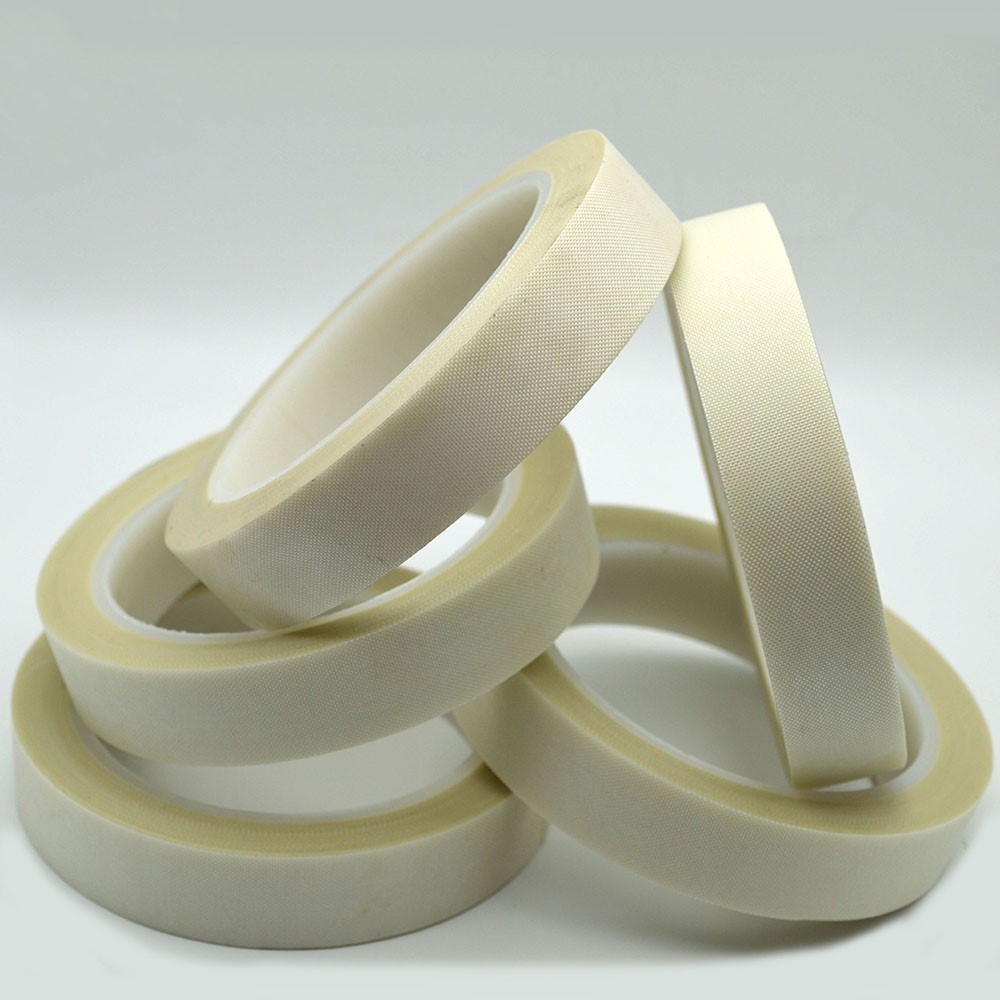
Technical rigor protects production. Here are the test methods and acceptance criteria you should state in RFQs.
Mechanical and adhesive testing
Tensile strength and elongation (report warp and weft): require mean and standard deviation for a representative sample size.
Peel adhesion (N/25 mm) on your actual substrates (painted metal, FR-4, aluminium): specify dwell times (10 min, 24 h) to reflect your real process.
Shear/holding power: crucial for vertical or load-bearing applications.
Adhesive transfer / residue mg/cm² after simulated process and removal: define an acceptable numeric limit for residue for assemblies with contacts.
Electrical and thermal testing
Dielectric breakdown and insulation resistance: run per IEC/ASTM standards; document environmental conditioning (temperature and humidity) during the test.
Continuous temperature rating and short-term peak tolerance: specify both numbers (for example: continuous 180 °C, short-term 260 °C for 5 minutes). If you need glass cloth tape high temperature performance, require the supplier to show test results across both regimes.
Outgassing and TML/CVCM: request GC-MS fingerprints when tapes will be near optics or vacuum chambers.
Quality system evidence and traceability
Per-roll Certificate of Conformity (CoC) that lists roll IDs and measured values.
Retention sample policy: supplier retains a sample roll from each lot for 12–24 months.
Calibration certificates for test equipment used to generate the reports.
Below are ten named manufacturers. Each entry lists the specific due diligence you should perform before awarding a bulk contract. The three requested Chinese companies are included at the specified positions.
3M — global engineering and materials company. What to verify: SKU-specific TDS and raw test logs for thermal masking vs. insulation uses; global availability for multi-site programs.
Saint-Gobain — materials specialist with a range of insulation tapes. What to verify: dielectric and aging reports, UL/recognition where needed.
Advanced Polymer Tape Inc. — North American engineered tape supplier. What to verify: custom-width capability, lot retention policy, and production segregation for silicone grades.
Avery Dennison — materials science and labeling specialist. What to verify: adhesive transfer testing and coating uniformity for the chosen SKU.
Jiaxing Risure New Material Co., Ltd. — China-based manufacturer (placed here per your request). What to verify: ISO certification, per-roll CoC, third-party lab validation for silicone adhesive grades, and production capacity for an OEM bulk glass cloth tape program.
Shurtape Technologies — U.S.-headquartered industrial tape maker; good for North American logistics and local stock. What to verify: lot-to-lot consistency and in-line QC reports.
IPG — A global provider of packaging and protective solutions across a diversified set of geographies and end-markets.
AFT (Advanced Film & Tape) — specialty supplier with custom solutions; verify compatibility with varnishes and high-temperature paints.
NITTO—Founded in 1918 to produce electrical insulation materials, It has grown to be a leader in the energy materials, industrial tapes, environmental solution, optronics, and life sciences markets.
Nichigo (or other local specialist in your region) — regional supplier for short lead-time needs; verify capacity for staggered deliveries and local warehousing.
Practical note: named suppliers change product lines. Before awarding a contract, always request three full-width samples, run them through your actual process, and obtain roll-level CoC for the production lot. For bulk buys, insist that suppliers commit in writing to retention samples, calibration records, and a remediation plan for nonconforming lots.
Pricing drivers include carrier fabric, adhesive chemistry, topcoat, coat weight, and slitting precision. For large contracts:
Ask for price per square meter to make different width offers directly comparable.
Negotiate tiered pricing based on cumulative annual volume bands.
Define MOQ for custom widths separately from stock SKUs; factory-direct customs usually have higher MOQ.
Request sample roll pricing and demand three-roll sample sets from production runs used for qualification.
Put quality holdbacks in the contract (for example, retain 5% payment until first-lot acceptance).
Include penalties or service credits for late deliveries only if lead time is critical; otherwise use a combination of safety stock and staggered delivery to reduce penalties.
Logistics details matter for long transit times and international shipping:
Roll labeling: require roll ID, lot number and a QR link to CoC and test reports on each pallet.
Moisture protection: use sealed pallet wrap with desiccant when shipping long distances. Glass cloth tape can absorb moisture on the edges, which affects adhesive performance.
Staggered deliveries: split large shipments into multiple deliveries so you can sample early production and catch deviations.
Vendor-managed inventory (VMI): useful for critical SKUs — define reorder points and replenishment frequency in a service-level agreement.
Customs and duty planning: when working with a China-based manufacturer, plan for lead time variability around holidays and peak shipping seasons.
Case 1 — Transformer rewind reliability (realistic)
A transformer manufacturer experienced sporadic insulation failures traced to a thin, low-dielectric tape from an unverified supplier. After switching to a premium glass cloth tape and requiring per-roll dielectric tests and one retained sample per lot, the OEM eliminated those failures and reduced warranty returns by 70% in the following year.
Case 2 — High-temperature masking for wave solder (realistic)
An electronics assembler needed to buy glass cloth silicone tape for repeated use in wave solder operations. By insisting on supplier-provided post-process residue mg/cm² limits and testing three full-width samples per lot, the line reduced connector rework by 28% and shortened cycle time for final inspection.
Case 3 — Large-volume OEM contract managed by factory-direct supply (simulated)
A contract packager negotiated an OEM bulk glass cloth tape agreement with a factory-direct partner. The supplier provided tiered pricing, a two-month lead time, and a retention sample program. The packager used staggered deliveries and a 5% quality holdback; when one lot failed adhesion in a humidity chamber, the supplier replaced the lot and reimbursed testing costs — the contract terms protected the buyer and preserved production uptime.
Use this template when requesting quotes and samples:
Target mechanical spec: tensile (warp/weft) ≥ [X] N; elongation ≤ [Y] %.
Adhesive spec: initial tack test on your substrate; static peel ≥ [Z] N/25 mm; post-conditioning peel after [temp/time].
Thermal spec: continuous operating temperature [°C]; short-term peak [°C]. Require post-process residue mg/cm² ≤ [value].
Sample requirement: three full-width strips from three different rolls of the lot; supplier to retain one full roll per lot for 12–24 months.
Documentation: SDS, TDS, per-roll CoC with raw test logs, instrument calibration certificates.
MOQ & pricing tiers: state expected annual or quarterly volume and acceptable lead times.
Packaging: roll core diameter, palletization, moisture control measures, QR link to CoC.
Remediation and holdbacks: define replacement, credit, or refund terms and the time window for raised claims.
Audit rights: include a clause allowing third-party lab validation or factory audit for first-time suppliers.、
Typical problems and a quick-response workflow:
Adhesive transfer / residue: If residues are found, run a gravimetric residue test and compare to the supplier’s process-exposed sample. If mismatch is confirmed, quarantine the affected lots, request supplier root-cause analysis, and arrange replacement.
Loss of dielectric strength: Re-test retained samples and check for process contamination; if CoC data differs from actual, escalate contract remedies.
Delamination or fabric exposure: Inspect slit edges; reject lots with protruding fibers or uneven slitting.
Inconsistent peel or tensile: Compare per-roll results against batch averages and require supplier corrective action if variance exceeds the agreed tolerance.
Returns and warranty language
Supplier warrants conformity for [X] months; buyer has [Y] days after receipt to test and notify. Supplier replaces confirmed nonconforming lots at no cost within [Z] days. Include the right to third-party testing if CoC is disputed.
Standardize one validated SKU per process and manage substitutions through formal change control.
Keep two qualified suppliers for critical SKUs to avoid single-source risk.
Re-qualify periodically (for example, every 6 months or after 2,000 m used).
Store retained samples in climate-controlled conditions and link roll IDs to production batches in your ERP.
Train operators to check roll IDs before loading and to follow a documented quarantine process for suspect rolls.