
info@jxgreentape.com
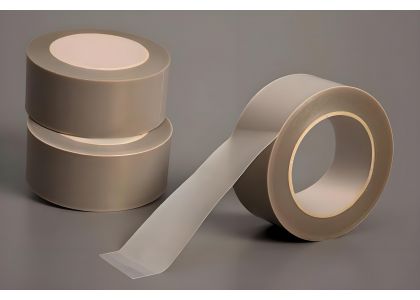
If you are comparing PTFE coated glass cloth tape and PTFE film tape, you are not shopping for generic “PTFE tape.” You are trying to fix a production issue: film sticking to a sealing jaw, tape tearing at the edge, release marks, adhesive residue, or too many line stops for tape replacement.
Both products use PTFE to create a non-stick, low-friction surface. That does not make them interchangeable. PTFE coated glass cloth tape is normally chosen when the process creates repeated pressure, abrasion, puncture risk, or dimensional stress. PTFE film tape is normally chosen when the process needs a smoother surface, thinner profile, better conformability, or a cleaner sliding layer. The better question is not “which PTFE tape is better?” It is “how does the current tape fail?”
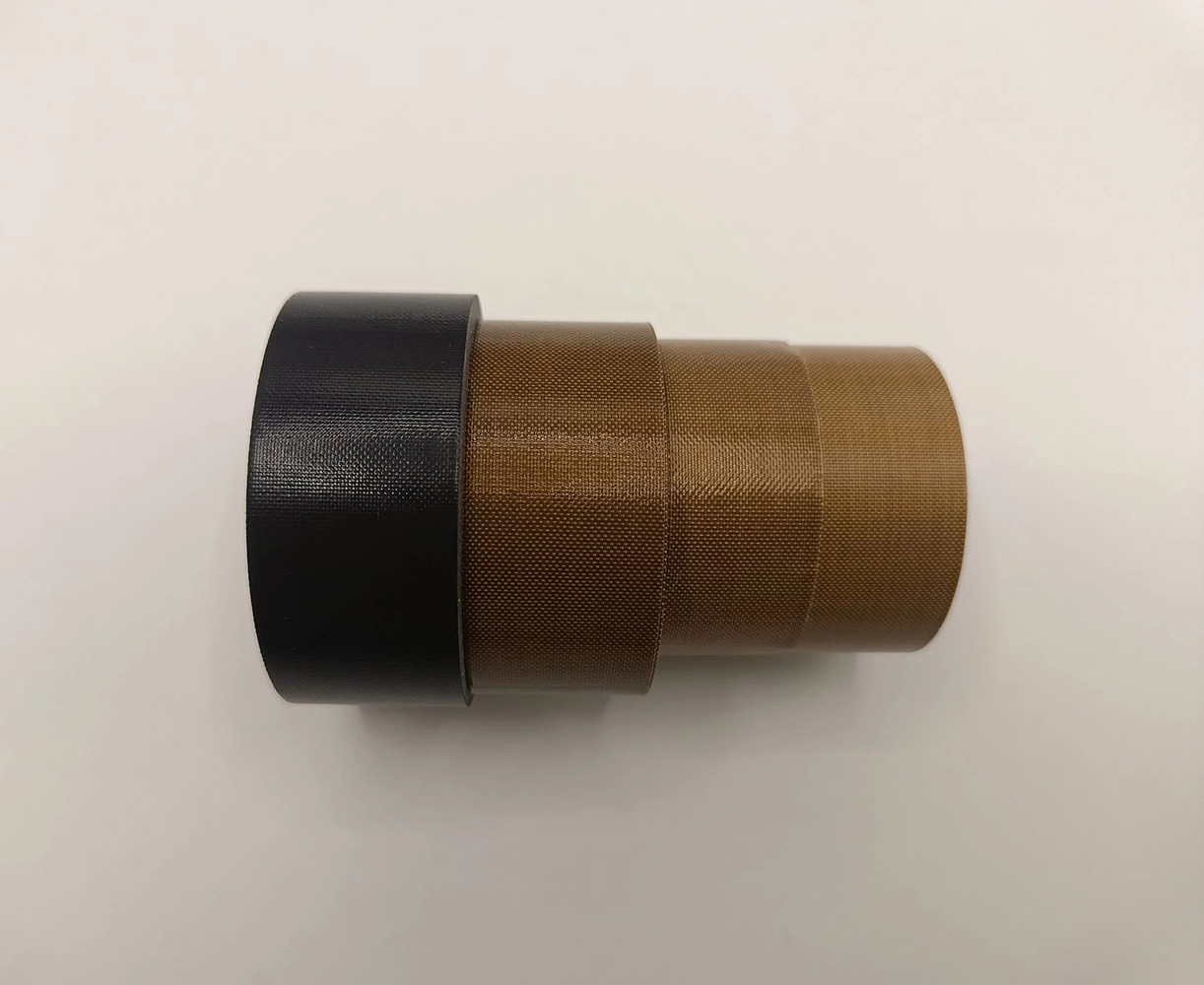
PTFE coated glass cloth tape uses woven fiberglass fabric coated or saturated with PTFE, usually with silicone pressure-sensitive adhesive. The glass cloth gives the tape its mechanical backbone. It improves resistance to tearing, puncture, and abrasion where a heated bar, roller, guide, or sealing jaw keeps contacting the same area.
PTFE film tape uses a solid PTFE film backing with adhesive. It has no woven reinforcement, so the surface is usually smoother and more flexible. Some film tapes use skived PTFE film; some use extruded PTFE film. Extruded PTFE film can lie flatter and resist curling during unwind better than typical skived film.
So the first selection filter is structure, not temperature: reinforcement or smoother film surface?
For buyers comparing other high-temperature tape structures, our PTFE tape material comparison guide can help separate backing, adhesive, surface finish, and wear behavior before sampling.
On heat sealing equipment, PTFE coated glass cloth tape is often the safer first trial. Impulse sealers, vacuum sealers, hot bar sealers, and continuous band sealers expose tape to heat, pressure, sliding contact, and edge wear. In that environment, reinforced backing usually survives mechanical stress better than a thin film construction.
This is why PTFE glass cloth tape is commonly used as heat seal release tape, sealing jaw tape, and packaging machine tape. The PTFE face helps reduce sticking; the glass cloth backing helps the tape stay intact.
But glass cloth is not always correct. The woven structure can make the tape thicker and less smooth. On thin or glossy packaging films, that texture may show as faint marks. If the customer rejects packages because of surface marks, a stronger tape has still failed the job.
For sealing jaws, hot bars, and packaging machines with repeated pressure, PTFE coated glass cloth tape for heat sealing jaws is usually the first product sample to test.
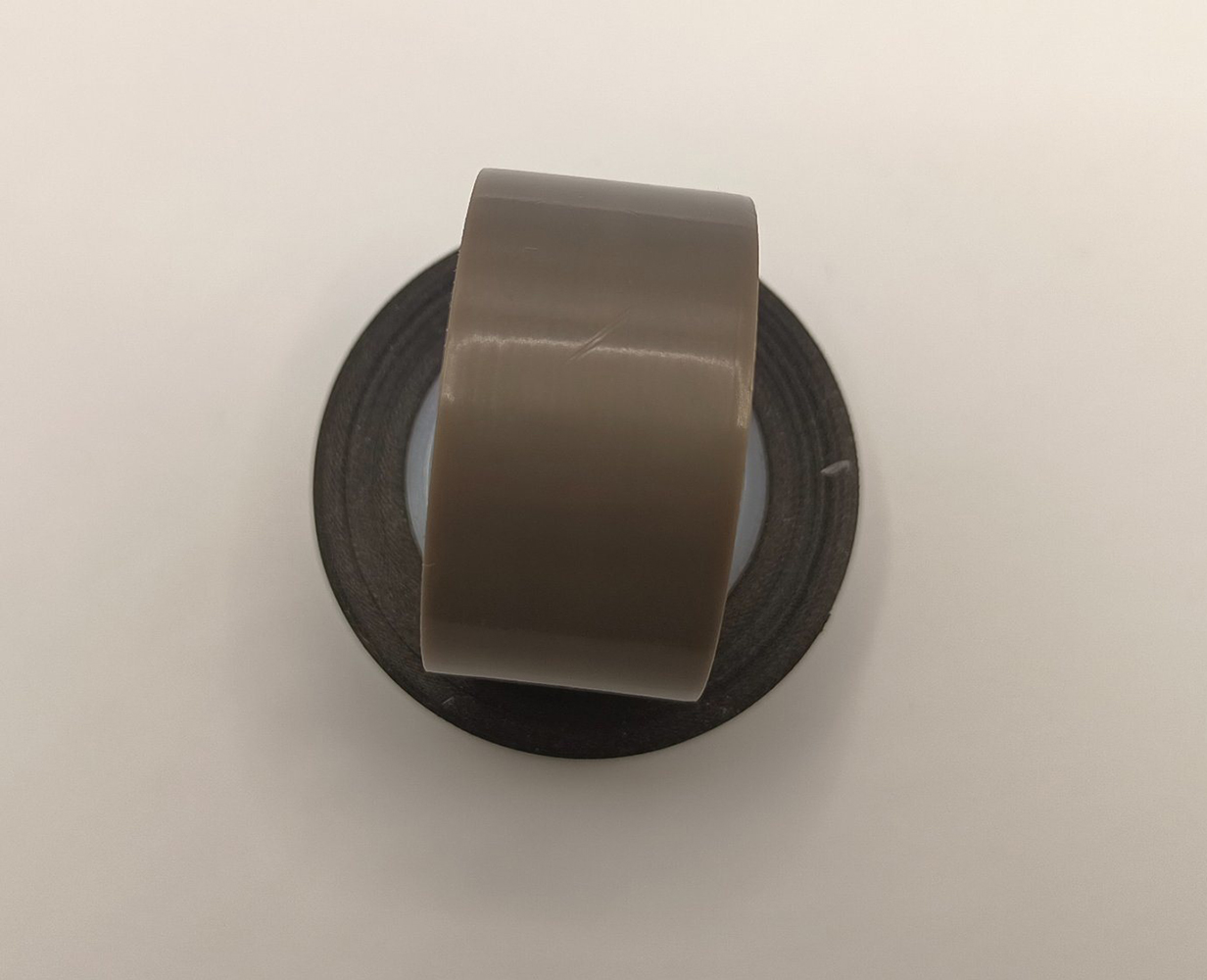
PTFE film tape should not be treated as a weaker substitute. It solves a different problem. If the application needs a slick release layer, a thinner contact surface, or easy wrapping around a curved part, film tape can be the smarter choice.
It is often useful on rollers, guide rails, sliding plates, curved tooling, and lay-flat surfaces where fabric texture is not acceptable. For roll wrapping, smooth application without edge lift or excessive curl can matter more than tensile strength.
Thickness still matters. A very thin PTFE film tape may release well but tear quickly under scraping contact. A thicker film tape may last longer under moderate abrasion, but it still will not behave like reinforced glass cloth.
For rollers, guide rails, curved tooling, and sliding surfaces, PTFE film tape for rollers and sliding surfaces may be a better first trial than reinforced cloth tape.
Many buyers start with temperature because it is easy to compare. Understandable, but incomplete. Ratings vary by construction, adhesive, dwell time, pressure, and whether the exposure is continuous or intermittent.
Once both candidates can handle the thermal window, move to wear mode. Is the tape edge fraying? Is the film tearing? Is the tape stretching during application? Is the sealing surface leaving marks? Is adhesive residue forcing operators to scrape the jaw? Each failure points to a different answer.
Do not treat “260°C” as a universal green light. Product data sheets often define temperature performance under specific conditions. PTFE also has safety limits at excessive temperatures, so the tape should stay within the supplier’s stated use range. For heat sealing lines, real dwell time and pressure matter more than a catalog number.
If your current tape is tearing, fraying, leaving residue, or causing frequent line stops, review our heat sealing tape failure analysis before switching to another roll with the same temperature rating.
Surface finish is where many wrong purchases become visible. PTFE coated glass cloth tape may last longer, but the cloth structure can matter when the package film is thin, soft, glossy, or pressure-sensitive. If the final seal area shows texture, dull spots, or pressure lines, the tape may be mechanically strong but commercially wrong.
PTFE film tape gives a smoother contact surface because there is no woven glass cloth pattern. That can help with clean release, lower drag, and more consistent contact on delicate substrates. The practical rule is simple: choose glass cloth when wear and pressure dominate; test film tape when smoothness, conformability, and appearance dominate.
Most tapes in this category use silicone adhesive, but adhesive is not a small detail. It controls peel strength, heat-aged removal, residue risk, and compatibility with the mounting surface. A tape that removes cleanly at room temperature may behave differently after a week on a hot sealing bar.
Compare the complete tape construction, not just “PTFE backing.” Ask for total thickness, backing thickness, adhesive type, peel adhesion, tensile strength, elongation, and post-heat residue behavior. If the machine is cleaned with solvents, check adhesive compatibility instead of assuming PTFE chemical resistance represents the whole tape.
PTFE coated glass cloth tape often costs more per roll than basic PTFE film tape. That does not automatically make it more expensive. If it lasts longer on an abrasive sealing jaw, the cost per usable cycle may be lower.
A better calculation is: tape cost per cycle equals tape cost divided by usable production cycles before replacement. Then add labor, downtime, cleaning time, scrap, and customer complaints. One extra tape change during a packaging shift can cost more than the money saved by buying a cheaper roll.
PTFE film tape can still win when the process values smooth surface finish, easy wrapping, or thin profile more than long wear life. The goal is to buy the tape that fails least expensively in your process.
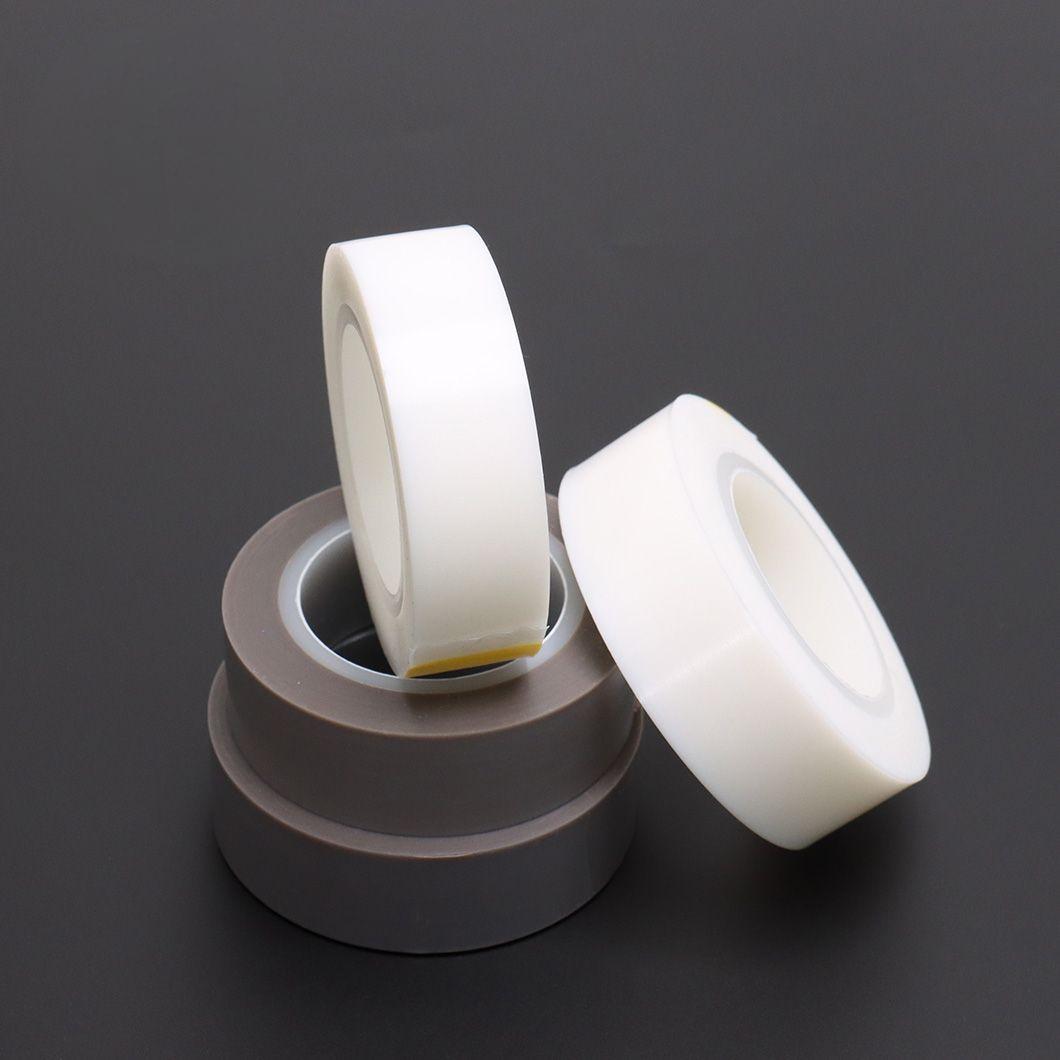
For heat sealing jaws with repeated pressure, start with PTFE coated glass cloth tape. Reinforcement helps against wear, tearing, and puncture. For thin packaging films that show pressure marks, test PTFE film tape because the smoother backing may reduce visible texture.
For roller wrapping, curved surfaces, guide rails, and lay-flat sliding surfaces, start with PTFE film tape. It usually conforms more easily and creates a smoother low-friction surface. For scraping edges or areas where the tape edge gets attacked first, glass cloth is usually the better first trial.
For electrical insulation, do not guess. Compare product-specific dielectric data. For chemical splash with low abrasion, film tape may be enough. For chemical exposure plus mechanical wear, reinforced glass cloth is usually safer.
Do not send only width, length, and temperature. Tell the supplier the machine type, sealing temperature, dwell time, pressure, current tape thickness, packaging film type, and current failure mode.
Ask whether the backing is PTFE coated glass cloth, skived PTFE film, or extruded PTFE film. Ask about total thickness, adhesive type, peel adhesion, tensile strength, elongation, temperature rating, and recommended surfaces. If surface finish matters, ask whether the tape may leave cloth texture on soft or glossy films.
For a broader sourcing workflow, our industrial tape buying guides cover RFQ details, sample testing, and supplier comparison methods across different adhesive tape applications.
The first wrong choice is buying glass cloth tape only because it sounds stronger. Strength helps when the problem is wear, but it may hurt if the real issue is surface marking.
The second wrong choice is buying film tape only because it is thinner. Thin film may apply neatly, but it can tear fast if the machine has sharp edges, scraping contact, or heavy abrasion.
The third wrong choice is trusting a temperature number without checking dwell time, adhesive, pressure, and removal behavior. In many heat sealing lines, stopping the machine costs more than the tape.
PTFE coated glass cloth tape and PTFE film tape are not simple substitutes. Glass cloth tape is usually the better starting point for heat sealing jaws, packaging machines, repeated pressure, and abrasive contact. Film tape is usually better when the process needs a smoother surface, thinner profile, better conformability, or cleaner contact.
The best choice comes from the failure mode: wear, tearing, surface marks, curling, residue, downtime, or insulation requirements. Start there, and tape selection becomes less confusing.
Sometimes. It can work when smooth release or surface appearance matters more than abrasion resistance.
PTFE film tape usually gives the smoother release surface because it has no woven glass cloth texture.
PTFE coated glass cloth tape is usually better under repeated abrasion, pressure, and puncture risk.
It can. Residue depends on adhesive type, temperature, dwell time, surface condition, and how long the tape stays on the machine.
No. Temperature ratings vary by construction, adhesive system, and whether exposure is continuous or intermittent.
The selection logic in this article is supported by the following reference points:
· ASTM D3330 — commonly used for comparing peel adhesion of pressure-sensitive tapes.
· ASTM D3652 — used for measuring pressure-sensitive tape thickness.
· ASTM D3759 — used for tensile strength and elongation testing of pressure-sensitive tapes.
· ASTM D3308 — provides specification context for PTFE resin skived tape, but should not be treated as a full standard for adhesive-backed PTFE film tape.
· 3M PTFE glass cloth tape data — supports the use of PTFE glass cloth tape for non-stick, low-friction surfaces on heat sealing and packaging equipment.
· 3M PTFE film tape data — supports the point that extruded PTFE film tape can provide a smoother, flatter release surface than typical skived PTFE film tape.
· tesa 4818 product data — supports the use of PTFE-saturated glass cloth tape with silicone adhesive for heat seal release applications.