
info@jxgreentape.com
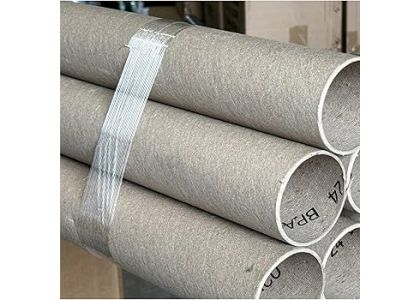
The rapid expansion of online retail, omnichannel fulfillment and higher unit-throughput packing lines has changed how procurement teams specify closure and reinforcement materials. Buyers who need consistent machine runnability and measurable load performance increasingly request Premium quality filament tape or Premium quality glass reinforced tape as part of their approved-material lists, while evaluating whether to Buy filament tapes broadly or to Buy filament reinforced tape for heavy or high-value SKUs. These shifts reflect both demand-side growth for robust packaging and the available variety of filament constructions on the market.
Premium quality filament tape is a composite product: a film backing (often PP or PET) with aligned filaments embedded to carry tensile load. The filaments transform the tape from a surface-sealant into a linear reinforcement element; with the right adhesive (acrylic or hot-melt) it bonds to corrugated fiberboard, coated cartons and many industrial substrates. Premium quality glass reinforced tape is a filament variant that emphasizes glass fibers for added rigidity and dimensional stability across temperature cycles. These differences are measurable—tensile strength per inch, elongation-at-break, and cyclic fatigue are the metrics procurement teams should require from suppliers.
Duct tape and cloth tapes remain useful as general-purpose, short-term fixes. However, in industrial settings—pallet unitization, long-lashing, bundling long goods and strapping-substitute tasks—Premium quality filament tape outperforms because it carries tensile loads rather than merely adhering to a surface. Premium quality glass reinforced tape is often chosen where multi-directional forces or flex fatigue resistance are concerns (mixed pallets, lateral shifting). For repeatable, high-throughput packing lines, standardizing on filament constructions reduces repacks and improves first-pass yield.
• High tensile capacity per linear inch — useful for substituting strapping on lighter palletized loads.
• Tamper-evidence — pulled/broken filaments are visually detectable.
• Predictable applicator behavior — when adhesive and unwind specs match the line equipment.
• Customization potential — from printed branding to special adhesive chemistries for recycled board.
These benefits explain why many industrial buyers choose to Buy filament tapes or specify Buy filament reinforced tape in supplier RFQs when packaging must protect higher-value or heavier SKUs.
Duct tape is durable for general repairs, but its cloth or polymer backing does not deliver the same linear tensile strength and controlled elongation that filament products provide. Where a tape must prevent load migration or support repeated handling stress, Premium quality filament tape and Premium quality glass reinforced tape are engineered for longevity under continuous stress.
Customization goes beyond logos. Typical custom requests include filament pattern (uni-directional vs cross-woven), adhesive chemistries for recycled corrugate, special widths/core sizes for specific applicators, sequential lot numbering for traceability, and color coding for pick-and-pack flows. When teams Buy filament tapes at scale, they often require pilot approvals and contract clauses that mandate batch certificates and remediation if lots fail acceptance tests.
Unit price alone can be misleading. A life-cycle or total-cost-of-ownership view factors in fewer repacks, lower damage claims and reduced labor for corrective packing. For operations that handle heavy or irregular shipments, Premium quality filament tape typically lowers total cost over time relative to cheaper general-purpose tapes because the replacement/rework costs associated with failures are higher than the tape premium.
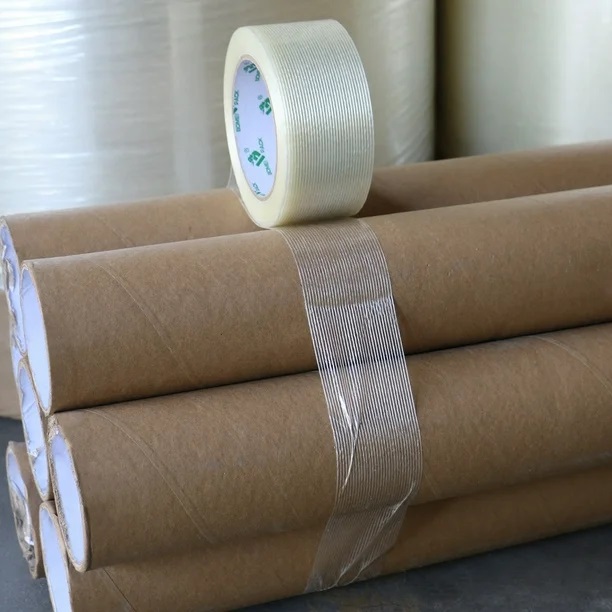
Manufacturers are investing in adhesive science, separable backings and lower-impact materials to balance high performance and recyclability. Procurement teams will increasingly ask for cradle-to-gate emissions, separation guidance for recycling streams, and verified test data before they Buy filament tapes or commit to OEM bulk Filament Tape programs.
(section corresponding to “Conclusion”) — Practical procurement & QA guidance (actionable)
Technical selection checklist: require tensile (N/in), peel adhesion at target temps, cyclic flex for glass-reinforced constructions, unwind force and applicator compatibility. Pilot and KPIs: run a 30–90 day pilot and measure damage rate, applicator stoppages, tape yield and repack labor. Contract items: batch traceability, replacement for non-conforming lots, supplier applicator support and scheduled quality audits when you Buy filament reinforced tape in OEM quantities.
Short case examples
Case 1 — Electronics distributor: switched fragile, heavy SKUs from generic cloth tape to Premium quality filament tape; pilot showed a 28% reduction in packing-related damage over 90 days and quicker fulfillment because of fewer repack cycles.
Case 2 — 3PL: standardized Premium quality glass reinforced tape for mixed palletized freight, negotiated OEM bulk Filament Tape terms with vendor-managed replenishment and saw a 30% drop in tape-related line stoppages.
Case 3 — Specialty manufacturer: selectively decided to Buy filament reinforced tape for large or delicate furniture pieces; returns from transit damage fell measurably and CSAT improved.
Practical procurement templates & quick items to use immediately
Pilot acceptance: require tensile and peel test certificates, and a 30-day pilot on live lines.
PO sample line: “Supply 500 rolls Premium quality filament tape, 48 mm x 50 m, acrylic adhesive, core 3”.”
Vendor clause: “Supplier to replace non-conforming lots and provide batch reports for Premium quality glass reinforced tape shipments.”
KPI to track: damage rate per 10,000 parcels; applicator downtime hours; tape yield per roll.