
info@jxgreentape.com
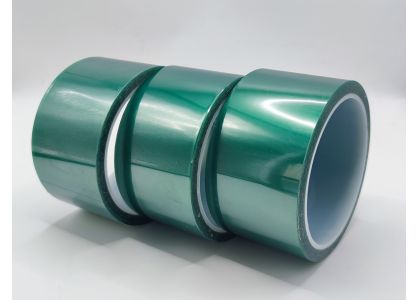
Every powder coating line carries the imprint of its consumables. Masking is often treated as a low-risk input, yet in practice it is one of the most failure-sensitive variables in finishing operations. Decisions involving Green High Temp Masking Tape, and volume programs such as Bulk Green Polyester Tape directly influence edge quality, rework rates, and line stability.
Manufacturers that rely on undocumented tape sourcing—whether from domestic mills or a Powder Coating Tape China Exporter—often discover issues only after parts have passed through full thermal cycles. Adhesive residue, edge lift, or powder creep rarely appear at the spray booth; they emerge after cure, inspection, or even packaging. Auditing tape suppliers removes guesswork from this equation and shifts quality control upstream, where it belongs.
A structured audit does more than confirm specifications. It validates whether a supplier can repeatedly manufacture tape that behaves the same way under real production conditions, not just under nominal lab settings.
An effective audit begins before the site visit. Procurement and quality teams should establish a shortlist of Powder Coating Tape Suppliers that reflects both technical capability and supply strategy. This may include local producers for responsiveness and at least one qualified Powder Coating Tape China Exporter for scale and cost control.
Initial qualification criteria should be objective and document-driven:
Defined lead times for standard and bulk programsWhen volume supply is required, suppliers should demonstrate the ability to deliver Bulk Green Polyester Tape under rolling forecasts, with clear policies for buffer stock and surge capacity. For applications requiring custom Powder Coating Masking Tape, auditors should request historical examples, die-cut records, and documented minimum order quantities. Mature suppliers will provide sample coupons produced on the same line and tied to the same adhesive lot intended for shipment.
Factory-level quality control determines whether audit findings translate into real-world reliability. During audits, inspectors should focus on how coating, slitting, and rewinding operations are controlled—not just whether equipment exists.
Key checkpoints include:
Retention of sample coupons per production lotA robust QC system links every pallet to a lot number, a retained coupon, and a set of lab results that include peel strength and residue measurements. These traceable artifacts are essential for post-delivery investigations. When tape performance issues arise on the line, the presence—or absence—of this documentation often determines whether root causes can be identified quickly.
Auditing Green High Temp Masking Tape requires measurements that reflect actual operating conditions. Generic datasheets are insufficient if they do not match the plant’s real thermal profile.
Critical performance metrics include:
Long-run durability, such as peel-after-100-cycles testingAuditors should insist on raw data, not just pass/fail summaries. When possible, sample coupons should be produced from the same production run and adhesive lot that will ship. If a Powder Coating Tape China Exporter cannot provide reel- or pallet-level documentation tied to shipped material, this should be treated as a material risk indicator.
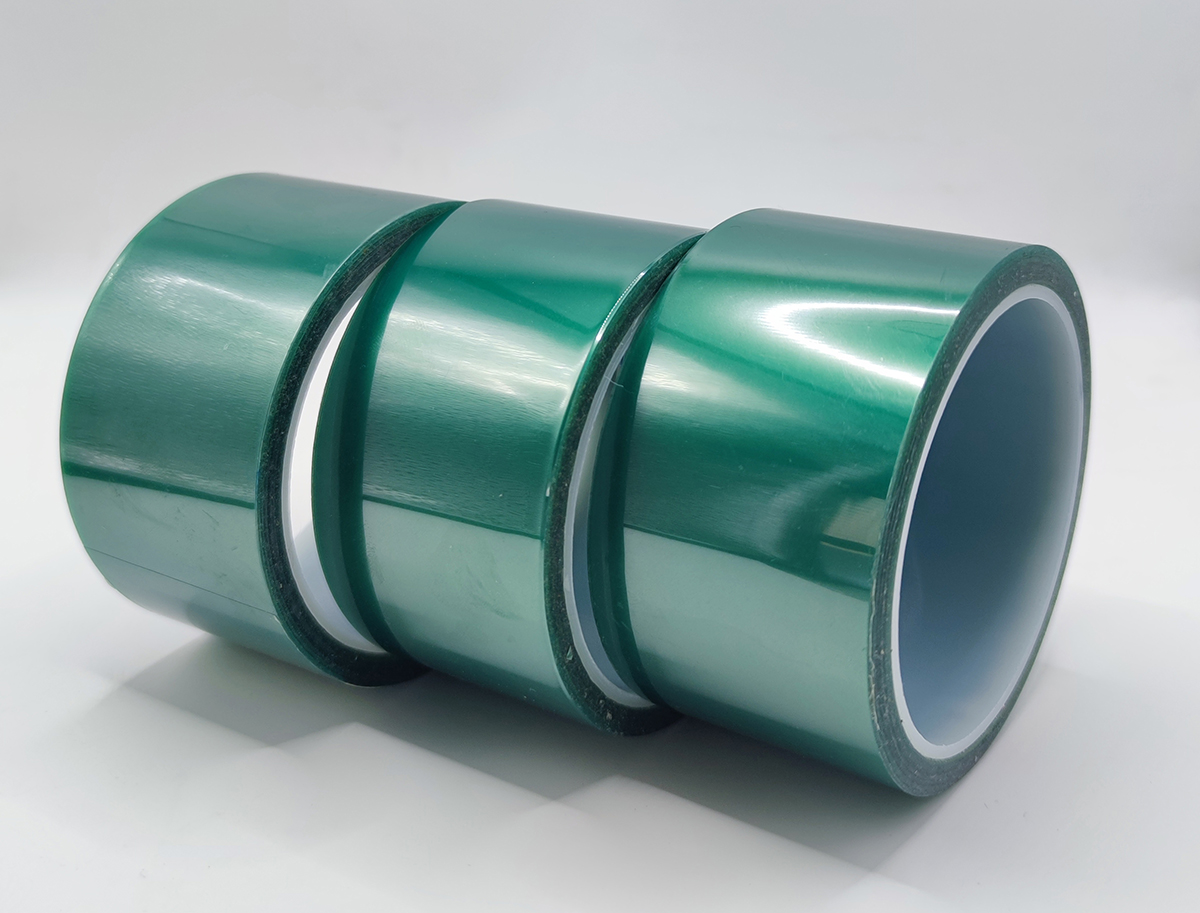
Sampling strategy determines the credibility of an audit. Best practice is to run parallel validation: supplier-provided coupons tested alongside internally prepared coupons under identical conditions. Peel tests should specify angle and speed, while residue evaluations should use gravimetric wipe methods with results expressed in mg/cm² to ensure comparability.
Variance across batches should trigger statistical review. Cp/Cpk values for coating weight and slitting tolerances often reveal whether performance deviations stem from process instability rather than isolated adhesive defects. Auditors who ignore statistical signals risk approving suppliers whose output cannot be controlled at scale.
Audit findings generally fall into three categories: process control gaps, raw-material variability, and documentation weaknesses. Corrective actions must address root causes rather than symptoms.
Common remediation steps include:
For example, recurring edge lift traced to inconsistent slitting tension is a mechanical issue, not a formulation flaw. Effective corrective actions combine equipment adjustment with updated QC checks, including pre-shipment peel testing for Powder Coating Masking Tape used on critical surfaces.
A contract finisher supplying powder-coated enclosures for industrial automation experienced a costly disruption after qualifying a new supplier for Powder Coating Masking Tape. Initial approval relied on visual inspection and ambient peel checks, and the supplier provided standard technical documentation. No elevated-temperature peel or residue testing was conducted during qualification.
Within weeks of ramp-up, adhesive ghosting and residue marks appeared around masked apertures after curing. The defects were not visible immediately at line exit but emerged during final inspection, triggering rework and partial scrap. Investigation revealed that the adhesive system lost cohesion under the plant’s actual bake profile, which involved longer dwell times and higher airflow than the supplier’s reference conditions.
A post-failure audit identified several gaps. Pallet-level coupons were not retained, and peel data at target bake temperature was unavailable. Subsequent testing showed adhesive mass transfer increased sharply above the published temperature range. The incident resulted in multiple days of line interruption and rework costs exceeding USD 40,000.
Corrective actions required full requalification. The buyer implemented mandatory high-temperature peel and residue testing, enforced pallet-level coupon retention, and revised acceptance gates for Powder Coating Masking Tape used on critical surfaces. The supplier modified adhesive formulation and added in-process QC checks before shipments resumed. The case underscored a fundamental audit lesson: without validating adhesive behavior under real thermal conditions, even visually acceptable tape can become a high-risk consumable.
After failure-driven requalification, audit programs prove their value most clearly in scale-up and customization scenarios. These cases illustrate how disciplined audits convert risk into predictable supply.
A defensible audit program is structured, repeatable, and evidence-based. It should withstand internal review, customer scrutiny, and dispute resolution without relying on informal judgments.
Core elements include:
Audit findings should translate into contractual clarity. Failing lots must be quarantined and either reprocessed or replaced at supplier cost. For strategic partners, periodic joint process-improvement projects help sustain capability rather than merely enforce compliance.
Auditors should arrive on site with a clear checklist and predefined acceptance criteria. Typical checkpoints include:
Acceptance gates should be numeric and unambiguous. When results fall outside limits, material should not enter production until corrective actions are verified.
Audits are not endpoints; they are control points. Post-audit collaboration determines whether suppliers improve or simply comply temporarily.
Best practices include sharing aggregated performance data, co-funding targeted improvement pilots, and rewarding consistent performance with longer-term agreements and rolling forecasts. Maintaining a validated on-site buffer and at least one qualified alternate supplier reduces exposure during capacity constraints.
Quarterly reviews that examine trend charts for peel and residue performance help detect drift early. When Powder Coating Tape Suppliers understand that audits are linked to long-term business continuity rather than punitive action, compliance improves and variability decreases.
Require pre-shipment photos and pallet manifests, retain sample coupons for the warranty period, and rotate validated stock FIFO. For overseas sourcing, insist on witnessed pilots and documentation that ties lab data directly to shipped lots. When deploying custom Powder Coating Masking Tape, archive die-cut tooling parameters and slitting settings so future runs can be reproduced without requalification.
Auditing high-performance masking tape is not about checking boxes; it is about protecting finish quality and production stability. Whether the program involves Powder Coating Masking Tape, Green High Temp Masking Tape, or high-volume Bulk Green Polyester Tape, disciplined audits convert consumables from hidden risks into controlled assets. Manufacturers that embed audit rigor into supplier relationships consistently experience fewer disruptions, lower rework, and more predictable output across finishing lines.