
info@jxgreentape.com
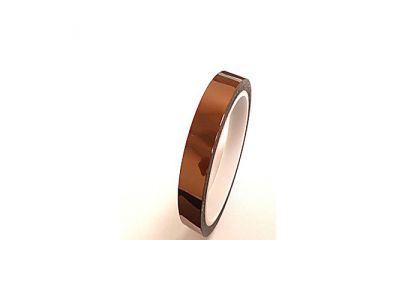
The evolution of printed circuit board technology has consistently pushed toward greater miniaturization, flexibility, and reliability. In both flexible and rigid-flex PCB manufacturing, Best Kapton Tapes have emerged as critical components for addressing complex design challenges. These specialized tapes, crafted from advanced Polyimide Tape materials, provide essential dielectric insulation and mechanical strain relief in environments where traditional materials would fail. The unique properties of Premium Quality PI Tapes—including exceptional thermal stability, electrical insulation, and mechanical durability—make them indispensable for modern electronics manufacturing. As devices become smaller and operate under more demanding conditions, the role of high-performance Kapton Tape solutions continues to expand, supporting innovations across aerospace, medical, automotive, and consumer electronics sectors.
Flexible and rigid-flex PCBs enable the sophisticated, compact designs required in today's advanced electronic devices. However, their functionality and longevity depend heavily on effective dielectric insulation and mechanical strain relief. Dielectric materials prevent electrical leakage and short circuits between conductive traces, which is crucial for maintaining signal integrity and preventing device failure. Simultaneously, strain relief mechanisms mitigate the mechanical stresses induced by bending, vibration, and thermal expansion—common challenges in flexible PCB applications. Premium Quality PI Tapes excel in both roles, offering high dielectric strength (often exceeding 5,000 V/mil) and superior flexibility that helps distribute mechanical stress. This dual capability ensures that PCBs can withstand both electrical and physical operational demands without degradation.
Choosing the right Kapton Tape for a specific PCB application requires careful consideration of several technical parameters:
Temperature Resistance: Tapes must withstand PCB processing temperatures (e.g., during soldering) and operational extremes. High-quality Polyimide Tape typically endures temperatures from -269°C to +400°C.
Adhesive Properties: Silicone-based adhesives are common for high-temperature applications and offer clean removal, while acrylics may provide stronger bonding in certain environments.
Dielectric Strength: Critical for insulation, with premium tapes offering values >5,000 V/mil.
Thickness and Flexibility: Thinner tapes (e.g., 25µm) are ideal for tight spaces, while thicker variants may offer enhanced durability.
Chemical and Environmental Resistance: Resistance to solvents, moisture, and UV light is essential for long-term reliability.
Working with reputable suppliers ensures access to tapes that meet these criteria, with options for customization in width, length, and adhesive type to suit specific design needs.
Premium Quality PI Tapes provide a combination of properties that are ideal for advanced PCB applications:
Thermal Stability: They maintain structural and functional integrity across extreme temperature ranges, preventing melting, cracking, or degradation.
Excellent Electrical Insulation: High dielectric strength minimizes current leakage and protects against short circuits, even in miniaturized designs.
Mechanical Robustness: Their high tensile strength and tear resistance ensure physical protection for delicate circuits during flexing, vibration, or impact.
Chemical Inertness: Resistance to most solvents, acids, and oils allows them to perform in harsh environments without breakdown.
Dimensional Stability: Low coefficient of thermal expansion (CTE) ensures consistent performance under thermal cycling, which is critical for maintaining precise circuit alignment.
These benefits make Best Kapton Tapes a preferred choice for applications demanding reliability under stress.
In sectors where failure is not an option—such as aerospace, automotive, medical devices, and military electronics—High-Performance Kapton Tapes are essential. These tapes are engineered to exceed standard specifications, offering:
Enhanced thermal conductivity for better heat dissipation in high-power designs.
Superior adhesive systems that maintain bond strength under prolonged thermal exposure.
Custom formulations, including static-dissipative or flame-retardant variants, to meet specific safety and performance standards.
For instance, in automotive electronics, these tapes insulate and protect circuits in engine control units (ECUs) where temperatures can fluctuate wildly. In aerospace, they secure components in satellites and avionics systems exposed to radiation and extreme thermal cycling.
A leading aerospace manufacturer faced challenges with flexible PCBs in satellite communication systems, where circuits were exposed to temperatures from -55°C to +125°C and significant vibration during launch and operation. After switching to a Premium Quality PI Tape with high-temperature silicone adhesive, they observed a 40% reduction in PCB failures during environmental testing. The tape provided reliable dielectric insulation and absorbed mechanical stresses at connection points, ensuring continuous performance in orbit. This solution underscored the value of selecting specialized Kapton Tape for critical applications.
A manufacturer of portable medical monitoring devices needed to improve the durability of rigid-flex PCBs subjected to frequent bending and sterilization processes. By integrating a thin, chemical-resistant Polyimide Tape at stress concentration points, they achieved a 30% increase in flex cycle endurance without increasing board thickness. The tape's dielectric properties also prevented electrical leakage in high-humidity environments, ensuring patient safety and device reliability. This application highlights how Best Kapton Tapes can solve multiple design challenges simultaneously.
At the core of every high-performance Kapton Tape lies Polyimide Film, a material renowned for its exceptional properties. Synthesized from aromatic dianhydrides and diamines, polyimide films exhibit:
Inherent thermal stability, with continuous service temperatures up to 240°C and higher for short periods.
Outstanding dielectric characteristics, including low dielectric constant and dissipation factor for high-frequency applications.
Mechanical toughness, resisting tears and punctures that could compromise insulation.
Chemical resistance, with no known organic solvents dissolving the base film.
These properties make polyimide film the ideal substrate for PCB tapes, providing a reliable foundation that adhesive coatings complement for specific application needs.
Kapton Tape must perform reliably in some of the most challenging environments encountered in electronics. For example:
In downhole drilling equipment, tapes insulation circuits at temperatures exceeding 200°C and under high pressure.
For automotive under-hood applications, they protect sensors and control modules from heat, oil, and vibration.
In spacecraft, their low outgassing properties prevent contamination in vacuum environments, while their radiation resistance maintains insulation integrity.
Selecting tapes with certifications like UL 94 V-0 for flammability and detailed outgassing data (per ASTM E595) ensures they meet the stringent requirements of these applications.
For manufacturers incorporating Kapton Tape into high-volume production, sourcing from reliable suppliers is crucial. Key considerations include:
Quality Consistency: Suppliers should provide certifications (e.g., ISO 9001) and detailed material data sheets to ensure batch-to-b uniformity.
Customization Capabilities: The ability to supply tapes in specific widths, lengths, and on customized release liners streamlines production processes.
Technical Support: Partners offering application engineering assistance can help optimize tape selection and usage.
Supply Chain Reliability: Established distributors ensure timely delivery, preventing production delays.
Cost-Effectiveness: While Premium Quality PI Tapes may command a higher price, their reliability and performance often reduce total cost by minimizing rework and failures.
Building long-term relationships with trusted suppliers ensures access to innovative tape solutions as PCB technologies continue to evolve.
The future of Kapton Tape in PCB manufacturing is shaped by several emerging trends:
Advanced Composites: Development of polyimide films with incorporated nanomaterials for improved thermal conductivity or EMI shielding.
Environmentally Friendly Formulations: Increased demand for tapes using sustainable materials and processes, without compromising performance.
Integration with Additive Manufacturing: Tapes designed for compatibility with 3D-printed electronics, enabling new design paradigms.
Thinner and Stronger Films: Ongoing innovations to produce films with reduced thickness enhanced mechanical properties, supporting further miniaturization.
As electronics continue to advance into new environments and applications, Best Kapton Tapes will remain at the forefront, providing the essential dielectric and mechanical protections that enable reliable performance.