
info@jxgreentape.com
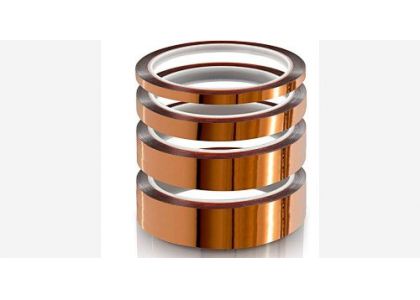
Manufacturers seeking leaner bills of materials and better thermal/electrical performance increasingly turn to Kapton Tape factory products and advanced Polyimide Films. By switching to thinner, higher-performance substrates and applying Customized Kapton Tapes where needed, design teams can reduce part counts, lower weight, and simplify assembly without sacrificing reliability. Specifying a High-Quality Polyimide Film early in the design phase lets cost engineers and electrical/mechanical engineers collaborate to remove redundant layers, minimize spacers or insulators, and ultimately reduce BOM complexity.
At the intersection of materials engineering and cost control, Kapton tape delivers a compelling value proposition. Its combination of thermal stability, mechanical strength and electrical insulation allows engineers to replace multi-component assemblies (for example, separate insulators + adhesives + protective sleeves) with a single thin-film solution. Cost engineering seeks to minimize both part count and lifecycle expense; Kapton Tape factory outputs—when properly specified—lower manufacturing time and reduce field failure rates, both of which feed directly into total cost of ownership calculations.
Key ways Kapton tape supports cost engineering:
Polyimide Films are prized for their ability to maintain properties at elevated temperatures, exhibit low dielectric constant, and resist chemicals and radiation. Newer film grades deliver the same insulation and barrier performance at reduced thicknesses. That change opens opportunities: where engineers once specified 0.125 mm layers, they can now use 0.025–0.05 mm high-performance films plus tailored adhesive systems. The result: fewer layers, fewer fasteners, and fewer secondary components.
Design implications:
Choosing thinner Polyimide Films—but of proven quality—delivers tangible advantages:
Material and manufacturing benefits
Lower material cost per assembly (less raw film used).
Reduced adhesive and backing requirements when tapes are optimized.
Faster curing and shorter processing times in lamination steps due to thinner stack-ups.
Performance benefits
Equal or superior thermal endurance when using advanced film chemistries.
Maintained dielectric strength in many applications thanks to improved film uniformity.
Reduced outgassing for vacuum or space applications when high-grade films are used.
Sustainability benefits
Less material consumption reduces waste and can lower packaging/shipping impacts—important for corporate sustainability metrics.
Customized Kapton Tapes are not a one-size-fits-all commodity: tailoring adhesive type, film thickness, and roll format can produce measurable gains in assembly throughput and field reliability. Examples of how properly specified Kapton solutions help:
Thermal management — applying a thin polyimide layer at hotspots can both insulate sensitive components and permit closer packing of electronics, reducing enclosure size and BOM for mechanical spacers.
Simplified harnessing — using adhesive-backed polyimide strips to secure wire bundles eliminates separate clamps and sleeves, cutting parts and labor time.
Manufacturing yield — tapes with consistent release behavior prevent contamination during reflow and cleaning steps, lowering scrap rates and rework.
Traceability and risk management — working with reputable Kapton Tape factory partners ensures batch testing, lot traceability and certificates (TDS, TGA, dielectric data), which are critical for regulated industries and high-reliability programs.
Case study A — Automotive ECU redesign (realistic, anonymized)
A Tier-1 supplier redesigned an ECU to reduce cost and weight. By replacing a multilayer ceramic insulator + adhesive stack with a targeted application of High-Quality Polyimide Film and a thin Kapton-backed tape in three hotspots, they removed two discrete parts from the BOM and reduced assembly labor time by 12%. Material cost fell by 8% per unit and the supplier reported a lower thermal delamination rate in accelerated testing.
Case study B — Consumer electronics miniaturization (simulated but representative)
A consumer electronics OEM needed to shrink a connector bay. Engineers replaced bulky thermoplastic standoffs with Customized Kapton Tapes that combined polyimide film and a high-temperature acrylic adhesive. The BOM dropped by three items, weight decreased by 6 g per device, and production cycle time for the assembly station improved by 15 seconds per unit—yielding significant annual savings at scale.
Case study C — Aerospace harness consolidation (field example)
An avionics contractor used thin Polyimide Films to rework harness separation requirements. Careful specification using supplier-provided dielectric data enabled tighter wiring layouts and removed several cable spacers and adhesive sleeves from the BOM. The upfront material cost per harness increased slightly, but overall installation time and total BOM cost decreased, and the harness passed RTCA DO-160 environmental testing with margin.
Not all polyimide tapes are created equal. When your objective is BOM reduction via thinner films, you must source from manufacturers who can demonstrate:
Ask suppliers for trial quantities and test certificates. A reputable Kapton Tape factory will support engineering trials and provide material samples matched to your thermal profile.
A strategic supplier relationship amplifies the benefits of polyimide films. Look for partners who:
Contract language should include acceptance criteria, test methods, and dispute resolution on material performance—this protects both purchaser and supplier when using advanced thin films in critical assemblies.
Reducing BOM through thinner Polyimide Films and smart application of Kapton Tape factory products is a practical, engineering-driven approach to cost optimization. The combination of material consolidation, weight reduction and simplified assembly delivers both immediate and lifecycle savings. To move forward:
Run a controlled pilot: replace selected multilayer assemblies with a polyimide-tape solution on 50–200 units and track yield, cycle time, and field performance.
Request detailed test data from shortlisted suppliers and include acceptance thresholds in prototype contracts.
Factor in non-recurring engineering (NRE) and the supplier’s supportability when calculating ROI.