
info@jxgreentape.com
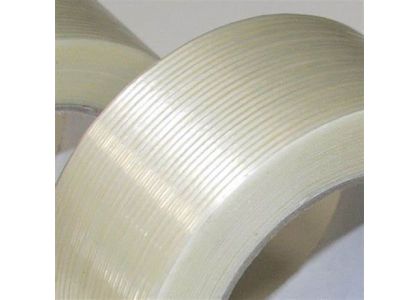
For many industrial buyers, Filament Bunding Tape is a purely functional consumable—used to secure steel bars, timber packs, pipes, or palletized machinery. Yet from an environmental standpoint, it is one of the most problematic packaging materials in circulation. Its combination of polymer backing, embedded glass filaments, and high-tack adhesive makes it durable in use—and persistent after disposal.
Today, every Filament Bunding Tape Manufacturer operates under increasing pressure from ESG audits, customer sustainability questionnaires, and regional waste directives. At the same time, Filament Bunding Tape Supplier networks continue to ship growing volumes to construction, logistics, and export packaging markets. Large-scale distribution by Filament Bunding Tape China Exporter channels further amplifies the issue, as tape applied in one regulatory region is often discarded in another with very different recycling infrastructure.
The problem is not theoretical. Industrial waste audits consistently show that filament-reinforced tapes are among the most frequently rejected contaminants in cardboard and plastic recycling streams. Once landfilled, the polypropylene backing and fiberglass reinforcement persist for decades, while adhesive residues leach slowly into surrounding material. This reality has turned what was once a “minor consumable” into a material now scrutinized at procurement, compliance, and corporate responsibility levels.
To understand recycling limitations, buyers first need to understand material construction—not marketing descriptions.
A standard Filament Bunding Tape Manufacturer design typically includes:
From a recycling perspective, this is a worst-case composite. Unlike mono-material films, these layers cannot be separated mechanically without significant energy input. Fiberglass filaments fracture during shredding, contaminating plastic regrind. Adhesive residues foul both polymer melt streams and glass recovery systems.
The challenge is not lack of intent, but physics, chemistry, and economics.
The very adhesive systems that give Filament Bunding Tape its holding power are incompatible with conventional recycling. High tack and cohesive strength mean residues remain bonded to fibers and films, clogging screens and reducing output quality.
Fiberglass does not melt or reform like thermoplastics. Once embedded and fractured, it lowers the value of any recovered plastic fraction and accelerates wear in recycling equipment.
A single roll occupies significant space but contributes little recoverable mass. Collection, transport, and processing costs often exceed the value of reclaimed material.
Despite these constraints, limited recycling pathways do exist.
Some facilities use thermal adhesive softening to detach tape from cardboard prior to pulping. Others deploy electrostatic separation to remove fiberglass fragments from shredded plastic streams. A small number of industrial processors employ pyrolysis to recover energy from contaminated tape waste.
However, these methods are capacity-limited, region-specific, and cost-sensitive. They are not universally available, and they require consistent waste streams to function economically. This is why recycling success varies dramatically depending on how Filament Bunding Tape Supplier programs are structured upstream.
In practice, recycling success is rarely determined by material design alone. The structure and behavior of the Filament Bunding Tape Supplier network often decide whether used tape ever enters a recovery pathway—or goes straight to landfill.
Most industrial users do not separate tape waste deliberately. Tape is stripped during unpacking, dropped on the floor, and swept into mixed waste. If a supplier’s responsibility ends at delivery, that material is effectively unrecoverable. By contrast, suppliers who embed recycling logic into distribution models can materially change outcomes.
Examples observed in the field include:Supplying tape with clearly documented disposal guidance aligned to local recycling capabilities
Offering optional take-back programs for high-volume customers (construction yards, export packers)
Coordinating with cardboard recyclers to define acceptable contamination thresholds and removal practicesWhere such systems exist, recycling rates for packaging streams containing Filament Bunding Tape improve measurably—not because the tape is suddenly “easy to recycle,” but because disposal behavior changes.
Export-driven supply chains introduce another layer of complexity. A Filament Bunding Tape China Exporter may ship product into markets governed by REACH, RoHS, or regional extended producer responsibility (EPR) frameworks, yet the tape is consumed and discarded thousands of kilometers away.
This creates three recurring compliance risks:
Regulatory mismatch
Adhesive chemistries permitted in one jurisdiction may render tape unrecyclable or non-compliant in another, even if performance is identical.
Traceability gaps
Once tape leaves the export packaging stage, there is often no documentation linking material composition to downstream disposal obligations.

Not all sustainability claims are equal. From an engineering perspective, only a narrow set of design changes produce measurable improvements in recyclability for Filament Bunding Tape Manufacturer products.
Changes with documented impact include:
Conversely, cosmetic changes—such as “eco” labeling or marginal bio-content—rarely alter end-of-life outcomes in real waste streams.
For buyers, this distinction matters. Evaluating sustainability claims without understanding processing constraints risks selecting products that look compliant on paper but fail in practice.
Even with improved design and supplier cooperation, recycling Filament Bunding Tape remains structurally limited in many applications.
Failure points commonly observed include:Outdoor job sites where tape is contaminated with cement dust or oils
Export packaging removed in regions without industrial recycling access
Mixed waste streams where tape volume is too low to justify separationFor procurement teams, this means environmental responsibility cannot be reduced to a single checkbox. Instead, buyers must decide where mitigation is realistic and where alternative strategies—such as waste-to-energy or controlled disposal—are more honest and effective.
Ignoring these limits creates risk. Overstated sustainability claims increasingly attract scrutiny during audits, customer reviews, and regulatory inspections.