
info@jxgreentape.com
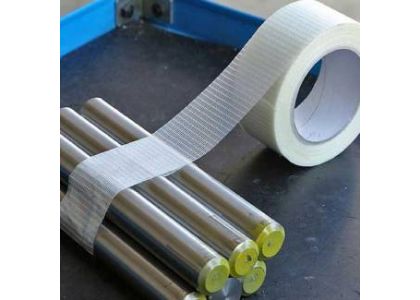
For B2B buyers and packaging engineers, the real question is rarely “Is this tape strong?”—it’s “Does it stay stable under vibration, handling, and edge pressure without creating safety or surface-damage risk?” In mixed industrial shipments, teams often use Filament Strapping Tape alongside Filament Bunding Tape and Filament Packing Tape depending on load geometry and failure mode. To keep performance consistent at scale, many operations standardize specs with a Filament tape supplier and validate repeatability from a qualified Filament tape manufacturer—not because it sounds better, but because batch variation becomes expensive fast.
The key is understanding what actually fails: carton edges collapse, pipes shift into gaps, straps snap back during cutting, or bundles loosen after repeated vibration cycles. The right securing choice is the one that controls those failure modes with the least operational friction.
Pallet loads fail in predictable ways: micro-slippage between cartons, corner compression, and gradual loosening after forklift impacts. In these cases, Filament Strapping Tape works best when it is treated as a load-path component, not “extra tape.”
What engineers look for on pallets:Controlled elongation (enough to absorb shock, not so much that cartons “walk”)
Split resistance (so the tape doesn’t tear lengthwise under edge stress)
Adhesion stability after temperature cycling (warehouse → truck → cross-dock)A practical approach used in audits is to test for:Vibration exposure
Edge stress (carton corners, pallet deckboard edges)
Removal behavior
If the pallet load is heavy but the surfaces are easy to bond (corrugate, clean wood), Filament Strapping Tape often replaces part of the steel strapping process—especially when teams want faster application and less risk of product surface scarring.
Pipes are a classic “looks secure until it isn’t” load. Steel straps can hold rigidly, but rigidity is also why failures become severe: sharp edges, surface dents, and snap-back risk during cutting. In pipe handling yards and construction distribution, Filament Bunding Tape is frequently chosen not because it is “stronger,” but because it spreads load and reduces damage risk.
Common pipe-bundling problems engineers report:Strap marks on coated pipe surfaces
Workers getting minor cuts or “snap-back” near-misses while removing metal straps
Bundle loosening after repeated vibration (especially when pipes are round and can roll microscopically)
What makes Filament Bunding Tape useful here is the combination of reinforcement + adhesive grip on the outer wrap, which helps resist lateral movement. On coated or dusty pipe surfaces, the adhesive system matters as much as reinforcement.
Not every securing job is “strap the load.” Many failures occur at the package level: cartons bulge, seams lift, and crates rack under handling stress. That’s where Filament Packing Tape is typically the better choice—especially for reinforcing seams, corner wraps, or creating secondary containment around a carton or small crate.
Where Filament Packing Tape tends to outperform general tapes:
Reinforcing long seams on heavy cartons
“H-pattern” sealing where the carton top is under internal pressure
Cross-wraps that protect against seam creep during storageA common engineering mistake is using one tape grade for everything. In practice, operations often standardize two: one optimized for pallet securing (strapping use) and one optimized for carton reinforcement (packing use). That reduces confusion on the floor and improves repeatability in audits.
|
Decision Factor |
Steel Strapping |
Filament Strapping Tape/Filament Bunding Tape/Filament Packing Tape |
|
Worker safety during cutting |
Snap-back and sharp-edge risk |
Lower snap-back risk, safer handling (still needs PPE) |
|
Surface protection |
Can dent/scar coatings |
Better surface friendliness when applied correctly |
|
Speed of application |
Slower; tools often required |
Faster manual application; simpler station setup |
|
Corrosion exposure |
Can rust in humid/salt-air environments |
No rust; adhesive performance must be chosen correctly |
|
Vibration behavior |
Rigid, can concentrate stress |
Controlled elongation can absorb shock and reduce edge damage |
|
Best-fit loads |
Very heavy, rigid items needing minimal stretch |
Mixed loads, coated surfaces, cartons/crates, many pipe bundles |
Selecting the correct securing solution is not about choosing the “strongest” option on paper. In practice, engineers evaluate how Filament Strapping Tape, Filament Bunding Tape, and Filament Packing Tape behave under specific failure modes. The most common mistakes happen when specifications are read in isolation, without considering how the load actually moves.
Key technical parameters procurement and engineering teams typically review include:
Test data relevance
Rather than generic claims, engineers often request peel and adhesion data referenced to standardized methods such as ASTM D3330. These figures help compare tapes under consistent conditions instead of relying on marketing language.Working with a capable Filament tape supplier allows teams to review these parameters early, reducing trial-and-error during rollout.
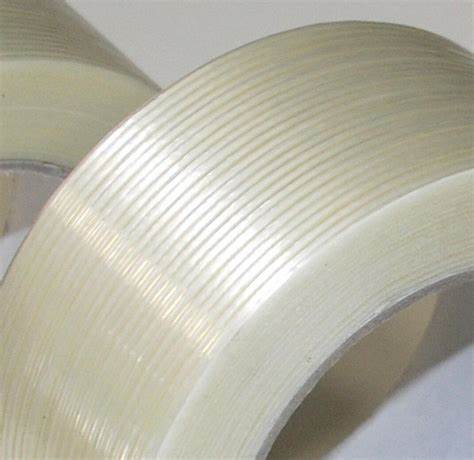
A regional infrastructure distributor handling coated steel pipes (3–6 meters in length) historically relied on steel strapping for outbound bundles. While static storage performance was acceptable, multiple operational issues emerged during transport and unloading:Coating damage at strap contact points after long-distance vibration
Minor hand injuries during strap cutting, particularly under tension
Inconsistent bundle tightness after repeated forklift handling
During a packaging review, the engineering team compared steel strapping against Filament Bunding Tape under controlled conditions:
Test conditions included:
Simulated vibration cycles representing road transport
Drop-and-settle tests during forklift repositioning
Manual cutting observations focused on safety and control
Observed outcomes:Bundles secured with Filament Bunding Tape showed no coating indentation after vibration exposure
Limited elastic compliance absorbed shock rather than transferring it to pipe surfaces
Cutting time per bundle decreased noticeably, and snap-back incidents were eliminatedAfter a three-month pilot, the distributor standardized the tape for coated pipe shipments. Load damage complaints dropped by approximately 20–25%, while unloading time per truck was reduced due to faster, safer removal. The decision was less about raw strength and more about reducing operational friction and downstream cost.
Once a tape solution proves effective, scaling it across sites introduces new risks. Variability between batches, widths, or adhesive lots can undermine earlier gains. Experienced buyers typically lock down several elements before expanding volume purchases:
Supplier capability review
A reliable Filament tape manufacturer should be able to explain how performance is monitored, not just what the nominal specification claims.At scale, the cost difference between tapes becomes secondary to predictability. Packaging failures disrupt logistics far more expensively than incremental material savings.
From pallets in distribution centers to pipes in construction supply chains, securing loads is fundamentally a risk-management exercise. Filament Strapping Tape, Filament Bunding Tape, and Filament Packing Tape succeed not because they replace every traditional method, but because they address specific failure modes more efficiently.
Organizations that align tape selection with real load behavior—and partner strategically with a knowledgeable Filament tape supplier—tend to see fewer damage claims, safer handling, and smoother operations. In industrial packaging, the right securing choice is rarely about strength alone; it is about control, consistency, and total system performance.