
info@jxgreentape.com
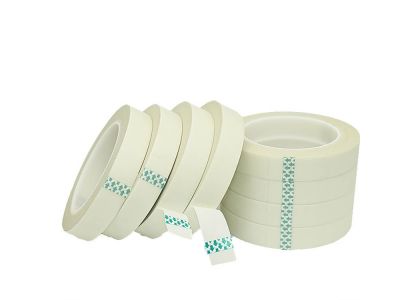
In industrial finishing, buyers do not run into tape problems because they forgot to ask for a “high-temperature” grade. They run into problems because the tape that looked acceptable on a datasheet behaves differently on the actual line. A masking tape can survive heat in a lab and still fail in production once airflow, dwell time, edge geometry, and removal timing start interacting. That is why glass cloth silicone tape keeps showing up in powder coating and selected thermal spray applications. Buyers use it when they need more than nominal heat resistance. They need dimensional stability, tougher handling, and a cleaner demask result under real process conditions. Public guidance from tesa, 3M, and Oerlikon all points in that direction: in these environments, performance is tied to the process window, not just a headline temperature number.
For powder coating, the usual priority is simple: keep the masking line sharp and remove the tape without turning a paint job into a cleaning job. Suppliers in this category emphasize clean removal after bake cycles, resistance to shrinking or curling, and stable edge definition during coating. Those are not marketing extras. They are the basic conditions for avoiding rework on finished parts.
Thermal spray changes the buying logic. Heat still matters, but impact resistance and holding power move much closer to the center of the decision. In harsher spray environments, a tape that works in powder coating may not be the right choice because the dominant failure mode is different. That distinction is where many generic blog posts fall apart. They lump all high-temperature masking into one bucket. Real production does not.
The biggest mistake buyers make is still the same one: they buy by temperature rating alone. That is convenient, but it is not disciplined sourcing. Powder coating references from PCI and major suppliers make it clear that cure profile matters. Oven temperature by itself tells only part of the story. Part temperature, dwell time, ramp rate, and even the thermal mass of the workpiece affect what the adhesive and backing actually experience. The same logic applies when a line runs unevenly from one zone to another. A tape that looks fine under average conditions may fail at the hottest lane or after a delayed removal event.
Residue complaints are a good example. In many factories, residue gets blamed on the tape first because that is the visible symptom. But residue often comes from process interaction rather than a single raw-material defect. Delayed demask, longer-than-planned dwell, contamination on the substrate, or poor rinse consistency can all change removal behavior. Surface-preparation guidance for coating operations repeatedly stresses that remaining films and inconsistent pretreatment affect downstream performance. That does not mean pretreatment explains every residue case. It does mean buyers should stop treating residue as a one-variable problem.
Edge lift is another expensive failure mode because it tends to look small until it creates finish defects, rework, or line slowdowns. On real parts, edge lift is often tied to curvature, poor application pressure, overspray accumulation near the tape line, or localized booth conditions. Flat coupon testing misses a lot of that. It is useful for screening, but it is not enough for approval. If a masking point matters to yield, the tape should be checked on the actual part shape, in the actual process position, under the actual cure or spray exposure.
This is also why buyers should care about backing strength and handling behavior instead of focusing only on adhesive claims. A tape that tears unpredictably, cracks after poor storage, or distorts during application can create variation before the part even reaches the oven. ASTM D3759 exists because tensile strength and elongation are meaningful variables for pressure-sensitive tapes. Those numbers do not tell the whole application story, but they are not decorative data either. They affect how consistently the tape can be applied and removed.
A good qualification process starts with the real operating window. For powder coating, that means validating the hottest realistic cure zone, the longest realistic dwell, and the removal timing the line actually sees when production is interrupted. For thermal spray, buyers need to add abrasion and position stability to the validation plan because the tape is being asked to do a harder job. Sources from 3M and Oerlikon both make clear that spray masking depends on more than thermal survival. Holding power and resistance to mechanical stress matter.
The next step is substrate-specific validation. Stainless steel, aluminum, coated fixtures, and pretreated metal do not behave the same way. ASTM D3330 is useful here because it provides a recognized method for comparing peel adhesion consistency. But buyers should use that method intelligently. A supplier saying “strong adhesion” is not giving you useful information unless you know how the peel was measured, on what substrate, and after what aging or exposure. Process-relevant data always beats generic claims.
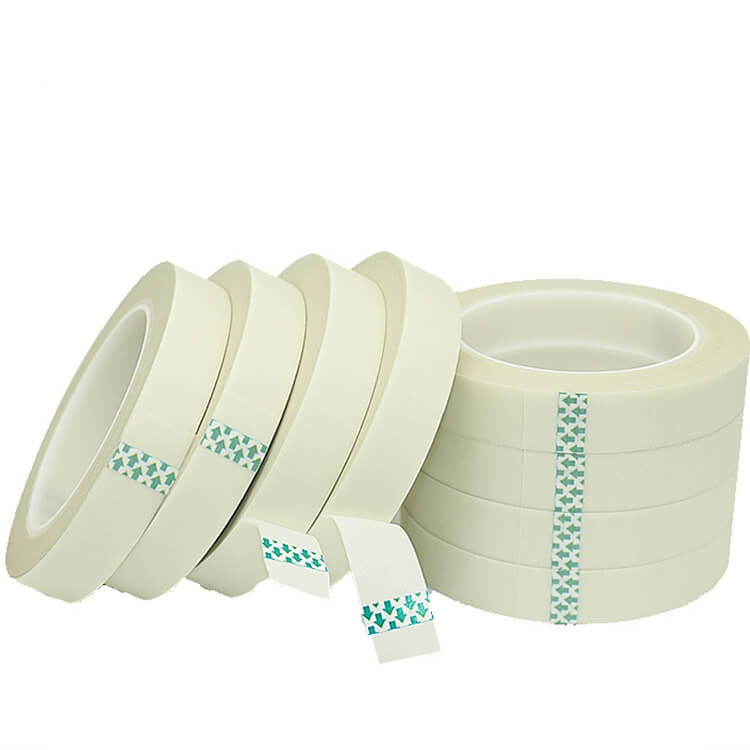
Factory-direct versus distributor supply should be handled more carefully than most articles suggest. The real issue is not which channel sounds more professional. The issue is where your production risk is created. If the line depends on narrow widths, repeatable unwind, slit accuracy, or stable lot-to-lot behavior, then tightly controlled factory-direct or converter-managed supply often makes more sense. In those cases, conversion quality is part of process control, not just packaging.
Distributor supply has a real advantage when plants need smaller quantities, mixed widths, or faster replenishment. That flexibility is valuable, especially in high-mix operations. But it is not a substitute for qualification. Buyers still need to know who slit the roll, what tolerance is controlled, and how lot traceability is maintained. Mature operations often end up with a hybrid model for exactly that reason: one qualified route for critical masking points, another for backup or lower-risk demand. That logic aligns well with the process-control mindset behind ISO 9001.
Most RFQs for masking tape are still too shallow. They ask for thickness, adhesive family, and roll size, then stop. That is fine if the tape is low-risk consumable stock. It is not fine when masking affects edge quality, demask labor, or cosmetic scrap. A serious RFQ should define the process environment: substrate type, pretreatment condition if relevant, cure or exposure profile, removal timing, and whether the tape sees powder only or a more aggressive spray process. If the application includes tight radii, narrow sealing lands, or manual placement variability, slit tolerance and edge quality should be specified too.
Traceability is another line item that weak suppliers often try to keep vague. That is a mistake on the buyer side. At minimum, ask for batch identification, shipment-level conformance documents, and change-notification expectations for backing, adhesive, or conversion conditions. If a supplier cannot explain how lot continuity is managed, the tape may still work today, but you do not have strong control of tomorrow’s risk.
One more caution is worth stating plainly: masking approval is not the same as electrical approval. Some glass cloth tapes are designed for electrical insulation near heaters, leads, or sensors, and 3M’s electrical literature makes that clear for specific products. But buyers should not assume every masking-grade glass cloth silicone tape is acceptable for electrical service. If the application crosses into electrical protection, the product data and certification need to support that use directly.
For most B2B teams, the practical rule is simple. Do not buy this tape as a generic “high-temp” item. Buy it as a process component. Validate it in the real window, ask better RFQ questions, and separate powder coating logic from thermal spray logic. That is where better sourcing decisions start.
1. Is glass cloth silicone tape always better than polyester tape for powder coating?
No. Polyester tapes are common in powder coating and often perform well in standard bake cycles. Glass cloth silicone tape becomes more attractive when buyers need better tear resistance, tougher handling, or more stability in difficult masking points. The right choice depends on the process window and failure mode, not on a blanket ranking.
2. What most often causes residue after high-temperature masking?
Usually a combination of delayed removal, longer dwell than planned, and variable substrate condition. In other words, residue is often a process interaction problem. Buyers should validate demask timing and test on real surfaces before treating it as a simple material failure.
3. What should buyers request in an RFQ?
Ask for substrate compatibility, peel test method, backing-strength data, slit tolerance, traceability, and change-control expectations. A basic datasheet is not enough when masking quality affects yield or finish appearance.
4. When should a plant move from standard rolls to custom slit or die-cut formats?
Usually when manual placement starts creating variation in edge quality, labor time, or fit on narrow masking zones. If operators are trimming tape on the line, the process may already be paying for inconsistency.
5. Can the same tape be approved for both masking and electrical insulation?
Only if the specific product data supports both uses. Some glass cloth tapes are built for electrical insulation, but that does not make every masking tape suitable for that job.
This article is informed by public guidance from Google Search Central, 3M, tesa, and Oerlikon Metco, as well as relevant ASTM test methods such as ASTM D3330, ASTM D3759, and ASTM D1000 where applicable.