
info@jxgreentape.com
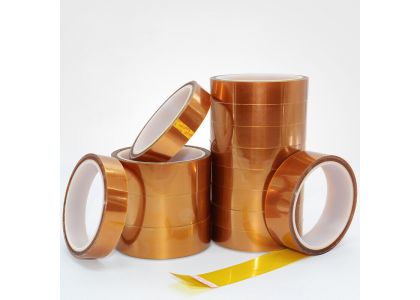
Kapton tape, or more generally polyimide film tape, is widely used when buyers need high-temperature stability, electrical insulation, and predictable performance in demanding manufacturing environments. It appears in PCB masking, coil and transformer insulation, high-temperature harness protection, and other processes where ordinary tapes may soften, shrink, or fail after heat exposure.
But this is where many sourcing decisions go wrong.
A lot of buyers compare one headline number on a datasheet and assume the job is done. The temperature rating looks high, the dielectric strength looks acceptable, and the tape gets approved. Then the real process starts: actual dwell time, repeated thermal cycling, different substrates, rework requirements, and removal after heat. At that point, the first thing that fails is often not the polyimide film. It is the adhesive through edge lift, residue, poor peel retention, or instability on the real surface.
That is the core point of this article. Kapton tape selection is not just a material question. It is a process question. This guide is written for B2B buyers, engineers, and technical sales teams who need a practical way to evaluate where polyimide tape fits, where it does not, and what to verify before placing a production order.
The first mistake is assuming that “high temperature” is one simple requirement. It is not. Peak temperature matters, but so do dwell time, number of cycles, ramp profile, substrate type, and whether the tape must remove cleanly. A tape that performs well in one short masking step may behave very differently in a longer cycle or on a lower-surface-energy material.
The second mistake is treating the film as the whole product. It is not. In real use, the full construction matters: film thickness, adhesive chemistry, adhesive coat weight, slit quality, and roll consistency in production. That is why serious evaluation should go beyond catalog language and focus on how the tape behaves in the actual process.
The third mistake is over-specifying. Some buyers jump to the thickest or most expensive option because it feels safer. That logic often creates new problems. Thicker constructions can improve handling and puncture resistance, but they also reduce conformability and can make wrapping tight geometries harder. In some jobs, a more balanced construction performs better than the heaviest one.
The short version is simple: do not buy Kapton tape by headline numbers alone.
This point needs to be stated clearly because the market often blurs it: standard Kapton tape is usually chosen because it survives heat, not because it moves heat efficiently.
Polyimide film is valued for thermal stability, electrical insulation, and dimensional stability. That makes it useful near hot zones, in solder masking, and in insulation tasks where the tape must hold its shape under thermal stress. But that does not make standard Kapton tape a thermal interface material or a heat spreader.
For buyers, the takeaway is straightforward. If the job is to maintain insulation integrity near heat, Kapton tape may be the right fit. If the job is to transfer heat efficiently into a heatsink or across a thermal path, you should be evaluating thermal interface materials or specially engineered thermally conductive constructions instead.
That distinction matters in electronics, power systems, and compact assemblies. It also prevents a common sourcing error: using standard polyimide tape to solve a thermal transfer problem it was never designed to solve.
Buyers often want simple rules like “thinner is more precise” or “thicker is stronger.” Neither rule is reliable by itself.
Thin polyimide tape can help when you need tight bends, limited clearance, or better conformability around complex shapes. That is why thinner constructions are often considered for dense electronics and fine masking work. But thin film can also be easier to damage during handling, more prone to tearing at edges, and less forgiving in manual application.
Thicker constructions can improve handling robustness and puncture resistance. But they are not automatically better either. On uneven or tight geometries, they may bridge rather than conform, which can create lift points after heating.
So what should drive the choice? Start with the dominant failure mode. If the real risk is abrasion, sharp edges, or handling damage, a slightly thicker backing may help. If the real constraint is bend radius, clearance, or masking detail, a thinner construction may be smarter. Then verify the adhesive behavior on the actual substrate instead of assuming the thickness decision solved the whole problem.
Kapton tape is a good candidate when the application genuinely combines heat exposure with insulation or process stability requirements.
In PCB and electronics manufacturing, it is commonly used for masking in high-temperature processes and for temporary insulation or surface protection. This is a real industrial use case, not vague marketing language. When the process includes solder masking or localized heat exposure, dimensional stability and clean removal after the cycle become more important than generic “high-temp tape” claims.
In electrical insulation, especially around coils, transformers, motors, and similar components, polyimide tape remains relevant because the tape must maintain separation under heat stress. Here, buyers should care about more than the phrase “non-conductive.” Dielectric suitability, aging behavior, and adhesive stability under real temperature exposure matter more than a broad product label.
In wire and cable wrapping, Kapton tape can make sense when temperature margin and insulation stability are the real constraints. But this needs honesty: it is not the default answer for every harness job. Many harness applications are better served by PET cloth, PVC, or fabric tapes when the priorities are cost, noise damping, flexibility, or general abrasion resistance. Kapton becomes more relevant when the environment is hotter, the insulation demands are stricter, or the assembly will see process heat that ordinary tapes do not tolerate well.
That kind of application filtering is exactly what good B2B content should do. It should narrow the fit, not pretend one product is right for everything.

Custom converting sounds attractive because it promises a tailored answer: exact width, die-cut format, controlled roll length, special core size, and application-specific tolerances. All of that can be useful.
But custom converting does not fix a vague specification.
If your RFQ only says “high-temperature Kapton tape,” you are leaving too much open to guesswork. A useful RFQ should define the actual process: maximum temperature, dwell time, expected cycle count, substrate type, need for clean removal or permanent bond, whether residue is acceptable, insulation requirement, and whether the tape will be applied manually or automatically.
This matters because many tape failures are not truly tape failures. They are specification failures. The wrong adhesive is chosen for the surface. The buyer expects clean removal after a heat profile the supplier was never told about. Or the tape is qualified on one surface and later applied to a very different one in production.
If the supplier has to guess, the tape is already under-specified.
|
Property |
Common Buyer Assumption |
What Usually Limits Real Performance |
What to Verify |
|
Temperature resistance |
“The max temperature rating is enough.” |
Adhesive behavior under dwell time and cycling often limits performance first. |
Post-heat peel, residue, edge lift |
|
Dielectric strength |
“A high number solves insulation risk.” |
Edge design, contamination, humidity, and aging can still create failure. |
Application-relevant dielectric checks |
|
Peel adhesion |
“Higher adhesion is safer.” |
Too high can damage surfaces; too low can lift under heat. |
Substrate-specific peel checks |
|
Shear/holding power |
“If it sticks initially, it will stay put.” |
Slippage under heat or load can create process instability. |
Holding power under relevant conditions |
|
Film thickness |
“Thicker is stronger, thinner is better for detail.” |
Both trade off handling, conformability, and edge durability. |
Match thickness to the main failure mode |
|
Clean removal |
“High-temp tape should remove cleanly.” |
Removal depends on heat profile, substrate, and adhesive chemistry. |
Representative post-process removal test |
Before a full release, run a small qualification on the actual substrate and through the real process. Do not rely only on generic supplier values.
At minimum, confirm these points:
· peel behavior after representative thermal exposure
· visible residue or adhesive transfer after removal
· edge lift during or after heating
· insulation suitability for the intended function
· roll consistency if the tape will run on automated equipment
This is also where buyers need discipline. Qualification on stainless steel does not automatically predict behavior on coated metal, plastic, powder-coated parts, or cable jackets. A tape that removes cleanly after one short cycle may not remove cleanly after repeated dwell at temperature. Those differences are exactly where production problems start.
Kapton tape remains a strong industrial option when the application truly needs heat resistance, electrical insulation, and dimensional stability. But good selection depends on disciplined matching, not brand familiarity or one attractive datasheet value.
If there is one point worth remembering, it is this: buyers usually get into trouble when they judge the film and ignore the adhesive under the real process profile.
That is where qualification should begin.
Q1: What matters more in high-temperature use: the polyimide film or the adhesive?
Both matter, but in real production the adhesive often becomes the first practical limit. The film may remain stable while the adhesive loses hold, leaves residue, or lifts at the edges after heat exposure.
Q2: Is Kapton tape a good heat-transfer material?
Usually no. Standard Kapton tape is mainly chosen for heat resistance and insulation. If the design goal is heat transfer, evaluate thermal interface materials or specially engineered thermally conductive products instead.
Q3: Why does Kapton tape sometimes leave residue after heat exposure?
Residue depends on adhesive chemistry, dwell time, surface condition, and the actual substrate. A clean-removal claim should always be verified under the real thermal profile.
Q4: Is Kapton tape the best choice for every cable harness application?
No. It is a strong option when heat and insulation stability are critical, but many harness jobs are better served by PET cloth, PVC, or fabric tapes depending on cost and performance priorities.
Q5: What should be included in an RFQ for custom polyimide tape?
At minimum: substrate, temperature profile, dwell time, cycle count, required thickness, need for clean removal, insulation requirement, and whether the tape will be applied manually or automatically.
· ASTM D1000 – test methods for pressure-sensitive adhesive-coated tapes used in electrical and electronic applications
· ASTM D3330 – peel adhesion of pressure-sensitive tape
· ASTM D3654 – shear adhesion and holding power of pressure-sensitive tapes
· ASTM D149 – dielectric breakdown voltage of solid electrical insulating materials
· UL 746 series – evaluation framework for polymeric materials used in electrical equipment
· DuPont™ Kapton® technical materials – standard Kapton film and thermally conductive Kapton MT / MT+ references
3M™ and tesa® polyimide tape technical documents – representative industrial uses including solder masking, insulation, and cable-related applications