
info@jxgreentape.com
In high-voltage systems, insulation problems rarely begin with a sudden breakdown. More often, they develop gradually through edge stress, contamination, partial discharge, or adhesive degradation after repeated thermal cycling. This is why insulation reliability cannot be judged only by a single datasheet value. In practice, how the tape behaves after installation is often more important than its nominal specification.
Kapton tape, based on polyimide film, is widely used where electrical insulation must tolerate heat, vibration, and long-term electrical stress. Engineers focus on dielectric performance and stability under real operating conditions, while procurement teams care about supply consistency, documentation, and predictable pricing. Both perspectives ultimately point to the same goal: reliable insulation over time rather than short-term performance on paper.
Dielectric strength describes the maximum electric field an insulating material can withstand before electrical breakdown occurs. In high-voltage applications, it directly affects whether insulation can prevent arcing, tracking, or unexpected electrical failures.
Kapton tape is commonly selected because polyimide film maintains stable insulating properties across wide temperature ranges. Dielectric strength is often reported using methods such as ASTM D149, although results depend on factors such as film thickness, humidity, electrode configuration, and test environment. In real assemblies, insulation failures are often influenced by edge conditions or interfaces rather than bulk material breakdown.
Industries working with motors, transformers, and aerospace wiring typically require repeatable dielectric performance across production batches. Engineering teams therefore rely on test data and application-level validation rather than marketing descriptions alone when approving insulation materials.
Kapton tape performs well in high-voltage environments because several characteristics support insulation reliability when combined correctly.
High Dielectric Strength
Helps resist electrical breakdown and reduce leakage risk when thickness and application design are properly matched.
Thermal Stability
Polyimide film can maintain performance under elevated temperatures. In many real applications, long-term reliability depends on adhesive stability during thermal cycling rather than film capability alone.
Chemical Resistance
Resistance to oils, solvents, and industrial exposure helps preserve insulation performance over extended service periods.
Mechanical Integrity
Dimensional stability under vibration and stress helps prevent movement or gaps that may increase electrical risk.
These properties explain why Kapton tape is widely used in motor insulation, PCB masking, cable protection, and high-voltage connector applications. Even so, engineers normally validate performance through process-specific testing rather than relying only on general property descriptions.
The Kapton tape supply chain includes global manufacturers, specialized converters, and regional distributors. Reliability usually depends less on brand size and more on manufacturing control and consistency.
A qualified supplier typically provides:
Factory-direct sourcing can improve cost competitiveness for large programs, but most engineering teams still run sample validation before full approval. Comparing multiple production lots early helps identify differences that may affect long-term insulation reliability.
Many engineers assume that higher dielectric strength automatically means safer insulation. In reality, several high-voltage failures occur not because the film breaks down, but because adhesive behavior, dielectric loss, or environmental factors introduce unexpected stress points. Real applications show that insulation reliability is often controlled by details beyond the headline specification.
Aerospace and LEO satellite wiring
In low-earth-orbit (LEO) satellite systems, insulation materials must survive vacuum exposure, radiation, and extreme temperature cycling. Kapton tape is commonly used in wire harness protection, but qualification typically goes beyond dielectric strength alone. Materials often need to pass outgassing tests such as ASTM E595 to limit volatile contamination, which can contribute to corona discharge risk in high-voltage environments. Engineers therefore evaluate both electrical insulation and vacuum compatibility during approval.
High-voltage motor windings and inverter systems
In modern electric drive systems, especially high-frequency environments, insulation stress often comes from partial discharge rather than simple steady-state voltage. Engineers may pay closer attention to edge condition, adhesive stability, and dielectric loss behavior under switching loads. In practice, failures frequently initiate near winding edges where electric field concentration is highest, which is why sample builds and aging tests are commonly used before production release.
PCB assembly under high-temperature processes
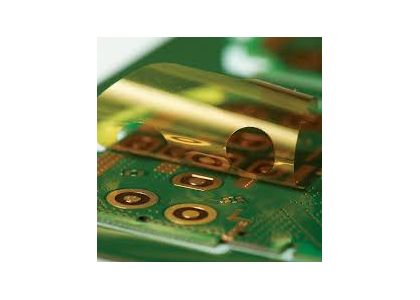
During wave soldering or rework operations, Kapton tape is used for masking and localized insulation. The film generally tolerates the heat, but manufacturing issues often arise from adhesive residue or edge lifting after repeated exposure. Engineering teams therefore validate clean removal on real board surfaces and confirm that insulation margins remain stable after processing.
Power distribution and high-voltage connectors
In transformers and high-voltage connector assemblies, Kapton tape helps maintain insulation spacing between conductive components. Long-term reliability depends on consistent thickness, accurate edge alignment, and clean assembly conditions. Engineers typically evaluate insulation performance after humidity and thermal aging rather than relying solely on initial dielectric strength measurements.
Across these applications, the main lesson is consistent: insulation reliability is rarely defined by a single parameter. Performance comes from matching material behavior — including adhesive and environmental response — to real operating conditions.
Selecting a supplier requires alignment between engineering requirements and procurement strategy. Price is important, but consistency and validation support are usually more critical for high-voltage insulation.
Common evaluation points include:
Suppliers offering technical support during qualification can often reduce validation time and help prevent later production risks.
High-voltage products often remain in production for years, which makes stable supplier relationships valuable. Frequent supplier changes may reduce short-term cost but can introduce new variables into insulation performance.
Long-term cooperation allows suppliers to understand real operating conditions and suggest incremental improvements, such as adhesive adjustments or thickness optimization. Over time, these small changes can improve reliability and manufacturing efficiency without major redesign.
Kapton tape’s dielectric strength makes it a widely used insulation option in high-voltage applications, but reliable performance depends on more than a single specification. Edge conditions, adhesive behavior, environmental exposure, and supplier consistency all influence long-term results.
Engineering teams typically rely on application-based validation, while procurement teams focus on stable sourcing and documented quality. Balancing technical evaluation with practical supply decisions helps reduce risk and maintain dependable insulation performance across long production cycles.