
info@jxgreentape.com

1. Introduction: Is the Heavy-Duty Version Really Worth Paying For?
2. What Both Grades Have in Common
3. Where Standard Grade Usually Makes Sense
4. When Heavy Duty Grade Becomes Worth Testing
5. When Heavy Duty Does Not Pay Back
6. Upgrade Strength or Adjust Width?
7. Handling, Cutting, and Dispenser Fit
8. Cost per Roll vs Cost per Protected Package
9. Technical Checks Before Switching Grade
10. Quick Selection Table
11. What to Send Before Asking for a Recommendation
12. FAQ
Two tapes, two prices, and one familiar question: is the heavy-duty version really worth paying for?
For international buyers and packaging engineers, the answer is not always yes. A stronger mono filament strapping tape only makes sense when it reduces real packaging risk: fewer loose bundles, fewer open cartons, less rework, less tape used per package, or fewer complaints after export shipping.
This article stays within the mono filament strapping tape family. We are comparing Standard Grade and Heavy Duty Grade, not bi-directional tape. If your package tears from more than one direction, that is a different selection question.
Here, the goal is practical: decide when Standard Grade is enough, when Heavy Duty Grade is worth testing, and when the real fix is not a stronger tape at all.

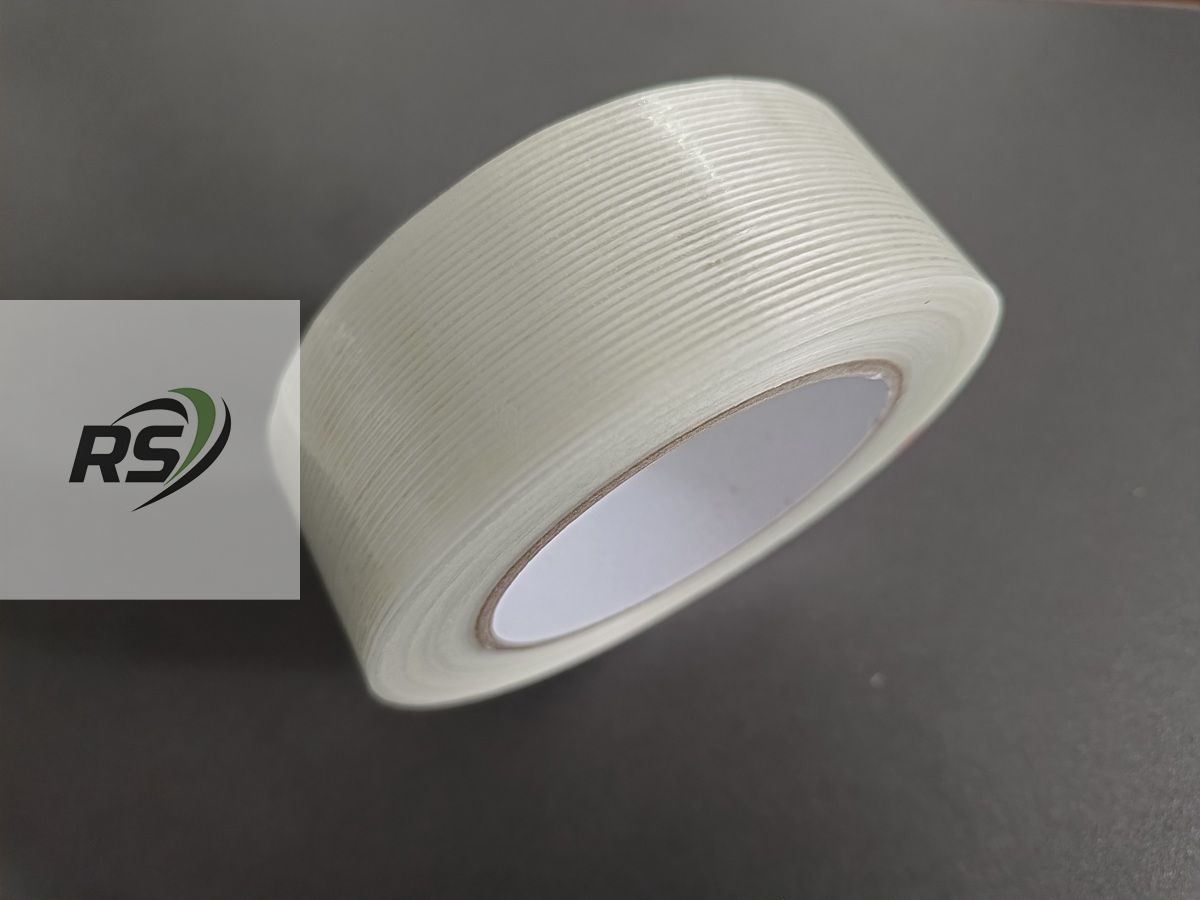
Standard Grade and Heavy Duty Grade both belong to the same mono filament strapping tape structure. The fiberglass reinforcement mainly runs along the tape length, so the tape is best suited for loads that pull in one main direction.
That makes mono filament tape useful for carton reinforcement, pipe and tube bundling, rod and profile bundling, edge securing, and many warehouse packaging jobs. It is different from regular packing tape because the fiberglass reinforcement helps control stretch and tensile performance.
In most packaging lines, mono tape is the first product to consider when the load is linear and predictable. If the package twists, splits sideways, or tears from different directions, bi-directional tape may be a better starting point. But when the force is mostly straight, mono tape is usually the more cost-effective structure.
Standard Grade filament tape is not cheap tape. It is the practical grade when the packaging risk does not justify a heavier structure.
It usually makes sense for regular carton reinforcement, light-to-medium bundling, daily warehouse packaging, predictable linear loads, and high-volume packaging lines where unit cost matters. If a carton only needs extra edge support, or a bundle of light plastic tubes needs to stay together during internal handling, Standard Grade is often the workhorse.
For many daily industrial bundling tape jobs, Standard Grade is still the cost-effective filament tape choice. It gives enough reinforcement without forcing the buyer to pay for strength that the package may never use.
This is where some sourcing teams over-specify. They choose heavy duty tape because it feels safer, but the package does not actually need it. The result is higher material cost without a clear reduction in failure risk.
A simple rule helps: if the current standard tape holds with one or two clean strips, does not lift, and does not require rework, upgrading may not add much value.
Heavy Duty Grade becomes worth testing when the standard grade starts showing limits.
Typical signs include heavy cartons that keep opening, long pipes or rods that loosen during handling, export packages that face repeated movement, or bundles that need several wraps of standard tape. If operators keep adding tape to solve the same problem, the cheaper roll may not be cheaper anymore.
In these cases, a heavy duty packaging tape may be worth testing if it reduces repeated wrapping, rework, or customer claims. It may also help when the packaging line needs stronger holding with fewer strips.
But the word is testing. Do not upgrade only because a product page says “heavy duty.” Check whether the stronger grade actually reduces tape use or failure risk in your real package.
Heavy Duty Grade does not solve every packaging problem.
A stronger tape does not fix a weak carton, a dirty surface, or the wrong packaging design. If the carton surface tears before the tape breaks, the issue may be board strength or contact area. If the tape lifts at the edge, the issue may be adhesive fit, surface dust, coating, humidity, or poor application pressure.
If the package shifts in several directions, the issue may not be mono tape strength at all. You may need bi-directional tape, better load control, or a different packaging method.
There are also cases where the load needs a different system. A heavy pallet may require strapping, stretch film, corner board, or redesigned packaging. Heavy duty mono tape can support selected light-to-medium reinforcement or bundling jobs, but it should not be sold as a full replacement for steel or plastic strapping.
Sometimes the best answer is not “buy the stronger tape.” It may be “use a wider tape,” “improve the carton,” or “change the securing method.”
Some failures look like strength problems, but they are really contact area problems.
If the tape is too narrow, stress is concentrated in a small strip. A wider tape can spread the load over more surface area and may hold better, even if the tape grade stays the same. This is especially important on corrugated cartons, recycled board, or surfaces that tear easily.
For regular carton reinforcement tape applications, width and surface contact are often as important as tensile strength. If the board tears before the tape breaks, upgrading to Heavy Duty Grade may not solve the problem. A wider tape, better placement, or stronger carton board may do more.
Of course, wider tape also costs more per meter. That is why width should be tested together with grade, not guessed from a catalog.
The practical check is simple: look at the failure point. If the tape breaks cleanly, grade may matter. If the board tears, width and carton strength matter. If the tape peels away, adhesive and application pressure matter.
Heavy Duty Grade may be thicker, stiffer, or harder to cut than standard grade. That can affect daily use.
In manual packing, operators may notice more effort when cutting or applying the tape. In semi-automatic or automatic use, the tape should be checked with the dispenser, blade, unwind tension, and application head. A tape can look excellent on a data sheet but still slow down a line if it does not cut, unwind, or apply cleanly.
This does not mean heavy duty tape is difficult to use. It means handling should be part of the trial. If your line uses hand dispensers, L-clip machines, or fixed tape heads, test the application process, not only the final holding result.
Also ask the operators. If a tape holds well but slows packing speed or creates messy cuts, the total cost may rise even if the package looks stronger.
A lower roll price does not always mean lower packaging cost.
For B2B buyers, the better unit is cost per protected package. How many meters are used per carton or bundle? How many strips are required? Does the tape reduce loose bundles, open cartons, downtime, or customer complaints?
If Standard Grade needs multiple wraps and still fails on export packaging, Heavy Duty Grade may reduce total use and labor. If it is applied to a simple light-duty carton, it may just be over-specification.
A practical in-house trial is to compare three packages side by side: standard grade at the current width, standard grade at a wider width, and heavy duty grade. After storage and handling, check tape lift, carton tear, bundle movement, application speed, and operator feedback.
This kind of trial is not complicated. It simply prevents a common buying mistake: choosing the tape with the lowest roll price, or the tape with the strongest label, without checking what happens on the real package.
Before switching from Standard Grade to Heavy Duty Grade, check more than tensile strength.
Useful items include tensile strength, elongation at break, peel adhesion, holding power or shear resistance, tape width, adhesive type, total thickness, surface compatibility, and dispenser fit. Tensile strength and elongation may be tested under methods such as ASTM D3759, while peel adhesion may be evaluated under ASTM D3330/D3330M, depending on the data sheet and test setup.
Do not compare numbers blindly. Two data sheets may use different test conditions, backing structures, adhesive systems, or sample preparation. Request the actual TDS before comparing tensile strength, peel adhesion, thickness, and roll specifications.
For important packages, sample testing on the real carton, tube, profile, or bundle is more reliable than choosing by headline strength.
|
Situation |
Better Starting Point |
|
Regular carton reinforcement |
Standard Grade |
|
Light-to-medium bundling |
Standard Grade |
|
Daily industrial bundling tape jobs |
Standard Grade |
|
Standard tape needs too many wraps |
Heavy Duty Grade |
|
Heavy cartons keep opening |
Heavy Duty Grade |
|
Carton surface tears before tape breaks |
Recheck width or carton strength |
|
Multi-direction tearing |
Consider bi-directional tape instead |
|
Tape is hard to cut or rebounds after application |
Check dispenser fit and tape thickness |
|
Packaging still fails after stronger tape |
Review carton design or securing method |
You do not need to prepare a long engineering file. A few details are enough to start:
· carton or product weight;
· surface material;
· current tape width;
· current failure problem;
· shipping route;
· manual or machine application;
· failure photo, if available.
With this information, a supplier can suggest whether Standard Grade, Heavy Duty Grade, wider tape, or another structure is the better sample to test.
If you are comparing options for export packaging, send the current tape width, carton weight, surface material, and failure photo. We can help check whether a standard grade filament tape, heavy duty filament tape, wider tape, or different reinforcement structure is the more reasonable starting point.
This article focuses on Standard Grade vs Heavy Duty Grade mono filament strapping tape. For the full application overview, visit our Industrial Packaging Solutions page.
For next-step research, you may also find these resources useful:
- [Industrial tape buying guides] — for RFQ preparation, sample testing, supplier questions, and bulk purchase checks.
- [Industrial tape material comparison guides] — for comparing mono, bi-directional, double sided, liner, adhesive, and backing options.
- [Filament tape failure analysis guides]— for diagnosing tape breakage, edge lift, carton tearing, loose bundles, and rework.
- [Adhesive tape technical guides]— for understanding tensile strength, peel adhesion, holding power, elongation, TDS data, and test methods.
Is Standard Grade suitable for export packaging?
Yes, if the carton weight, tape width, surface condition, and transport risk are within the tested range. Standard Grade is not a low-quality option, but it should not be used blindly when packages repeatedly open or bundles loosen.
When should I upgrade to Heavy Duty Grade?
Upgrade when Standard Grade needs too many wraps, heavy cartons still open, bundles loosen after handling, or rework becomes common. The upgrade should reduce real packaging risk, not just look stronger on paper.
Is Heavy Duty mono tape always better?
No. Heavy Duty Grade may be unnecessary for light packages, and it may affect cutting or dispenser handling. If the problem is weak carton board, poor adhesion, or multi-direction tearing, a stronger mono tape may not solve it.
Should I use wider tape or stronger tape?
Check the failure point first. If the tape breaks, stronger tape may help. If the carton surface tears or stress is too concentrated, wider tape or better placement may be more effective.
Can Heavy Duty mono replace steel strapping?
Only in selected light-to-medium reinforcement or bundling applications. For very heavy loads, sharp materials, or safety-critical securing, steel or plastic strapping may still be required. Always test under the real shipping condition.
How to Choose the Right Filament Tape for Bundling, Palletizing, and Transport Securing
Filament Tape Failure and Selection for Heavy-Duty Packaging