
info@jxgreentape.com
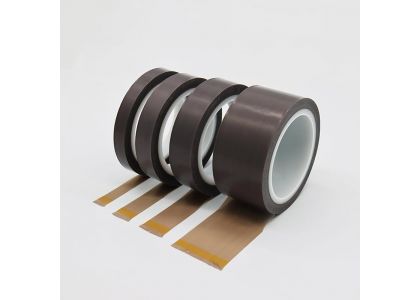
In many industrial projects, the switch to quality PTFE Film tape does not begin with performance optimization, but with failure investigation. Engineering teams often revisit insulation choices only after repeated downtime, unexpected residue, or material degradation has already occurred. In these situations, sourcing paths such as PTFE Skived Film Tape factories, a long-term PTFE Skived Film Tape supplier, or a bulk order Teflon Film Tape program are evaluated alongside cost factors like PTFE Film tape wholesale price. What initially appears as a search for the best PTFE Skived Film Tape is, in reality, an effort to eliminate risks that Kapton or Polyester solutions could not control under actual operating conditions.
Kapton and Polyester tapes are widely used because, on datasheets, they appear to satisfy most heat shielding requirements. Temperature ratings are close, chemical resistance is acceptable, and cost advantages are clear. However, field failures rarely occur because a temperature limit was exceeded by a narrow margin.
Instead, problems typically arise from combined stresses:
These interactions are not captured in simple specification tables, yet they dominate long-term performance in real equipment.
In several industrial heating and electronics assembly environments, Kapton tape initially performed as expected but began to crack after repeated thermal cycling combined with mechanical constraint. The cracking was not immediately visible and only became apparent after insulation failure or electrical leakage occurred.
Polyester tape, while cost-effective, has shown dimensional instability near sustained heat sources. In packaging equipment, this often leads to gradual shrinkage, exposing metal surfaces and causing polymer buildup or contamination.
These are not marginal issues. They directly increase maintenance frequency, downtime, and rework cost—factors that rarely appear in early-stage material comparisons.
PTFE film tape is not typically selected as a first option in cost-sensitive designs. It is chosen when other materials introduce failure modes that cannot be mitigated through process adjustment.
Key reasons include:
These properties become decisive in environments where Kapton becomes brittle or Polyester loses shape, even if their nominal temperature ratings appear sufficient.
What differentiates high-quality PTFE film tape in heat shielding is not a single specification, but the way multiple properties interact under stress:
This is why PTFE-based solutions are frequently adopted in aerospace, semiconductor manufacturing, and high-temperature industrial equipment—sectors where failure cost outweighs material price.
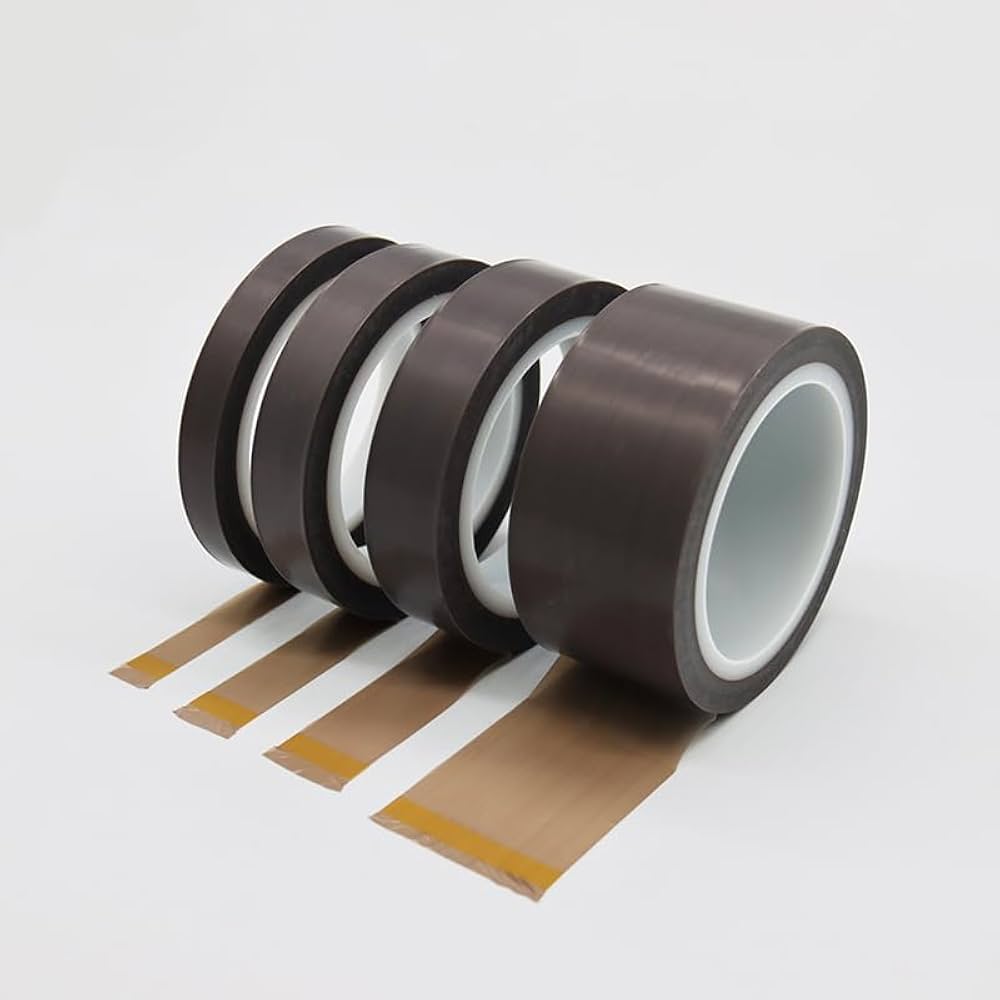
A Tier 1 automotive supplier producing electric vehicle components experienced recurring heat-related damage near battery connectors. Initial insulation materials met validation criteria but degraded under vibration and sustained thermal load.
After consulting a PTFE Skived Film Tape supplier, the company standardized an OEM bulk Teflon Film Tape specification across multiple platforms. The objective was not higher peak temperature resistance, but reduced variation and improved long-term stability.
Following implementation, thermal-related failures decreased significantly, and warranty claims linked to insulation damage dropped by approximately 40%. The decision was driven by risk reduction rather than headline performance gains.
In aerospace manufacturing, insulation failure cannot be tolerated, even when exposure time is limited. One satellite component supplier required heat shielding that would not degrade under high vacuum and elevated temperature.
Heat sealing PTFE tape sourced from qualified PTFE Skived Film Tape factories was applied to telemetry wiring and thermal interfaces. Testing confirmed stable performance beyond 240°C, but more importantly, no residue or surface interaction was observed during assembly and inspection—an issue that alternative tapes had failed to control.
In practice, material selection follows a different logic than datasheet comparison:
For applications requiring customization, direct collaboration with PTFE Skived Film Tape factories often delivers better outcomes than off-the-shelf substitutions.
PTFE film tape is not universally superior in all scenarios. It is selected because it removes specific risks that Kapton and Polyester introduce under combined thermal, mechanical, and chemical stress.
Organizations that adopt PTFE solutions typically do so after experiencing failures, not as an upgrade for marginal gains. Whether the project involves sourcing the best PTFE Skived Film Tape or committing to a bulk order Teflon Film Tape program, the real objective is long-term stability rather than short-term performance metrics.