
info@jxgreentape.com
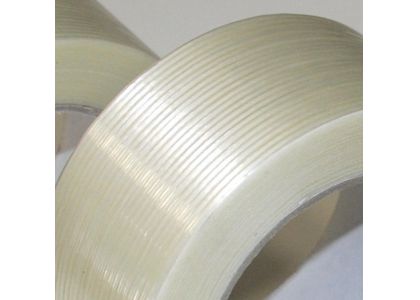
In the world of manufacturing and logistics, choosing the right filament tape isn't just about the upfront roll price—it's about calculating the true filament tape cost per load. This metric factors in material costs, labor efficiency, and the hidden expenses from failures and rework, ultimately driving better filament tape ROI. In this guide, we'll break down why focusing on cost per load beats roll pricing, compare three popular tape options, and provide actionable strategies like buying filament tape in bulk to maximize savings. Backed by real-world data and a simple model, you'll learn how to calculate filament tape ROI and achieve reliable, long-term results.
Many teams in manufacturing and logistics default to buying tape based on roll price alone—a common pitfall. Instead, prioritize filament tape cost per load, which combines material expenses, application labor, and the costs of failures or rework. Our easy-to-follow model demonstrates why premium, high-performance filament tapes often deliver superior filament tape ROI, even at a higher initial cost. We'll explore bulk purchasing strategies, a procurement checklist, and tips to ensure consistent savings. Use this as a blueprint to align your procurement, operations, and finance teams for measurable gains.
Quick Tip: Wondering how to calculate filament tape ROI? Jump to the worked example or download a free Excel template at the end.
A single pallet failure or loose wire harness can rack up costs far beyond the tape itself, including rework labor, return shipping, delayed deliveries, and customer complaints. By shifting focus to filament tape cost per load, you create a unified metric that reveals the full picture. This approach helps objectively evaluate options, quantify filament tape ROI, and tailor decisions to your specific operations, whether for short-haul shipping or high-vibration environments.
Calculating filament tape cost per load boils down to three key factors:
· Material Cost: Based on roll price, length, and usage per load.
· Labor Cost: Time spent applying the tape, converted to wage expenses.
· Expected Failure/Rework Cost: Failure probability multiplied by average damage or fix costs.
While all drivers matter, reducing failure rates often yields the biggest boost to filament tape ROI, especially in high-stakes scenarios like export shipping.
We modeled three common industrial tape choices:
· General-Purpose Packing Tape (Non-Filament): Cheapest upfront but weakest in strength, ideal for light-duty tasks.
· Standard Filament Tape: Fiberglass-reinforced for balanced performance in mixed loads and medium-distance shipping.
· High-Tensile Filament Tape: Premium option for demanding routes, with superior durability despite higher roll costs.
Plug in your own data to customize these comparisons for accurate filament tape ROI insights.
Start with your real numbers for the best results. Here's a set of conservative industry benchmarks to illustrate the process:
· Hourly wage (fully loaded): $20.00
· Roll length: 50 meters
· Roll prices (bulk): General-purpose $1.40; Standard filament $2.10; High-tensile $2.60
· Tape used per load: General-purpose 3.0 m; Standard 2.8 m; High-tensile 2.5 m
· Application time per load: General-purpose 22 seconds; Standard 18 seconds; High-tensile 16 seconds
· Failure rate per load: General-purpose 5.0%; Standard 2.0%; High-tensile 0.8%
· Average rework/damage cost per failure: $4.50
The basic steps are:
1. Material cost = (Roll price / Roll length) × Meters used
2. Labor cost = (Seconds per load / 3600) × Hourly wage
3. Expected failure cost = Failure rate × Rework cost
4. Total cost per load = Material + Labor + Expected failure
Copy these into a spreadsheet for quick "what-if" scenarios.
We've simplified the calculations: Use the formulas above to compute each part, then see the results below. For full transparency, plug these into Excel—detailed steps are in the inputs section.
· Material: $0.084
· Labor: $0.122
· Failure: $0.225
· Total per Load: $0.431
· Material: $0.118
· Labor: $0.100
· Failure: $0.090
· Total per Load: $0.308
· Material: $0.130
· Labor: $0.089
· Failure: $0.036
· Total per Load: $0.255
|
Option |
Per Load Cost |
Annualized (10,000 Loads) |
Savings vs. Option A (Annual) |
|
A: General-Purpose |
$0.431 |
$4,310 |
- |
|
B: Standard Filament |
$0.308 |
$3,080 |
$1,230 |
|
C: High-Tensile |
$0.255 |
$2,550 |
$1,760 |
High-tensile tape wins on filament tape ROI, thanks to lower failures and faster application. This shows how to calculate filament tape ROI in practice—premium options often pay off.
Key variables can shift outcomes:
· Higher Rework Costs: Doubling to $9.00 amplifies failure expenses, favoring premium tapes.
· Rising Labor Rates: As wages increase, time savings (e.g., from 22 to 16 seconds) add up significantly.
Tip: Build a spreadsheet table varying these factors to pinpoint when each tape becomes the best choice for your filament tape cost per load.
Buying filament tape in bulk lowers unit costs but risks quality inconsistencies. Maximize benefits with these steps:
· Demand certificates of analysis (COA) per lot.
· Test 1% of incoming samples for strength and adhesion.
· Store in cool, dry conditions to maintain quality.
· Include replacement clauses in contracts for faulty batches.
When done right, bulk buys enhance filament tape ROI through better pricing and supply stability. Learn more about the best filament tape for bulk buying in our checklist below.
Product choice is just the start—optimize processes for even greater gains:
· Train operators on proper application to minimize errors.
· Use ergonomic dispensers to cut application time.
· Invest in automated tools for consistency and speed.
· Analyze failures to prevent recurrences and refine supplier choices.
These tweaks often deliver higher filament tape ROI than switching tapes alone.
Before committing to a supplier, insist on:
· Technical data sheets (TDS) and COAs with ASTM standards.
· A trial run of 100–200 loads.
· A 1% QA sampling plan and quarantine protocols.
· Clear terms for replacements and corrective actions.
· Guidelines for traceability and storage.
This ensures your filament tape cost per load stays predictable and suppliers remain accountable.
Our benchmarks draw from supplier TDS, ASTM tests (e.g., D3759 for tensile, D3330 for peel), and pilot data—always verify with your setup:
· Request detailed COAs and run lab tests on samples.
· Conduct a 30–90 day field trial to track real failures.
· Log incidents by type and use data to inform decisions.
This rigorous validation turns marketing claims into reliable filament tape ROI.
1. Adapt our model with your site-specific data.
2. Pilot high-tensile tape on sample loads to measure filament tape cost per load.
3. For filament tape in bulk, enforce COAs and sampling.
4. Pair upgrades with training and tools.
5. Review ROI every quarter as conditions evolve.
In a hands-on pilot at Jiaxing Risure, we tested three tapes over 60 days on 500 pallets and 2,000 bundles. High-tensile filament reduced failures by 65% and rework time by 40% compared to general-purpose—real results that shaped our model.
Scope: 500 mixed-SKU pallets (long-haul) and 2,000 harness bundles (assembly).
· Baseline (General-Purpose): 5.1% failure rate; $5.20 average rework.
· Trial (High-Tensile): 1.8% failure rate; $3.10 average rework.
· Results (Projected for 10,000 Loads): $1,420–$1,760 annual savings, plus fewer delays and better customer feedback.
Author: Jarod, Material Manager at Jiaxing Risure New Material Co., Ltd., specializes in adhesive specs, QA, and validation for B2B tapes. He drives pilots and procurement to bridge lab data with production reality.