
info@jxgreentape.com
In industrial packaging, cost discussions around tape usually start—and end—with unit price. This is where most packaging decisions quietly go wrong. For heavy loads, the real cost driver is not “price per roll,” but how often a package fails, how much labor is required to compensate for weak materials, and how much rework or damage occurs downstream.
For loads above 30–40 kg, packaging stress is no longer theoretical. Pallets are tilted, cartons are dragged, bundles shift under vibration, and forces concentrate at edges and corners. In these conditions, Filament Strapping Tape behaves fundamentally differently from standard packing tape. The difference is not marketing language—it is mechanical.
To understand cost efficiency, you first have to understand how tape fails.
Regular packing tape relies almost entirely on adhesive strength. Once the adhesive creeps, softens, or peels under load, the tape fails catastrophically. There is no secondary structure to carry stress.
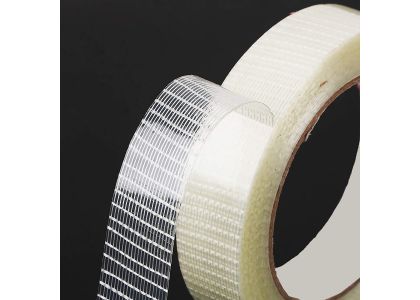
By contrast, Filament Strapping Tape incorporates fiberglass filaments that carry tensile load mechanically. The adhesive’s role is to anchor the tape; the filaments do the structural work.
|
Tape Type |
Common Failure Mode |
Result |
|
Regular packing tape |
Adhesive creep or peel |
Sudden box opening |
|
Regular packing tape |
Film elongation |
Progressive loosening |
|
Filament strapping tape |
Rare adhesive failure |
Load still held by filaments |
In warehouse environments, vibration during forklift handling and truck transport amplifies these effects. Engineers often observe that packing tape does not “snap”—it slowly relaxes until the load shifts. Filament tape, even if partially debonded, continues to restrain the load.
A common workaround for weak tape is simply to apply more of it. From a cost-efficiency standpoint, this is one of the most expensive mistakes packaging teams make.
|
Configuration |
Tensile Capacity |
Labor Time |
Risk Profile |
|
1 layer packing tape |
Low |
Fast |
High failure risk |
|
3 layers packing tape |
Moderate |
Slow |
Inconsistent |
|
1 layer filament tape |
High |
Fast |
Predictable |
Adding layers does not scale strength linearly. Adhesive interfaces slip independently, and film elongation compounds. In practice, three layers of packing tape rarely achieve the load stability of a single properly specified filament tape.
From an engineering perspective, this matters because:
This is where cost efficiency becomes measurable.
Total Cost per Shipment =Tape material costLabor application costRepackaging / damage risk costDowntime and claims handlingLet’s look at a simplified example for heavy cartons:
|
Factor |
Packing Tape |
Filament Strapping Tape |
|
Tape used per carton |
3–4 wraps |
1 wrap |
|
Application time |
High |
Low |
|
Damage rate (baseline) |
3–5% |
<1% |
|
Rework cost |
Frequent |
Rare |
Even if Filament Strapping Tape costs more per roll, the reduction in labor and damage typically outweighs the price difference within weeks.
Cost efficiency becomes obvious when tape selection is evaluated against real industrial loads instead of lab assumptions.
Heavy machinery crates often experience point loading during forklift handling. Regular packing tape fails not because of total weight, but because stress concentrates at corners and strap channels. Filament Strapping Tape distributes load along embedded glass filaments, preventing localized peel even when cartons flex.
In plants shipping motors, pumps, or metal assemblies, engineers consistently find that replacing multilayer packing tape with a single filament tape wrap reduces carton deformation and eliminates mid-route re-strapping.
Bundling introduces shear forces rather than pure tensile loads. Packing tape elongates, allowing bundles to loosen over time. Filament tape resists elongation, keeping bundles dimensionally stable during long-haul transport.
This is one reason logistics teams sourcing from a high-output filament tape producer prefer filament tape for exports—bundle integrity affects container utilization and unloading safety.
Scenario:
A regional distribution warehouse handling 800–1,000 outbound pallets per week, average carton weight 45–60 kg.
Initial setup:
Observed problems:
Intervention:
Packaging engineers trialed Filament Strapping Tape sourced directly from a filament tape export factory, using a single-wrap protocol.
Measured results over 6 weeks:
Rework labor reduced significantly
Cost outcome:
Despite higher per-roll cost, total packaging cost per pallet dropped due to reduced labor, fewer tape layers, and lower damage-related handling.
Not all filament tapes perform the same. Variability in filament density, adhesive coat weight, and backing film quality directly affects cost efficiency.
Working with a qualified filament tape manufacturer offers advantages beyond price:
For large programs, sourcing from a vertically integrated filament tape producer reduces the risk of silent spec changes that often occur with trading-only suppliers.
Export-focused buyers also benefit from dealing directly with a filament tape export factory, where:
Production capacity matches volume demand
Lead times are predictable
Use this framework to avoid cost traps when choosing between filament tape and packing tape:
Define the real load case
Weight, handling cycles, vibration, stacking height—not just box weight.
Map failure cost, not tape cost
Include labor, rework, delays, and damage exposure.
Run a controlled pilot
One wrap filament tape vs current multilayer packing tape, measured over real shipments.
Lock specifications
Filament count, tensile rating, adhesive type—documented with your supplier.
Choose supply partners intentionally
A reliable filament tape manufacturer or filament tape producer is part of the cost equation, not an afterthought.When this process is followed, the decision rarely favors regular packing tape for heavy loads.