
info@jxgreentape.com
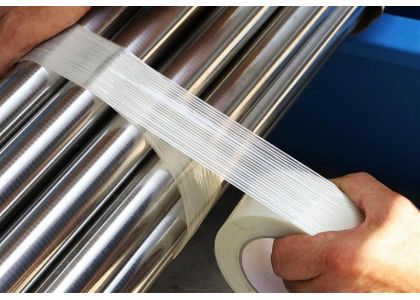
In B2B packaging, filament-reinforced tape is often chosen because it can reinforce cartons, bundle parts, and stabilize loads when ordinary carton tapes start to creep. When your shipments sit in outdoor staging areas, travel through hot-and-cold routes, or face oily handling and wipe-down chemicals, long-term reliability becomes a selection factor—not just day-one grip. That’s why procurement teams usually evaluate Filament Strapping Tape alongside application-specific options from a Filament Packing Tape manufacturer, or a Filament Carton Sealing Tape manufacturer: each construction can behave differently under UV radiation, heat cycling, solvent contact, or oil mist. The goal is not to find a tape that “never fails,” but to choose a construction that keeps performance predictable within your exposure window and your handling process, especially for export packaging and mixed warehouse/yard storage.
UV exposure rarely causes an immediate, obvious collapse. More often, it reduces the safety margin gradually, then failure shows up when the load is moved, bumped, or re-handled. In most outdoor and dock-edge scenarios, UV comes with heat and daily temperature swings, which accelerates aging.
What typically degrades first:
Backing embrittlement (loss of flexibility): Many polymer backings become less flexible after prolonged UV and heat exposure. The tape may still look intact, but the backing can crack or tear more easily when tension is applied. This is common on corner wraps and high-tension overlaps.
Adhesive aging and reduced wet-out: UV and heat can change how the adhesive flows into surface texture. Early signs include edge lift, especially on rough cartons, dusty corrugate, and uneven seams.
Heat-driven creep and edge movement: Even without aggressive solvents, elevated surface temperatures can soften some adhesive systems during the day. When loads shift, softened adhesive can creep slightly, making edges more likely to lift later.
Where these show up in practice:
A reliable way to interpret UV-related issues is to separate appearance from performance: a tape can look fine but lose flexibility or edge stability. Failures often occur during the next handling event, not during the first day of storage.
Chemical exposure is often less about a single “strong solvent” and more about repeated contact from oils, cleaning agents, and process fluids. In industrial settings, tape can be exposed through splashes, wiping, vapor, or oily hands during packing and handling. These exposures can change performance even if the tape is never fully soaked.
Common chemical-related effects include:
Because chemical environments vary widely, “chemical resistant” should be treated as an application claim that needs verification. A practical way to qualify is to test the tape on your actual substrate and expose it in the same way it will be exposed on the line (wipe, splash, or mist), then check for creep, edge lift, and removal behavior.
In the field, exposure is not uniform, and that’s why failures often look random. One pallet sits near a bay door and gets direct sun; another stays shaded. One carton batch has more surface dust; another is cleaner. One route starts cold, warms up at a hub, then cools again during last-mile delivery. Under these conditions, the same tape can show different outcomes.
Common real-world failure signatures include:
In export packaging, intermittent issues often trace back to a mismatch between tape construction and exposure window. If your operational reality includes days in yard storage, repeated hub transfers, or frequent cleaning contact, the tape choice and handling rules need to reflect that.
Harsh conditions do not require complicated controls, but they do require consistent habits and a tape selection that matches exposure.
Choose constructions matched to outdoor exposure
If outdoor staging is expected, select filament tape grades designed for better weathering performance and specify the exposure scenario in procurement documents (sunlight duration, expected temperature swings). That helps avoid selecting purely by day-one strength.
Map chemical contact, then qualify against the real contact mode
List the common exposures: oils, lubricants, IPA wipe-down, degreasers, alkaline cleaners, or other site-specific fluids. Qualify by applying the tape to real substrates and reproducing the actual exposure mode (wipe/splash/mist), then checking seam stability and creep under load.
Control storage and keep tape away from heat and light before use
Store rolls in a cool, dry area away from direct sunlight. Keep packaging intact until use to reduce dust contamination and edge damage. Storage discipline helps reduce roll-to-roll variation that shows up as “operator issues.”
Reduce exposure where you can
For outdoor staging, simple load protection helps: cover the most exposed faces, avoid placing critical seams on the sun-facing side when possible, and keep taped seams away from areas that receive chemical wipe-down. These steps protect the tape’s performance margin without slowing the line.
Define inspection and re-taping triggers
If tape remains in service for extended periods, define simple triggers: visible edge lift, seam creep, backing cracking, or slippage under tension. Re-tape before a move rather than after a failure.
To make qualification repeatable, procurement teams can add a short checklist to RFQs and internal specs:
In practice, selecting Filament Strapping Tape for harsh environments is about matching construction to exposure and controlling the variables that turn aging into failure. With clear exposure definitions, realistic qualification checks, and disciplined storage and handling, filament-reinforced tapes can remain a reliable reinforcement solution even under UV and chemical stress.
What is the biggest hidden risk when using Filament Strapping Tape on recycled corrugated cartons in export packaging?
Surface variability is usually the main risk. Recycled corrugate often has inconsistent fiber structure and dust levels, which can reduce adhesive wet-out consistency. In these cases, adhesive formulation and surface preparation control often matter more than filament tensile strength ratings.
When chemical exposure is unavoidable, how should we validate tape performance before approving a Filament Bundling Tape manufacturer?
Validation typically focuses on real exposure simulation. Apply tape to production substrates, expose it to actual site chemicals using the same contact method (wipe, splash, mist), then check seam stability and creep resistance after dwell. Comparing performance across multiple production batches helps identify long-term consistency risks.
Why does Filament Carton Sealing Tape sometimes fail after transport even when it passed internal packaging tests?
Many failures occur after temperature cycling or vibration exposure rather than during initial packing. Adhesive aging, backing embrittlement, and substrate contamination effects often accumulate during transit. Transport simulation or staged dwell testing usually provides more realistic performance insight than immediate post-application checks.
How can procurement teams reduce total packaging failure risk when qualifying a new Filament Strapping Tape supplier?
Focus on repeatability rather than peak performance data. Evaluate lot-to-lot consistency, substrate compatibility across carton batches, and performance after realistic storage and handling conditions. Many supply chains reduce failure rates more by controlling variability than by selecting the highest headline strength tape.