
info@jxgreentape.com
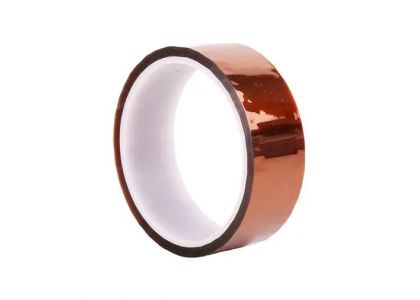
Many PCB buyers compare Kapton tape and green polyester tape by color, roll price, or a simple “high temperature” label. That is usually where the wrong decision starts.
In real PCB masking, the better question is not whether amber tape looks more technical than green tape. The better question is whether the tape can survive the actual process without edge lift, shrinkage, adhesive residue, static risk, extra cleaning, or damage to plated surfaces.
For high-temperature PCB masking, Kapton tape — more accurately, polyimide tape — is usually the safer starting point. It is commonly considered for reflow soldering, wave soldering, gold finger masking, and fine-detail masking around connectors or exposed pads. Some manufacturer datasheets describe polyimide film tapes for protecting PCB gold fingers during wave solder or solder dip processes.
Green polyester tape still has a real place. It can work well for PCB electroplating stop-off, lower-temperature masking, visible process masking, and cost-sensitive operations where the thermal and residue window is controlled. The mistake is treating green polyester tape as a cheaper version of Kapton tape. It is not. It is a different process tape.
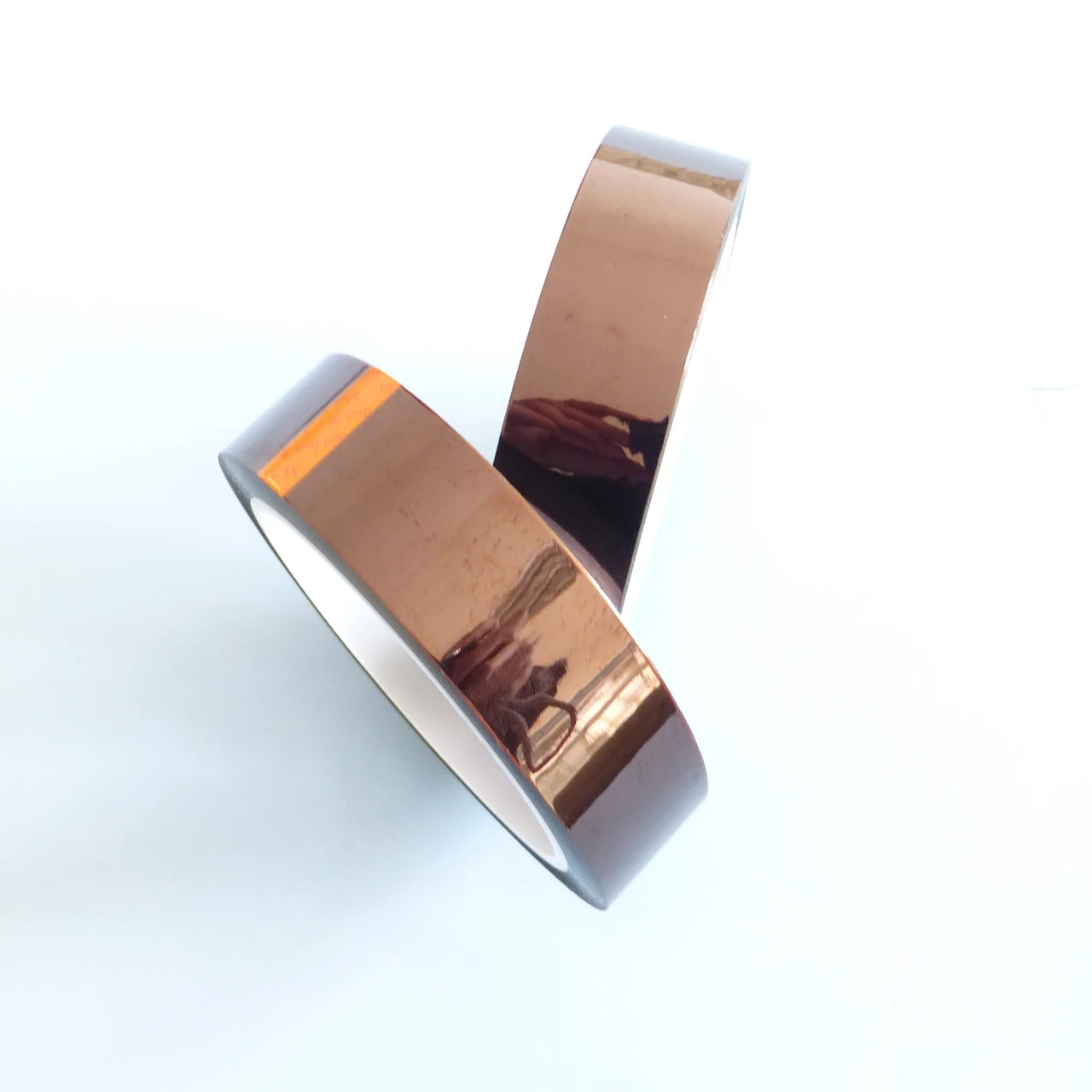
“Kapton tape” is often used loosely in the electronics industry to describe amber polyimide film tape. Kapton® itself is a brand name, but many buyers use the term as a general shorthand for polyimide tape. In PCB masking, these tapes often use silicone adhesive, although other adhesive systems exist.
Green polyester tape is usually based on PET film. Some versions are made for circuit board plating or process masking. Others are general high-temperature masking tapes originally intended for powder coating, splicing, or industrial surface protection.
That distinction matters. A green tape that removes cleanly after powder coating should not be approved automatically for lead-free reflow or wave solder masking. Color helps operators see the tape, but color does not define adhesive chemistry, backing thickness, temperature window, dimensional stability, or clean removal.
So the real comparison is not amber versus green. It is polyimide backing versus polyester backing, adhesive system versus adhesive system, and actual PCB process versus catalog description.
“High temperature tape” is not a complete specification. A tape may survive one short heat exposure and still fail in production after flux exposure, handling pressure, longer dwell time, or a second thermal pass.
Reflow and wave soldering are especially demanding because the tape must do more than stay attached. It must keep the masking edge in place, resist curling, remove cleanly, and avoid contaminating nearby contacts. IPC/JEDEC J-STD-020 is commonly used to frame moisture/reflow sensitivity classification for surface mount devices, but tape approval still has to be tested on the actual board, surface finish, and process profile.
This is where Kapton/polyimide tape usually has the stronger case. The film is more stable under heat than standard PET film, and many polyimide masking tapes are designed for high-temperature PCB processes.
Green polyester tape needs a narrower approval window. It may be perfectly fine in plating, stop-off, or lower-temperature masking. But for direct reflow or wave solder exposure, it should not be approved just because the supplier calls it “high temperature.”
PCB masking is often unforgiving. A slightly lifted corner near a gold finger, connector, or exposed pad can create a real production issue. The tape may still be “on the board,” but the masking job has already failed.
Kapton tape usually performs better when the masking edge needs to stay sharp. Thin polyimide film sits close to the board surface and can be slit or die-cut for small areas. This matters around gold fingers, test points, plated contacts, and fine-pitch components.
Green polyester tape can be easier to see and handle, but it is not always the better choice for fine masking edges. If the film moves, curls, shrinks, or lifts after heat exposure, the visible green color does not help much. The operator can see the tape clearly, but the process has already lost edge control.
For high-value PCBs, fine geometry, or areas where rework is expensive, the safer question is not “Which tape costs less?” It is “Which tape keeps the masking line stable after the real process?”
Green polyester tape should not be dismissed. That would be too simple and not very useful.
Its biggest advantage is visibility. On a fast production line, operators can confirm placement quickly. Inspectors can spot missing pieces. Removal is easier to check. For larger masked areas, regular shapes, plating stop-off, and lower-temperature masking, that visibility can reduce handling errors.
Green polyester tape may also offer a better cost position when the process does not require the heat margin of polyimide tape. In PCB electroplating or temporary process protection, a well-qualified green polyester tape can be the more practical option.
The key phrase is “well-qualified.” Do not assume all green tapes are PCB tapes. Some green PET tapes are designed mainly for powder coating or general industrial masking. They may not be suitable for soldering, flux exposure, or sensitive PCB surfaces.
When tape leaves residue after soldering or heat exposure, buyers often blame the film. In many cases, the adhesive deserves the first investigation.
Silicone, acrylic, and rubber-based adhesive systems do not age the same way under heat. They also behave differently on solder mask, copper, ENIG, HASL, and plated fingers. A tape that peels nicely at room temperature may become harder to remove after heat aging.
Peel strength is not a contest where the highest number wins. Too little adhesion can lead to edge lift. Too much adhesion after heat can slow removal, leave adhesive transfer, or increase the risk of surface damage. Peel adhesion can be tested using recognized methods such as ASTM D3330, which is used to assess adhesion uniformity for pressure-sensitive tapes; however, that test alone does not prove performance on your actual PCB process.
For PCB masking tape, ask what the board looks like after the real thermal cycle. Check edge lift, adhesive transfer, discoloration, trapped flux, removal force, and whether wiping is required. A tape has not passed simply because it stayed attached.
Tape removal can generate static, especially when operators peel quickly from dry surfaces or large masked areas. That does not mean every standard masking tape will damage components. It does mean ESD-sensitive assemblies deserve a more careful approval process.
Low-static polyimide tape may be worth testing when exposed contacts, sensitive ICs, or high-value assemblies are involved. Some low-static polyimide tapes are designed for masking selected PCB areas where static discharge during tape removal is a concern.
Contamination is another issue buyers sometimes notice too late. Silicone adhesive may be acceptable in many solder masking jobs, but not every bonding, coating, or encapsulation process tolerates silicone transfer. If the board goes into conformal coating after masking, adhesive chemistry should be reviewed before approval.
Green polyester tape often has a lower roll price. In the right process, that saving is real. But roll price is only the easiest number to compare.
A more useful calculation is process cost per board:
Tape cost per board = tape cost per square meter × masked area × waste factor
Then add the numbers people often forget: application time, inspection time, removal time, cleaning, rework, scrap risk, and operator training. If a cheaper tape adds one extra cleaning step to every board, the saving may disappear. If it causes one failed masking edge on an expensive assembly, the roll price becomes irrelevant.
Kapton tape can look expensive at the purchasing level but cheaper at the production level when it prevents edge lift, residue, or solder contamination. Green polyester tape can be the better buy when the application stays inside its validated process window.
The practical answer depends on total cost per board, not the price of one roll.
Use this as a starting point, not as a substitute for testing.
|
PCB Process |
Better Starting Point |
Why |
|
Lead-free reflow masking |
Kapton / polyimide tape |
Wider heat margin and better dimensional stability |
|
Wave solder gold finger masking |
Kapton / polyimide tape |
Thin film, edge control, clean removal |
|
Fine-detail masking near pads or connectors |
Kapton / polyimide tape |
Better masking edge stability |
|
PCB electroplating stop-off |
Green polyester tape |
Visibility and process handling |
|
Lower-temperature temporary masking |
Green polyester tape |
Cost and visual control |
|
ESD-sensitive assemblies |
Low-static polyimide tape |
Lower removal charge risk |
This table is not a universal rule. It is a trial priority. The final decision should still come from your board, your surface finish, your profile, and your removal method.
Before approving either Kapton tape or green polyester tape for PCB masking, ask practical questions:
What is the backing film? What adhesive is used? What is the total thickness and backing thickness? How was the temperature rating tested, and for how long? What happens after heat exposure? Does the tape leave residue on solder mask, copper, ENIG, HASL, or plated fingers?
Thickness and tensile properties also matter because they affect handling, edge control, and removal. ASTM D3652 is commonly used for pressure-sensitive tape thickness measurement, while ASTM D3759 is used for tensile strength and elongation of pressure-sensitive tapes. These methods help compare tape properties, but they do not replace real PCB process validation.
Also ask for samples from normal production stock, not perfect hand-selected rolls. Apply them the way operators will apply them. Run the actual process. Remove the tape after the same cooling time used in production. Then inspect the board before giving approval.
One mistake is treating every green tape as PCB masking tape. Some green polyester tapes are excellent in the right process. Others belong in powder coating or general industrial masking, not soldering.
Another mistake is choosing by color. Amber does not automatically mean high performance. Green does not automatically mean low grade. Construction matters more than color.
A third mistake is approving a tape after one clean room-temperature peel test. Heat changes adhesive behavior. Flux, dwell time, surface finish, and removal timing can change it again.
The last mistake is comparing only roll price. A tape that requires cleaning after removal is expensive, even if the roll looks cheap.
Kapton tape and green polyester tape both have a place in PCB masking, but they are not equal substitutes.
Kapton/polyimide tape is usually the safer first choice for reflow soldering, wave soldering, gold finger masking, fine-detail masking, and higher-risk electronic assemblies. Green polyester tape can be a strong option for plating stop-off, lower-temperature masking, visible process control, and cost-sensitive applications where the process window is controlled.
The best selection method is not color, catalog temperature, or roll price. It is failure-mode thinking: edge lift, shrinkage, residue, static risk, contamination, removal labor, and total cost per board. A good supplier should help you test those points before the tape reaches production.
Need to compare polyimide tape and green polyester tape for your PCB masking process? Share your board surface, temperature profile, masked area, and removal requirements. Our team can help suggest a starting tape construction for sampling.
Is green polyester tape the same as Kapton tape?
No. Kapton tape usually refers to polyimide film tape, while green polyester tape is typically based on PET film. They differ in heat resistance, dimensional stability, masking accuracy, adhesive behavior, and typical PCB applications.
Can green polyester tape be used for lead-free reflow masking?
Only if the specific tape has been tested and approved for that reflow profile, board surface, and removal process. Many green polyester tapes are better suited to plating, lower-temperature masking, or general process masking.
Which tape is better for gold finger masking?
Kapton/polyimide tape is usually the safer starting point for gold finger masking during wave soldering because it offers thin film construction, heat resistance, edge control, and clean removal when properly qualified.
Why does tape leave residue after soldering?
Residue can come from adhesive aging, excessive heat exposure, flux interaction, surface incompatibility, removal timing, or adhesive transfer. The backing film alone does not decide residue performance.
Should buyers consider ESD when choosing PCB masking tape?
Yes, especially for static-sensitive assemblies. Low-static polyimide tape may be worth testing when removal charge, sensitive ICs, exposed contacts, or high-value boards are part of the risk profile.
How should buyers compare cost between Kapton and green polyester tape?
Compare cost per board, not cost per roll. Include tape usage, waste, application labor, removal labor, inspection, cleaning, rework risk, and scrap risk.