
info@jxgreentape.com
If you are searching how to choose polyimide tape, you probably already know the familiar selling points: amber film, high-temperature resistance, electrical insulation and clean masking. The harder question is which grade will survive your actual process without residue, edge lift, static risk or unnecessary cost.
Most wrong purchases happen because buyers ask only for “Kapton tape” or “high temperature tape.” That is not enough for B2B sourcing. A tape used for PCB solder masking is not judged the same way as a tape used for powder coating, battery insulation, die-cut parts or electrical wrapping. Start with the process: temperature, dwell time, substrate, removal timing, cleanliness and whether sensitive electronics are involved. The color is the least useful specification.
If you are comparing several tape constructions before sending an RFQ, our industrial tape buying guides cover more sourcing checks for different applications.
Polyimide tape is the general product category. Kapton is a branded polyimide film name, although many buyers use “Kapton tape” as a shortcut for amber polyimide tape. In casual conversation that may be fine. In an RFQ, it is not precise enough. Public product data also separates polyimide film backing, adhesive type and total tape thickness, which is exactly why construction details matter.
A useful specification should state whether the tape is single-sided or double-sided, silicone or acrylic adhesive, total thickness, backing thickness, liner requirement, roll size and application. If you only write “Kapton tape, 260°C,” suppliers may quote products that look similar but behave very differently after heat exposure.
For many B2B applications, the adhesive system is the real selection point. The polyimide film may tolerate high heat, but the adhesive decides peel strength, residue, removal behavior and contamination risk.
Silicone adhesive polyimide tape is usually the first trial for continuous high-temperature masking, PCB solder masking, wave soldering and powder coating. It is widely used because it handles heat well and gives stable masking performance on many industrial surfaces.
Acrylic adhesive polyimide tape should not be dismissed as a cheap substitute. Some specially designed acrylic process tapes are used where easy removal, low residue or non-silicone contact is more important than long continuous heat endurance. But be careful: a tape that survives a short reflow cycle is not automatically suitable for long hot-zone exposure. For continuous heat, silicone is usually the starting point. For short-cycle electronics processes with strict cleanliness needs, acrylic may be worth testing. Public acrylic process-tape data supports this distinction: short high-temperature cycles can be valid, but only under defined process conditions.
Do not treat 260°C as a magic number. Temperature ratings depend on adhesive chemistry, exposure time, pressure, substrate and removal condition. One product may be suitable for continuous exposure near that range, while another may only tolerate it for a few minutes.
This matters in production. A reflow pass lasting a few minutes is not the same as continuous oven exposure. A powder coating bake is not the same as a wave solder process. A tape that survives heat but leaves residue has still failed. Ask what the rating means: continuous exposure, short-term exposure, number of cycles and tested substrate. If the answer is vague, the quotation is not ready.
Initial peel adhesion is not the whole story. Many tapes look fine before heat. The real test is what happens after the process: Does the tape lift at the edge? Does it leave adhesive on gold fingers? Does it stain the surface? Does it contaminate a coating-critical area?
For PCB assemblies that will receive conformal coating, visible residue is not the only concern. Silicone transfer or other surface contamination may affect coating wetting and adhesion. This can show up later as de-wetting, fish-eye defects or poor coating coverage.
That is why “clean removal” should be verified under the real heat cycle, not assumed from a catalog line. If the board will be coated, cleaned, bonded or inspected after masking, run a heat-aged removal test on the actual substrate before approval.
If residue, edge lift or staining has already appeared in production, compare the symptoms with our tape failure analysis guide before changing suppliers blindly.
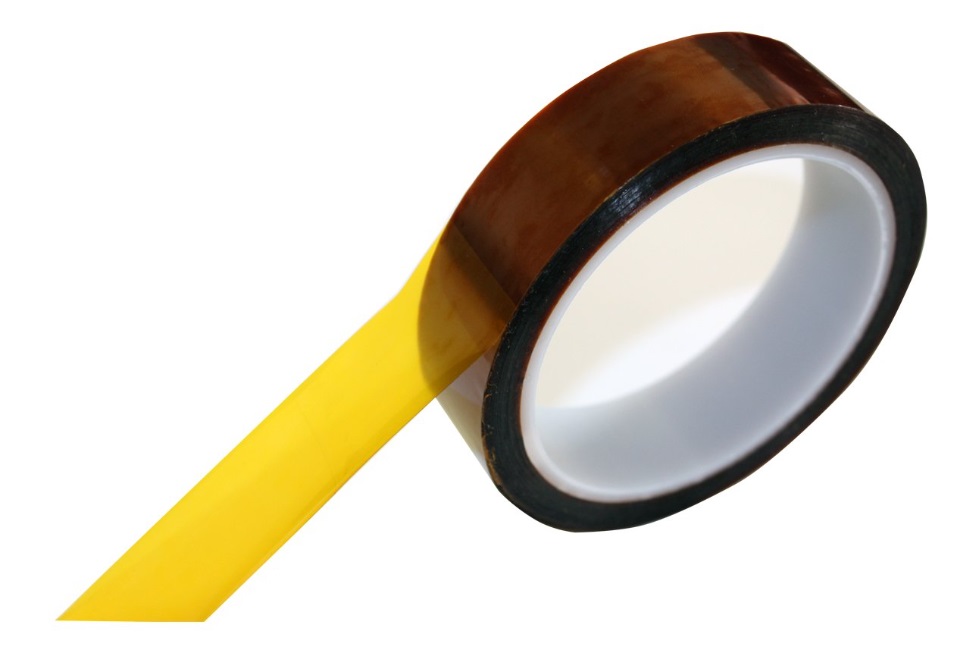
If your process involves sensitive electronics, PCB assemblies or semiconductor handling, ESD behavior is not optional. For powder coating or general insulation, it may be less important. This distinction keeps the selection practical.
Low-static polyimide tape is designed to reduce electrostatic discharge during unwind and removal. That matters when tape is removed from printed wiring boards or near sensitive components. Do not assume every amber tape is suitable for ESD-controlled production. If your plant has ESD controls, ask for static data and confirm whether the tape was tested during unwind, removal from board, or both.
For solder masking, gold finger protection and electronics process masking, see our PCB and electronics masking solutions page.
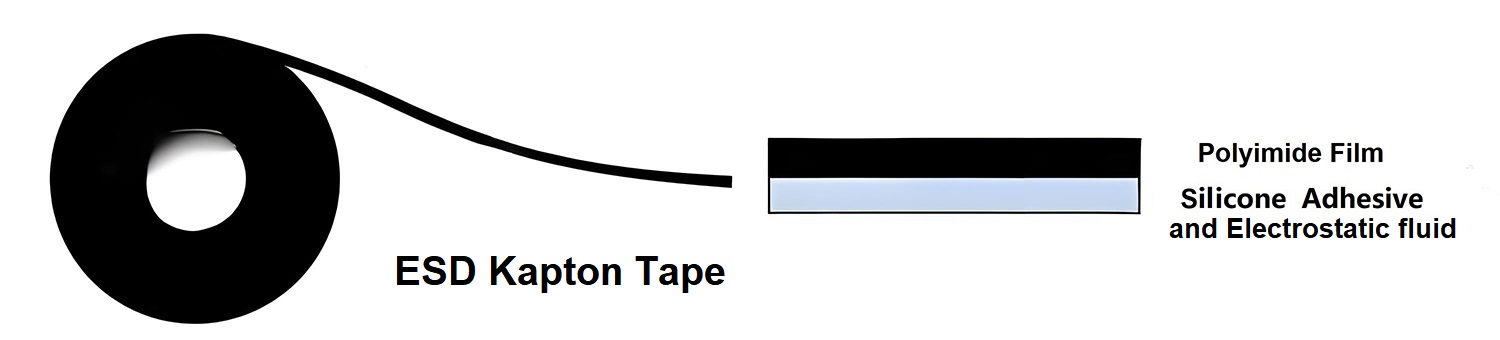
Single-sided polyimide tape is normally used for masking, insulation wrapping, surface protection and temporary high-temperature process protection. Double-sided polyimide tape is a different tool. It is used for bonding, laminating, insulation layer splicing, die-cut electrical parts and attaching thin components.
Do not use double-sided tape as the default answer just because the application needs stronger holding. If the tape must be removed after heat, double-sided construction may create more cleanup risk. If the application is bonding or laminating, liner quality, two-sided adhesion balance and die-cut handling become more important than masking performance.
For PCB solder masking, focus on adhesive system, heat cycle, edge holding, gold finger protection, clean removal and ESD requirement. If the board will be conformal coated later, treat contamination risk seriously.
For powder coating masking, focus on heat resistance, edge definition, paint line cleanliness, clean peel after bake and whether the tape is supplied in rolls or die-cut shapes. A tape that removes cleanly but lifts during bake is still the wrong tape.
For electrical insulation, compare dielectric strength, thickness, puncture resistance, flame-retardant requirements and long-term temperature exposure. If a recognized insulation or flame-retardant grade is required, say so early.
For battery insulation or tabbing, prioritize thin profile, insulation, conformability, heat resistance and batch consistency. Do not overpromise one tape for every battery process. These applications need customer-side validation.
Thickness affects more than insulation. A thicker tape may improve handling and dielectric spacing, but it may also create a higher masking edge. A thinner tape may conform better but tear more easily. Ask for both total thickness and film thickness; they are not the same number.
For die-cut polyimide tape, ask about liner release, edge cleanliness, tolerance, core type and whether the adhesive can handle cutting without ooze. Storage also matters. Ask for shelf life, manufacturing date and recommended storage conditions, especially when buying converted rolls in large volume. Cheap inventory is not cheap if it ages before use.
A serious RFQ should include more than width and roll length. Tell the supplier the application, process temperature, dwell time, continuous or short-term exposure, substrate, removal timing and residue requirement.
Specify adhesive preference if known: silicone, acrylic or non-silicone. For electronics, state whether ESD or low-static performance is required. For die-cut parts, include drawings, tolerance, liner requirement and packaging method. For insulation, ask for dielectric strength, total thickness and any qualification needs. Then request production-stock samples, not only catalog samples, and test them under real process conditions.
The first mistake is buying by color. Amber does not mean the tape is suitable for every high-temperature process. The second is treating 260°C as a universal guarantee. The third is choosing acrylic because it sounds cleaner without checking whether the exact tape supports the heat cycle.
Another common mistake is ignoring shelf life and storage. Large-volume purchasing can reduce unit price, but it can also create old stock. Finally, do not approve a tape only by room-temperature peel. Heat-aged removal and post-process residue are closer to the real risk.
The right polyimide tape is not chosen by color, brand shorthand or temperature alone. Start with the process, then check adhesive system, heat exposure, residue risk, ESD need, thickness and converting details. A clear specification saves more money than chasing the cheapest roll.
Is Kapton tape the same as polyimide tape?
Not exactly. Kapton is a branded polyimide film name. Polyimide tape is the broader product category. In sourcing, specify construction and performance, not only the name.
Should I choose silicone or acrylic adhesive polyimide tape?
Use silicone as the first trial for many continuous high-temperature masking jobs. Consider acrylic process tape for short-cycle applications where non-silicone contact or cleaner removal is required.
Can polyimide tape withstand 260°C continuously?
Some grades can, but not all. Check whether the rating is continuous, short-term or process-specific, and confirm the tested substrate and removal condition.
Does polyimide tape leave residue after reflow soldering?
It can. Residue depends on adhesive type, dwell time, surface condition and removal timing. Always test heat-aged removal on the actual board or component.
When do I need ESD or low-static polyimide tape?
Use it when masking near sensitive electronics, PCB assemblies or semiconductor-related processes where electrostatic discharge during unwind or removal may damage components.
· ASTM D3330/D3330M — useful for comparing peel adhesion uniformity of pressure-sensitive tapes.
· ASTM D3652/D3652M — used for pressure-sensitive tape thickness measurement.
· ASTM D3759/D3759M — used for tensile strength and elongation comparison of pressure-sensitive tapes.
· UL 510 — relevant only when electrical insulation or flame-retardant tape qualification is required; do not imply every polyimide tape has UL 510 recognition.
· Public product data for silicone, acrylic and low-static polyimide tapes supports the selection logic around adhesive system, heat cycle, clean removal and ESD control.