
info@jxgreentape.com

When buyers compare uni-directional vs bi-directional filament tape, the first question is often “Which one is stronger?” That is understandable, but it is not the best starting point. In heavy duty packaging, tape failure usually shows up as a pattern: the tape snaps in the pull direction, splits from the side, lifts from the carton, opens at the corner, or lets the load shift during transport.
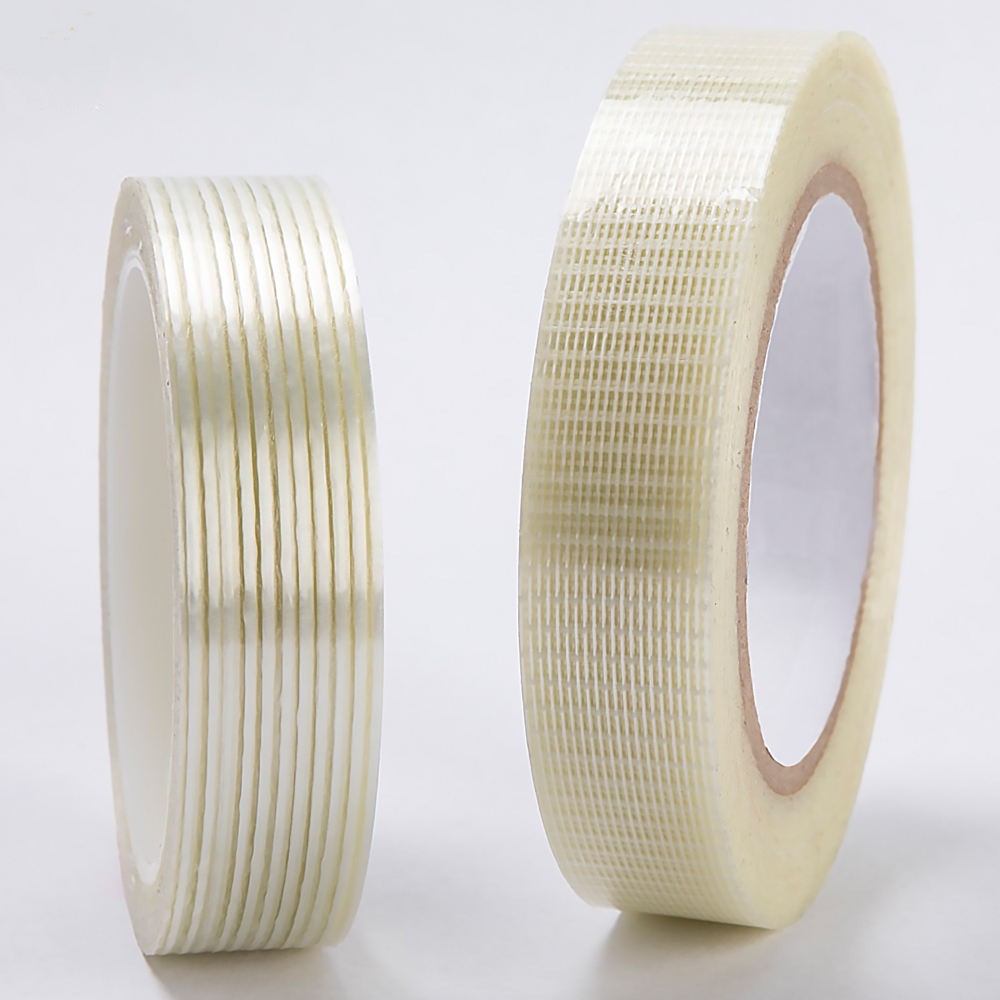
A uni-directional filament tape may be the better choice when the load pulls mostly along the tape’s machine direction. A bi-directional filament tape, also called cross-weave filament tape, becomes more useful when the package sees stress from more than one direction. Sometimes, though, the real issue is not fiberglass reinforcement at all. It may be dust, low application pressure, weak recycled fiberboard, poor overlap, or a packaging design that asks tape to do the job of strapping.
So the practical question is not simply “uni or bi?” It is: where does the package fail first?
Reinforcement direction is only one part of the decision. If you are still mapping out how filament tape, strapping, stretch film and corner protection should work together, our industrial packaging and load-securing overview gives the wider view.
If the tape breaks cleanly along the pull direction, start with the tensile side of the problem. Uni-directional filament tape uses glass yarns mainly aligned lengthwise, giving strong lengthwise strength in the machine direction. In applications like pipe bundling, long profile bundling, carton seam reinforcement, or linear package reinforcement, that direct reinforcement can be efficient.
The mistake is jumping immediately to bi-directional tape. If the break is mainly tensile, first check tape width, wrap count, overlap length, application tension, and tensile strength on the TDS. A wider or higher-tensile fiberglass reinforced tape may solve the issue without moving to a thicker cross-weave construction.
This is where mono-directional vs bi-directional filament tape should be judged by the failure mode, not by product name alone. If the load path is predictable and mostly linear, uni-directional reinforcement can be the more cost-efficient option.
Side splitting is a different problem. A fiberglass reinforced filament tape can have strong lengthwise strength but still split when stress starts from an edge nick, carton corner, staple point, or sharp packaging surface.
This is where the choice between unidirectional reinforcement and cross-weave reinforcement becomes a real engineering decision. Bi-directional filament tape uses reinforcement in both the longitudinal and transverse directions. In simple terms, it adds width direction support instead of relying only on the length of the tape.
If damage starts at the side and then runs across the tape, cross-direction strength matters. Look at cross-weave filament tape for crate corners, heavy box closure, mixed loads, irregular parts, and cartons that flex during forklift handling. The goal is not only to stop the tape from breaking, but also to slow split propagation after a small cut or edge damage begins.
Still, do not treat bi-directional tape as magic. Backing thickness, adhesive, edge quality, and surface contact still decide whether the tape survives rough handling.
If the tape peels off while the glass yarn reinforcement remains intact, the fiber direction was probably not the main problem. The problem is adhesion. This is common on dusty corrugated carton surfaces, recycled fiberboard, printed fiberboard, coated cartons, plastic bins, wood, or painted metal.
Here, compare adhesive system and surface preparation before arguing about unidirectional filament tape vs cross-weave filament tape. Many packaging tapes use a pressure-sensitive adhesive tape construction, often with synthetic rubber adhesive when high initial tack is needed on fiberboard and common packaging surfaces. But initial grab still depends on surface cleanliness, pressure, temperature, and dwell time.
Backing also matters. Some grades use polypropylene backing, while others may use polyester film backing or other film constructions. Depending on the grade, buyers may also need to check abrasion resistance, moisture resistance, scuff resistance, and long-term holding power. These are product-specific properties, not automatic guarantees for every roll of filament strapping tape.
The useful lesson is simple: if the adhesive lets go before the fibers break, upgrading from uni to bi may not solve the failure.
Corner failure is usually not a simple tensile break. A crate corner may flex outward. A heavy carton may bulge. A pallet may shift during transport vibration. These conditions create combined stress: peel, shear, side tearing, compression, and movement.
In these cases, bi-directional filament tape is often a better starting point because transverse reinforcement can help resist split propagation and corner opening. A glass yarn reinforced tape with reinforcement in both directions may be worth testing around corners, weak seams, and areas exposed to repeated handling.
That said, tape cannot fix a bad load plan. If the pallet is unstable, cartons are overloaded, or product corners cut into the box, switching from uni-directional to bi-directional tape may only hide the problem for a while. Edge protectors, stretch film, plastic strapping, stronger cartons, or a different pallet pattern may be needed.
Use this decision logic before asking for pricing.
|
Packaging Failure |
Better Starting Point |
What to Verify |
|
Lengthwise break |
Uni-directional filament tape or wider tape |
Tensile strength, width, wrap count, overlap |
|
Side split |
Bi-directional filament tape |
Transverse reinforcement, edge nick resistance, backing |
|
Peel from carton |
Adhesive review first |
Peel adhesion, surface dust, application pressure |
|
Corner opening |
Cross-weave filament tape or corner reinforcement |
Placement, overlap, carton strength |
|
Load shifting |
Tape may not be enough |
Strapping, film, pallet design, handling method |
This table is not a replacement for testing. It is a way to avoid the most common mistake: choosing by the word “stronger” instead of by the actual packaging failure.
Before rejecting a filament strapping tape, check the basics. Was the tape applied to a clean surface? Was the carton cold, wet, dusty, or heavily printed? Did operators leave enough overlap? Was the tape placed across the actual stress path? Were different lots behaving the same, or is the issue related to batch consistency and lot-to-lot consistency?
Then check the product construction. Ask whether the backing is polypropylene, polyester film, or another film. Ask whether the adhesive is synthetic rubber, acrylic, or another pressure-sensitive adhesive. Ask how the reinforcement is arranged: longitudinal reinforcement only, or both longitudinal reinforcement and transverse reinforcement.
For automated packaging, ask about unwind force, roll consistency, cutting behavior, and dispenser compatibility. A tape that works well by hand may not always behave the same way on a packing line.
A useful qualification test does not have to be complicated. Choose two or three packages that represent your real risk: one normal carton, one heavy carton, and one package that has failed before. Apply the current tape, a uni-directional filament tape, and a bi-directional filament tape using the same width, overlap, pressure, and placement where possible.
Record what fails first. Does the tape break? Does it split sideways? Does it peel from the surface? Does the carton tear before the tape fails? Does the corner open after handling? Leave samples for 24 to 72 hours as an internal comparison if storage before shipping is normal. Then handle them as your warehouse would: lift, stack, move by forklift, or simulate repeated carton movement.
When reading supplier data, ASTM D3759/D3759M, ASTM D3330/D3330M, and ASTM D3654/D3654M are useful references for tensile/elongation, peel adhesion, and shear adhesion. They help buyers interpret datasheets, but they do not replace testing on the actual package.
There are cases where neither mono-directional vs bi-directional filament tape is the real answer. If a heavy pallet shifts because the load pattern is poor, use pallet stabilization. If a sharp metal edge cuts through the carton, add edge protection. If the carton board is too weak, upgrade the box. If moisture exposure changes the board surface, validate the whole package, not only the tape.
For B2B buyers, the better metric is not roll price. It is cost per protected package. A cheaper tape may be right for predictable linear loads. A cross-weave tape may be justified when it prevents repeated carton splitting or corner failure. The smartest decision is based on failure mode, not on the word “stronger.”
Why does filament tape split from the side instead of breaking lengthwise?
Side splitting usually means the stress is starting from an edge, corner, puncture point, or weak carton area. A uni-directional tape may have strong machine direction tensile strength, but limited resistance when damage spreads across the width direction.
Can wider uni-directional filament tape replace bi-directional tape?
Sometimes. If the failure is a straight pull-direction break, wider or higher-tensile uni-directional tape may help. If the issue is side tearing, corner opening, or load twisting, bi-directional or cross-weave filament tape is usually the better test option.
Why does filament tape peel off recycled or printed fiberboard?
The issue is usually adhesion, not fiberglass strength. Dust, coating, recycled fibers, ink coverage, cold surfaces, low pressure, or short dwell time can all reduce bonding. In this case, review adhesive type and surface preparation before changing reinforcement direction.
Does cross-weave filament tape prevent corner blowout?
It can help when corner failure involves side tearing or multi-direction stress, but it is not a complete packaging fix. If the carton is weak, the load is unstable, or the product edge is sharp, corner protection or stronger packaging may still be needed.
What failure photos should I send before asking for a tape recommendation?
Send photos of the full package, the failed area, tape placement, carton surface, load shape, and handling condition. Also provide package weight, tape width, substrate, storage conditions, and shipping route. Failure mode matters more than tape name.
· ASTM D3759/D3759M — Breaking strength and elongation of pressure-sensitive tapes, including machine direction and cross direction testing.
· ASTM D3330/D3330M — Peel adhesion testing for pressure-sensitive adhesive tapes.
· ASTM D3654/D3654M — Shear adhesion under constant load for pressure-sensitive tapes.
· ASTM D5330/D5330M — Specification for filament-reinforced pressure-sensitive packaging tape.
· ASTM D3652/D3652M — Thickness measurement for pressure-sensitive tapes.
· ISTA 3-Series — Transport package performance testing background for distribution-related handling, vibration, and shipping conditions.
If you are comparing uni-directional vs bi-directional filament tape for export packaging, share your failure photos, package weight, substrate, tape width, and shipping conditions. A sample-based recommendation is usually more reliable than choosing by tensile strength alone.
RELATED ARTICLES:
Standard vs Heavy Duty Mono Filament Tape: When to Upgrade
How to Choose the Right Filament Tape for Bundling, Palletizing, and Transport Securing
Filament Tape Failure and Selection for Heavy-Duty Packaging