
info@jxgreentape.com
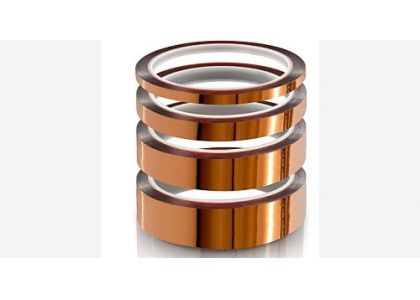
When you need to Buy Kapton tape for protecting sensors and flex cables during reflow, three buyer goals usually sit at the top of the list: thermal resilience, clean removal, and consistent supply. Engineers look for the Best polyimide tapes that survive peak reflow temperatures without residue, operations teams want OEM bulk PI tape pricing and reliable lead times, and design teams increasingly request Customized Kapton tapes to tackle tricky geometries and unique adhesive requirements. This article explains what to specify, how to test candidate tapes and adhesives, and how to engage suppliers so your reflow runs are predictable and defect-free.
Reflow soldering exposes assemblies to short, high temperature cycles (typically up to 250–260°C for lead-free profiles). Flex cables, thin film sensors and delicate connectors are particularly vulnerable: heat can delaminate thin adhesives, mechanical stress can kink flex traces, and adhesive residue can contaminate contact pads. Using the right polyimide tape — one with suitable film properties and an adhesive engineered for reflow environments — prevents masking failures, reduces rework and protects yield. In high-mix, high-volume environments, poor tape choice is a recurring root cause of field failures and scrap.
A practical specification covers both the film and the adhesive:
Film properties (polyimide / Kapton):
Continuous use temperature and decomposition temperature (TGA). Choose films with thermal stability well above your peak reflow temperature.
Dimensional stability and tensile strength — important when tapes are wrapped or used as mechanical supports.
Thickness options: thinner films (12–25 µm) for minimal bulk on flex cables; thicker films (50–75 µm) where mechanical protection is needed.
Adhesive properties:
High-temperature silicone adhesives resist 260°C short-term exposure and cleanly remove without aggressive off-gassing. Acrylic adhesives are cheaper but can char or leave residues at higher reflow peaks.
Peel strength at room temperature and after thermal cycling — you want adhesion that holds during assembly but releases cleanly post-reflow when required.
Residue profile (no-residue or low-residue classification) — verify through lab tests and visual inspection after reflow.
Process compatibility:
Reflow profile compatibility (peak temp, ramp rate, time above liquidus).
Compatibility with fluxes, cleaning chemistries and conformal coatings used downstream.
Low ionic contamination / extractables for sensitive sensors.
Boards and assemblies are rarely standard. A tailored product — for example, a Kapton tape with a formulated silicone adhesive and a printed peel guide or pre-cut die shapes — can solve multiple problems at once: it improves placement repeatability in pick-and-place, reduces handling errors and can be engineered for precise removal forces. Common customizations include slit widths for narrow flex tails, heat-stable removable liners, and adhesive patterns that reduce trapped air. When assemblies have unusual geometries or critical tolerances, investing in Customized Kapton tapes during pilot runs reduces field risk and usually shortens qualification time.
If you run high volumes, unit cost and supply continuity matter. Buying OEM bulk PI tape directly or via a distributor reduces per-unit cost, minimizes order frequency and simplifies inventory planning. Bulk orders also allow you to lock in consistent lot numbers for qualification, reducing variability between production runs. However, bulk procurement should follow a careful qualification matrix: pilot lot test → extended thermal cycling → production trials. Also negotiate lead times, quality clauses and returns for non-conforming batches.
High-quality polyimide film maintains tensile and dielectric properties through the thermal cycle and returns to its original state after cooling. Key behaviors to validate in your lab:
Test methods: TGA, peel after reflow, ionic contamination (per IPC-TM-650), visual microscopy, and functional verification of protected sensor or flex cable after full assembly.
A robust supplier qualification includes:
Ask suppliers for test data that match your reflow profile and request references in similar end-use industries (consumer electronics, automotive, or aerospace).
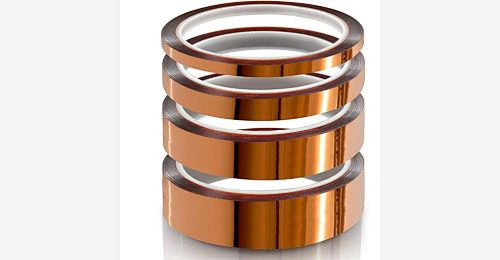
Case Study A — Consumer electronics (flex cable protection)
A contract manufacturer assembling wearable devices experienced intermittent failures where flex cables exhibited microcracks after reflow. After switching to a Best polyimide tapes grade with a thin film and silicone adhesive expressly tested to their 260°C profile, microcrack incidents dropped by 92% in six months. The supplier provided die-cut meshes that reduced handling time and improved placement accuracy.
Case Study B — Automotive sensor module (custom solution + bulk buying)
An automotive Tier-1 supplier required a tape that would hold a delicate MEMS sensor during reflow and then be removed without residue. The supplier developed a Customized Kapton tape with a low-residue adhesive and provided OEM bulk PI tape pricing. Qualification included extended thermal cycling and cleanliness testing; the OEM bulk purchase reduced material cost by 22% and supported long production runs without lot changes.
Case Study C — Aerospace avionics (small volume, high reliability)
A satellite subsystem used polyimide masking during conformal coating cure cycles. A high-grade polyimide film with documented low outgassing and certified lot traceability was sourced. The Buy Kapton tape decision emphasized documentation and batch certificates over unit cost; the result: successful thermal vacuum acceptance without contamination flags.
Before you finalize a supplier, complete this checklist:
Protecting sensors and flex cables during reflow is a small design decision with outsized impact on yield and field reliability. Prioritize materials that combine the right polyimide film properties with an adhesive engineered for your thermal profile. Where standard rolls don’t meet requirements, use Customized Kapton tapes to minimize risk; where volumes are large, negotiate OEM bulk PI tape contracts to control cost and simplify logistics. When you Buy Kapton tape, demand test data, pilot lots and supplier transparency — those steps pay back quickly in reduced rework, fewer defects and a more stable production flow.