
info@jxgreentape.com
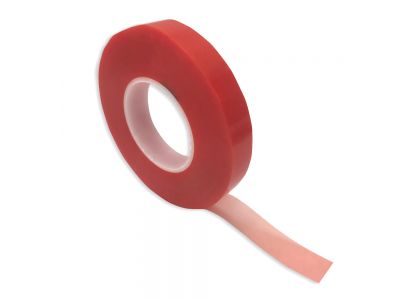
The manufacturing and assembly industries continually face challenges related to unwanted residues and contamination that can compromise product integrity. Achieving a truly clean bond calls for both the right materials and disciplined process control. In many production environments, solutions built around PET Double-Sided Mounting Tape and related adhesive systems—including films and heavy-duty variants—are selected because they combine reliable adhesion with options that reduce post-assembly residue. Rather than starting with a list of product names, this discussion emphasizes practical methods—surface preparation, consistent application, and product design choices—that together minimize contamination risk while preserving bond performance.
Ensuring a residue-free bond begins with scrupulous surface preparation. Operators must meticulously clean and decontaminate all surfaces before applying any adhesive materials. Removing dust, oils, and other contaminants greatly improves the bond quality of PET Double-Sided Mounting Tape and increases the effectiveness of alternative solutions such as double-sided industrial mounting tape on more demanding substrates. A rigorous cleaning routine not only aids adhesion but also reduces the chance that a cleaning agent itself will interfere with the adhesive—so select non-residual solvents and verify compatibility beforehand.
Key preparation steps:
Surface degreasing: Use approved, non-residual solvents to eliminate oily films without leaving residues.
Dust removal: Employ lint-free cloths, ultrasonic cleaning for small parts, or electrostatic dusting for large assemblies.
Verification: Perform tape-peel tests or light visual inspections to confirm a clean bonding area before tape application.
Once surfaces are prepared, the method of tape application becomes the decisive factor for residue control. Successful application demands careful alignment, steady pressure, and attention to ambient conditions. When working with pet acrylic double sided tape, for example, consistent pressure and slow, controlled placement reduce trapped air pockets and potential adhesive squeeze-out. Similarly, pet double sided tape benefits from calibrated pressure rollers or pneumatic applicators that ensure uniform contact across the joint.
Operational recommendations:
Pressure calibration: Use equipment that delivers repeatable, uniform force during lamination or hand-apply with measured tooling.
Temperature control: Maintain ambient and surface temperatures within the adhesive’s optimal range to avoid excessive flow.
Controlled speed: Avoid overly rapid application that can cause misalignment or adhesive migration.
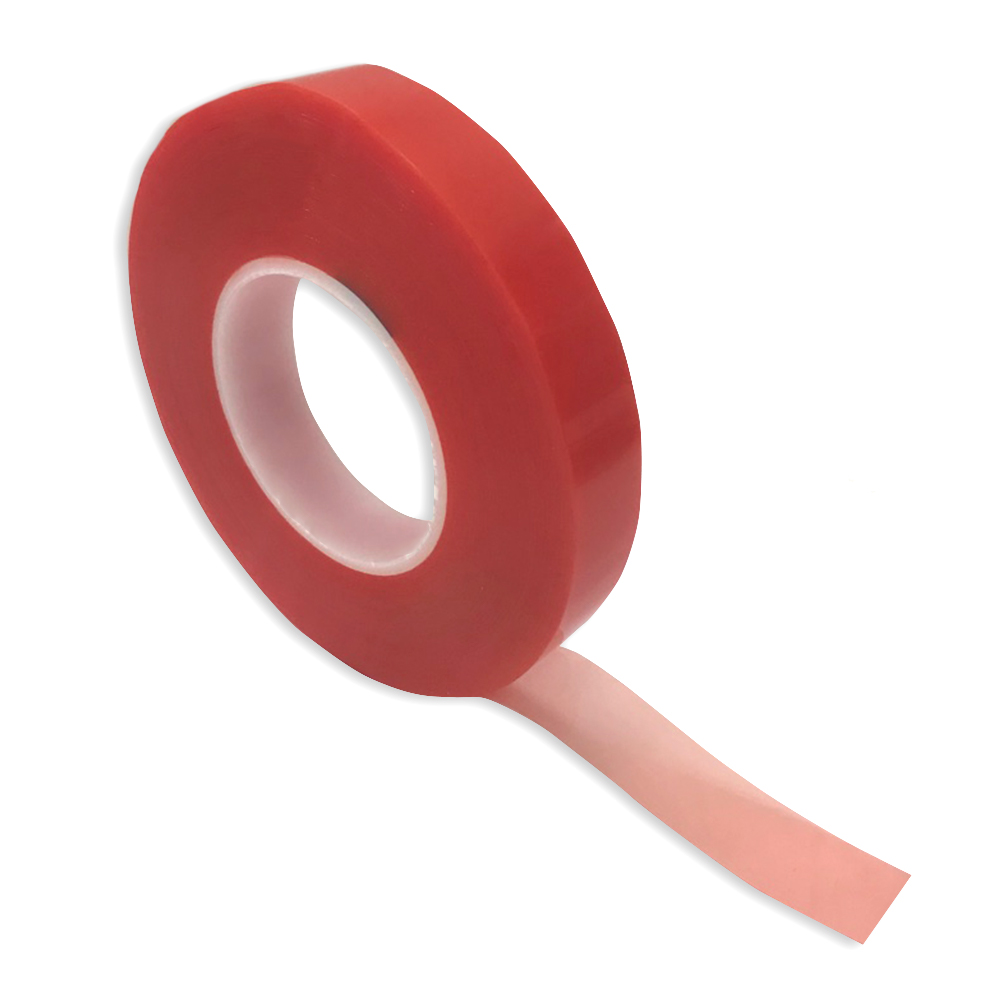
Recent product innovations focus on reducing post-bond tack and preventing residue migration. For instance, certain red double sided pet tape variants incorporate additives or modified adhesive chemistries that limit surface tack after the bond sets, reducing the likelihood of trapping contaminants or attracting dust. Improved backing technologies and liner designs also help contain the adhesive during handling and application.
Technological improvements include:
Additive integration: Formulations that lower surface tack once the adhesive has cured sufficiently.
Improved backings: Stronger PET carriers or coated liners that prevent adhesive bleed during storage and processing.
Environmental tolerance: Formulas engineered to resist humidity-induced migration and temperature-driven flow.
Practical insights from end-users confirm that methodical processes reduce residue and rework. Factories that pair PET Double-Sided Mounting Tape with carefully maintained application tools report higher throughput and fewer rejects than those relying on inconsistent manual methods. Where both thin-film and heavy-duty performance are required, combining double-sided industrial mounting tape for primary fixation with a clean, low-tack film for finishing can deliver aesthetic and functional benefits.
Observed benefits on the factory floor:
Higher throughput: Fewer interruptions for cleaning or rework.
Cost savings: Less scrap and reduced labor for removing adhesive residue.
Improved safety and quality: Lower contamination risk and better part appearance.
When even trace residue is unacceptable, process tuning becomes essential. Small temperature swings can change the viscosity of a pet double sided tape, altering how it flows under pressure; likewise, equipment with inconsistent roll tension can stretch liners and cause adhesive creep. Regularly testing different lots and running controlled pilot trials helps teams establish optimal parameters for each tape type and application.
Useful adjustments:
Batch testing: Evaluate new lots under standard conditions to detect variability.
Ambient controls: Stabilize temperature and humidity in critical work cells.
Maintenance schedules: Keep applicators and rollers clean to avoid buildup that transfers to parts.
Preventing residue is an ongoing program, not a one-time fix. Continuous improvement—driven by staff training, empirical feedback, and small iterative changes—yields sustained gains. When organizations include adhesive selection in design reviews, consult suppliers for best-practice laminating methods, and track defect metrics, they create a reinforcing cycle of quality improvement that benefits from both pet acrylic double sided tape innovations and improved process controls.
Cultural practices that help:
Regular operator training and refreshers.
Cross-functional reviews involving design, process, and procurement.
KPI tracking for residue-related defects and corrective actions.
Looking ahead, automation and sensor integration will play a larger role in residue elimination. Smart dispensing systems and inline quality inspection will make it possible to apply adhesives such as red double sided pet tape with near-zero human variability. Combined with evolving adhesive chemistries that reduce post-bond tack, these advances will raise the bar for residue-free assembly.
Anticipated benefits:
Reduced manual error through automated feeders and vision alignment.
Faster detection of application faults via inline inspection.
Cleaner bonds from chemistry and equipment working together.
In practice, consistent surface prep, controlled application, and careful product choice—whether using PET Double-Sided Mounting Tape, double-sided industrial mounting tape, or advanced thin films—are the cornerstones of residue-free bonding. By balancing process discipline with the latest adhesive innovations, manufacturers can reduce rework, improve product appearance, and ensure long-term reliability.
Modern adhesive technologies, coupled with disciplined application practices, transform the challenge of contamination into an opportunity for better product quality and production efficiency. Using proven products such as Double Sided Heavy Duty Mounting Tape for demanding joins and cleaner film options where aesthetics matter gives manufacturers the flexibility to meet both functional and visual requirements. The result is fewer operational hiccups, better part presentation, and a sustainable edge in manufacturing performance.