
info@jxgreentape.com
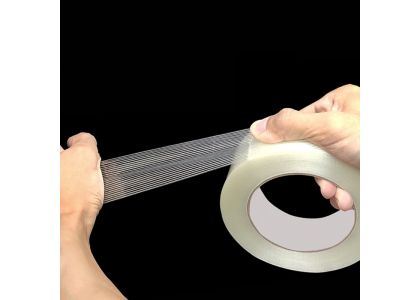
When aerospace logistics teams and composite manufacturers evaluate protective consumables, they often start with durability, predictable performance, and supply continuity. That is why many programs standardize on quality filament tapes from a trusted filament tape manufacturer and arrange OEM bulk filament reinforced tape runs for ongoing projects. For special fixtures or odd geometries, buyers ask for custom filament tapes while procurement secures backup stock from an approved filament tape exporter or local Filament Tape Supplier. Early-stage validation—slitted trial rolls, peel and tensile testing, and a clear specification for adhesive transfer—keeps risk low and allows teams to scale with confidence.
Aerospace components are high-value and often sensitive to shock, vibration and surface damage. Premium wraps based on glass-reinforced filaments distribute loads and prevent strap cut-through that can occur with plain film tapes. A well-specified quality filament tape holds parts in place, resists shear during movement, and preserves critical tolerances on machined surfaces.
Engineers should request Material Data Sheets (MDS) and test reports from any filament tape manufacturer under consideration. Useful metrics include tensile strength (N), elongation at break (%), 180° peel force (N/25 mm) after thermal aging, and adhesive transfer tests following prolonged pallet storage. An OEM bulk filament reinforced tape agreement should lock in formulation and lot traceability so a validated material is available for the life of the program.
Composite panels require gentle but secure handling: excessive clamping or hard filaments can dent skins, while weak wrap permits slippage and panel edge damage. The best glass reinforced tape balances filament density and backing yield to secure panels without introducing concentrators. Benefits include:
Buyers should look for documented abrasion tests (cycles to mass loss), adhesion-to-release-liner data, and compatibility statements for common composite packaging films. When a Filament Tape Supplier can provide slitted prototype kits to match panel widths, on-floor validation becomes straightforward and fast.
Not all applications fit a one-size-fits-all product. Custom filament tapes let engineers specify filament count, filament material (glass vs. high-tenacity polyester), adhesive tack and backing stiff-ness. Common reasons to customize:
Tooling and MOQ concerns are real: ask your filament tape exporter or filament tape manufacturer about low-MOQ pilot runs (100–500 m) for functional verification. Successful pilots should feed a specification that becomes part of supplier contracts and FAI (First Article) documents.
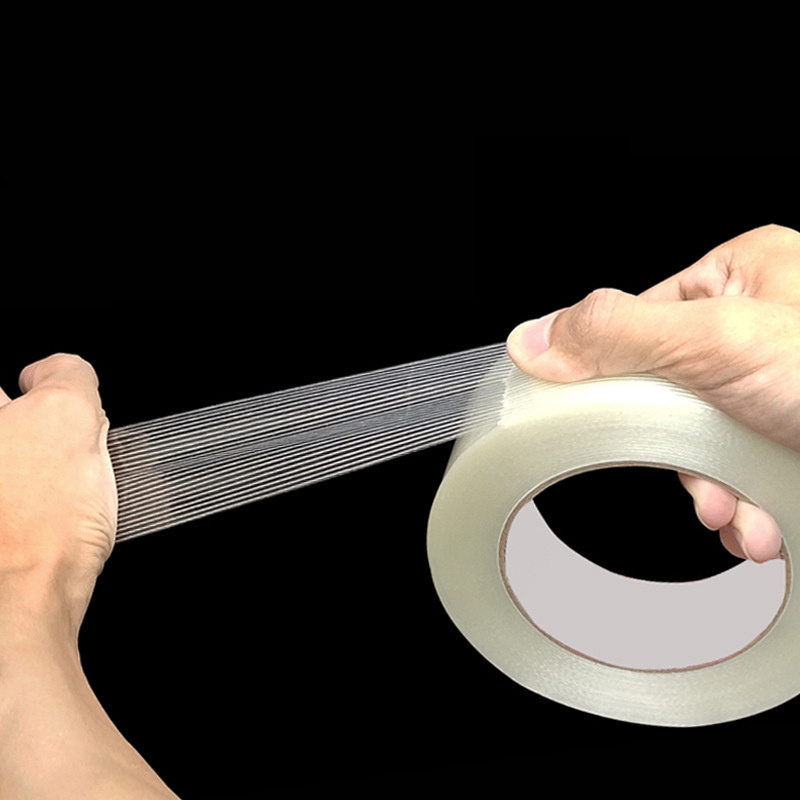
Choosing a supplier is about mitigating lifetime program risk as much as about price. The following checklist helps procurement and engineering align:
Technical documentation
Require MDS, spool-to-spool tensile distributions, aging reports, and adhesive transfer results.
Ask for representative lab certificates (third-party if the application is safety-critical).
Quality systems & traceability
Prefer suppliers with documented QA (e.g., ISO 9001) and lot-traceability with retained-sample policies.
Include FAI steps and acceptance test criteria in the purchase order for OEM bulk filament reinforced tape runs.
Supply & logistics
For long programs, negotiate volume and delivery bands; for short projects, ensure the Filament Tape Supplier has local stock or fast ship options.
Verify slitting tolerances, core dimensions and packaging for automated dispensers.
Total cost vs. lifecycle risk
Request life-cycle cost models comparing a lower-cost, unverified roll (higher field-failure risk) versus validated quality filament tapes with warranty and lot traceability. Often the validated option reduces claims and rework costs.
Service & technical support
A responsive filament tape manufacturer or exporter should provide application guidance, dispenser setup tips, and on-site trial support to minimize adoption friction.
Case 1 — Composite Panel Export (simulated)
A composites supplier shipping long panels to international OEMs experienced edge chipping during transit. They trialed a quality filament tape with a slightly lower filament pitch and a silicone-modified acrylic adhesive. After a two-week pilot and drop-testing, the firm reduced edge defects by 72% and negotiated OEM bulk filament reinforced tape pricing to ensure consistent future supply. (Simulated example.)
Case 2 — Precision Actuator Packing (simulated)
An actuator manufacturer needed secure clamping without marking delicate housings. The team worked with a filament tape manufacturer to produce a custom low-residue adhesive formula and pre-slit widths for their fixtures. Packing time decreased and warranty returns dropped substantially. They later used a filament tape exporter to source the same material for overseas plants. (Simulated example.)
Case 3 — Aerospace Tooling Kitting (realistic-style)
A Tier-1 integrator standardized on a branded quality filament tape for kitting tooling and harness bundles. The chosen Filament Tape Supplier provided MDS, spool retention samples and agreed to a three-month FAI hold. During audits, traceability documents simplified vendor qualification and the program avoided tape-related nonconformances for two years.
Adopting the right filament tape is both a technical and procurement decision. Start with clear performance targets, demand measurable data from suppliers, run slitted pilot trials, and formalize acceptance criteria in purchase orders. For most aerospace and composite programs, a blend of OEM bulk filament reinforced tape for core inventory, selective custom filament tapes for special fixtures, and a responsive Filament Tape Supplier for emergency refill is the optimal supply strategy. Prioritizing validated quality filament tapes from a reputable filament tape manufacturer reduces field risk, shortens packing cycles and lowers total lifecycle cost.