
info@jxgreentape.com
Export cartons rarely fail in a laboratory. They fail in containers, warehouses, distribution centers, and loading docks. A shipment may leave the factory looking secure and still arrive with split corners, opened flaps, crushed edges, or partially lifted seals.
When that happens, many buyers immediately ask for a stronger tape.
Sometimes that is the right answer. Sometimes it is not.
A carton may fail even when the tape itself does not break. In real export packaging, the weak point may be carton design, board quality, moisture exposure, flap rebound, poor application pressure, unsuitable tape width, or stress concentration at the box edge.
That is why filament tape for carton reinforcement should not be treated as a simple “stronger tape” purchase. The better question is: where does the carton fail, and how should the reinforcement control that stress?
This article focuses on carton reinforcement tape for corrugated export boxes. It does not replace a full pallet stabilization system, and it does not turn weak or wet fiberboard into a high-strength shipping box. Its job is more practical: reinforce the right carton areas before handling stress turns into box failure.
Carton reinforcement is one of several packaging jobs filament tape handles. Bundling, palletizing and transport securing are covered in our packaging solutions overview.
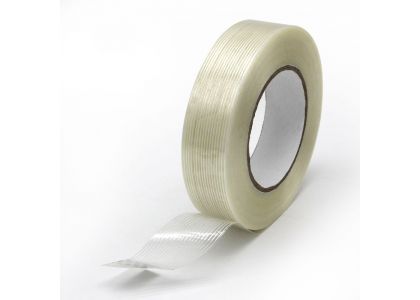
Filament tape is widely used for carton reinforcement because fiberglass filaments provide higher tensile strength than ordinary packing tape. For B2B packaging teams, the value is not only that the tape is strong. The value is that the tape can help control stress at specific weak areas of the carton.
Filament tape can help reinforce box edges, strengthen center seams, reduce flap opening risk, support heavy-duty carton sealing, and distribute local stress across a wider area.
But there are limits.
It cannot repair a poor carton design. It cannot restore strength to moisture-damaged corrugated board. It cannot replace pallet wrapping, corner protectors, strapping, or load stabilization when those are required. It also cannot guarantee that every carton will survive rough handling if the carton board itself is under-specified.
This matters because many carton failures are packaging-system failures, not simple tape failures. If the paperboard tears before the tape breaks, changing to a stronger grade may only move the failure to another location.
Many buyers focus on whether the tape snaps. In practice, carton failure often appears before the tape reaches its tensile limit.
|
Failure |
Possible Cause |
Practical Tape Check |
|
Edge opens |
Low peel adhesion, poor pressure, flap rebound |
Increase application pressure; test wider tape or stronger initial tack |
|
Carton surface tears |
Board is weak, tape is too narrow, stress is too concentrated |
Check carton strength; widen reinforcement area |
|
Tape breaks |
Tensile overload or wrong grade |
Test a stronger grade or wider filament tape |
|
Corners split |
Multi-direction stress during handling |
Apply L-clip reinforcement or test bi-directional filament tape |
|
Seal loosens after storage |
Heat, humidity, coating, or low holding power |
Check adhesive fit and storage conditions |
|
Tape flags after sealing |
Flap rebound, poor wet-out, dusty surface |
Improve pressure and surface cleanliness |
The important point is simple: not every broken carton asks for a heavier tape. A good reinforcement plan starts by identifying whether the failure comes from adhesion, tensile overload, board weakness, or reinforcement placement.
One common export packaging problem receives surprisingly little attention.
The tape stays intact, but the edge begins lifting shortly after sealing. This is often called flagging or early edge lift.
Heavy corrugated cartons, double-wall cartons, and high-board-weight cartons can generate noticeable flap rebound after closing. The flaps naturally try to return toward their original position. If the adhesive has not developed enough contact with the carton surface, that stored force gradually pulls at the tape edge.
Buyers sometimes assume this means the tape lacks strength. In many cases, tensile strength has little to do with the issue.
The more useful checks are:
· Was enough pressure applied after sealing?
· Was the carton surface clean and dry?
· Was the tape wide enough for the flap force?
· Was the board coated, dusty, recycled, or slightly humid?
· Did the operator apply the tape across the correct seam or only over the center?
Good box edge reinforcement tape works best when the adhesive has enough bonding area before the carton flap starts fighting back.
The question is not only “How heavy is the product?” It is also “Where does the carton fail?”
For many regular shipping cartons, a standard-grade filament tape may perform well when properly applied. For heavier cartons, repeated edge opening, export shipments, or cartons exposed to multiple handling points, a heavy-duty grade is worth testing.
A practical warning sign is when operators need too many wraps to get acceptable performance. If a standard tape needs repeated layers, the labor cost, uneven surface, and application variation may become worse than upgrading the tape grade.
But there is another side to this.
If the carton surface tears before the tape fails, upgrading tensile strength alone may not solve the issue. You may need a wider tape, a different reinforcement pattern, stronger carton board, or better application pressure.
When evaluating standard vs heavy-duty filament tape grades, the decision should be based on carton wall structure, failure location, surface condition, and handling route — not gross weight alone.
This is where many carton reinforcement projects succeed or fail. Tape grade matters, but placement and application pattern often matter just as much.
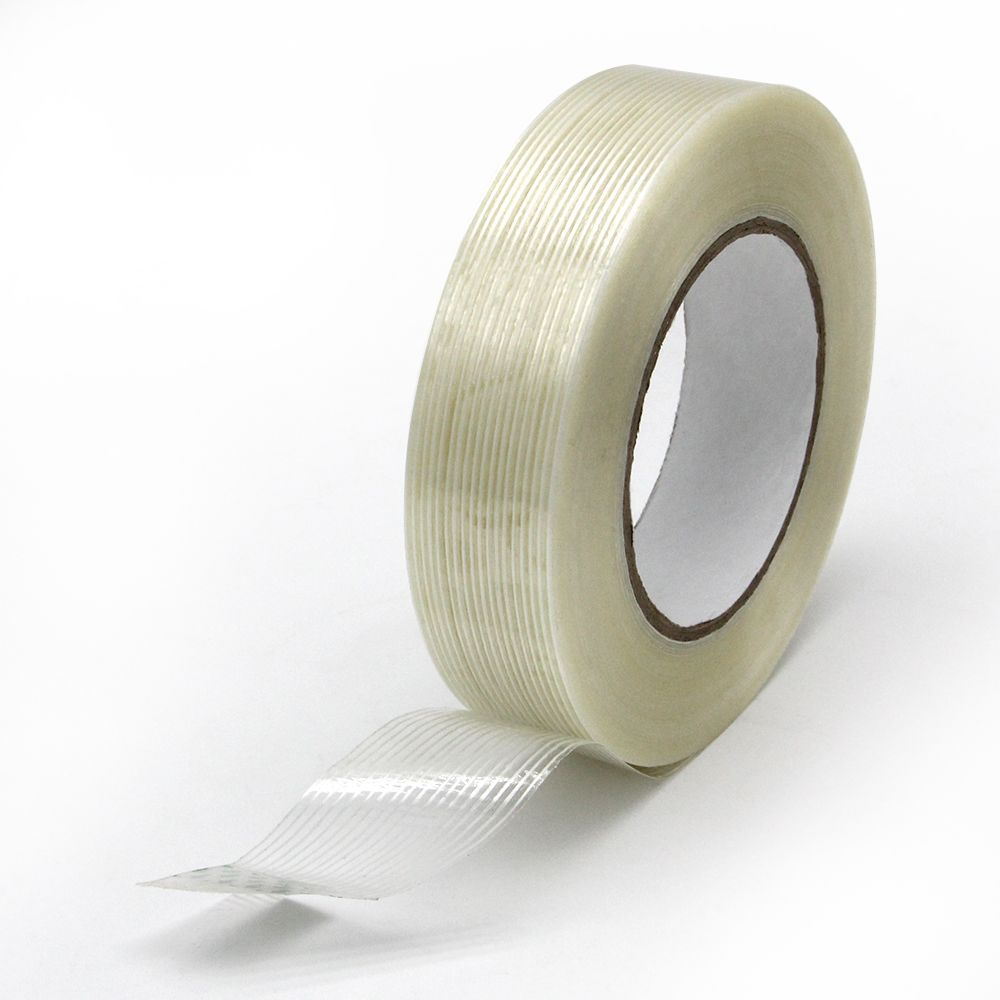
A wider tape gives the adhesive more carton surface to hold onto. That can reduce stress concentration and help prevent carton surface tearing. However, wider is not automatically better. If the tape covers curved, dusty, or uneven areas without enough pressure, the extra width may not fully bond.
For filament tape for boxes, the better approach is to match width to the failure area. Narrow tape may be enough for light edge support. Wider tape is usually better when flap rebound, carton edge opening, or surface tearing appears repeatedly.
Carton edges take a lot of abuse during manual lifting, conveyor movement, and pallet handling. Applying filament tape along vulnerable edges can help reduce splitting and prevent the seam from opening under repeated movement.
This is especially useful when the carton is strong enough overall but fails at one repeated location. In that case, reinforcing the edge may be more effective than wrapping the entire box with more tape.
Corners rarely fail in a clean straight line. They often fail where vertical and horizontal stress meet. L-clip reinforcement gives support across that transition.
For cartons that show corner splitting, applying L-shaped reinforcement at the corner can be more useful than adding another strip to the center seam. If corner damage appears in multiple directions, this is also where mono vs bi-directional filament tape becomes a relevant comparison.
H-pattern sealing is a common practical method when both the center seam and the edge seams need support. The center seam is sealed first, then the two edge seams are reinforced.
This pattern helps when the top or bottom flap wants to open under storage, stacking, or repeated handling. It is not magic, and it cannot fix a weak carton, but it gives the tape a better chance to hold the actual flap edges instead of only covering the middle.
Many packaging teams reinforce the top and forget the bottom. That is risky for dense products, small heavy components, or cartons that are lifted repeatedly.
If the bottom panel shows bulging, flap movement, or edge opening, bottom reinforcement should be tested before changing tape grade. A heavy-duty carton sealing tape may help, but placement still decides whether the added strength reaches the failure area.
Filament tape is not finished when it touches the carton. Pressure helps the adhesive wet out the paperboard surface. Without firm pressure, the tape may sit on surface fibers, dust, or coating instead of developing real contact.
That is why carton reinforcement should be applied with consistent hand pressure, roller pressure, or a controlled sealing process whenever possible.
Not all corrugated cartons are easy to bond.
A filament tape that performs well on one carton may lift or flag on another. The difference is often the carton surface, not the tape strength.
Kraft corrugated board is usually a more straightforward bonding surface. Coated cartons may reduce adhesive contact. Recycled board can vary in surface consistency. Dusty cartons create a weak layer between adhesive and paper fiber. Humid cartons may lose board strength and may also affect adhesion. Cold carton surfaces can slow initial wet-out.
This is why testing should use the actual production carton, not a clean sample board from the office. The real box may have dust, coating, humidity history, ink, or fiber variation that changes the result.
For export carton reinforcement, adhesive fit should be tested together with tape width and application pressure. Looking at only tensile strength is not enough.
Most carton reinforcement applications can be handled with mono-directional filament tape.
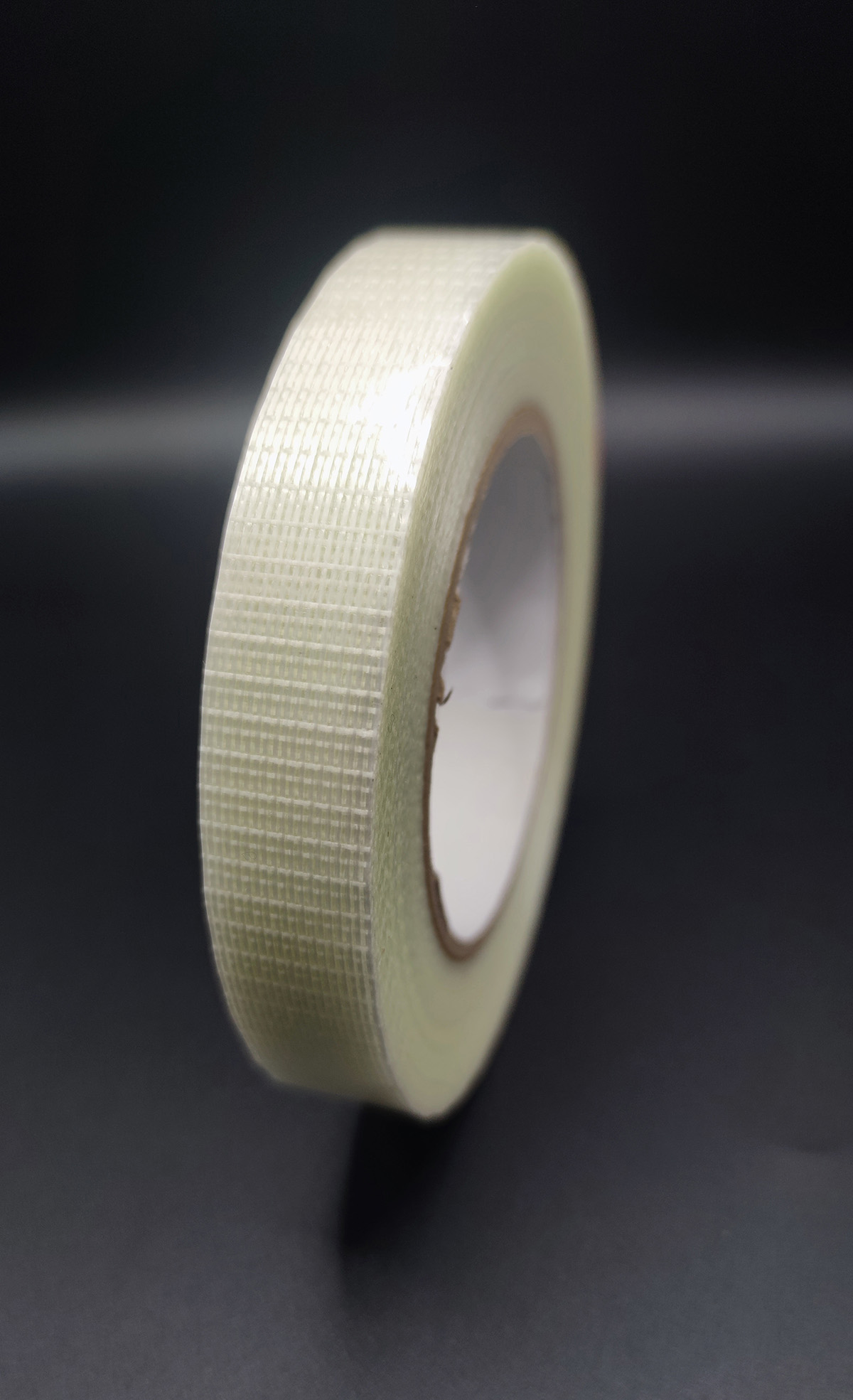
However, some failures involve stress from more than one direction. Examples include corner splitting, cross-direction tearing, irregular box geometry, and cartons handled from different angles during distribution.
In these cases, bi-directional filament tape may be worth evaluating. The goal is not simply “more strength.” The goal is better stress distribution.
If carton failure is concentrated along a single seam, mono-directional tape is often sufficient. If corners split repeatedly or tearing develops in multiple directions, bi-directional reinforcement is worth testing.
Many packaging failures can be found before a large purchase order is placed.
Use real production conditions:
· Real cartons
· Real product weight
· Real tape width
· Real application pressure
· Real storage conditions
· Real handling methods
After sealing, observe cartons for at least 24 hours or longer when possible. Look for edge opening, tape lift, corner splitting, surface tearing, bottom flap movement, and seal loosening.
If practical, simulate handling: lifting, stacking, pallet movement, carton turning, or vibration exposure during internal testing. The goal is not to prove that the tape works. The goal is to find where the system fails.
That is how buyers avoid ordering a stronger tape when the real issue is carton strength, poor surface adhesion, or the wrong reinforcement pattern.
One challenge in large packaging operations is consistency. Even when the correct filament tape for carton reinforcement is selected, installation quality may vary between operators, shifts, or facilities.
For repeat carton sizes, custom slit widths or pre-cut reinforcement strips can help reduce variation. This is especially useful when carton edge opening is caused by inconsistent tape placement or rough hand-cut edges.
When discussing carton reinforcement with a supplier, send carton dimensions, board type, product weight, current tape width, photos of the failure location, application method, storage conditions, and transportation route.
If you are not sure whether the problem comes from tape grade, carton strength, or reinforcement pattern, send the carton failure photos and current packaging details before requesting samples. A technical review can help narrow the test direction before you commit to bulk use.
This article follows common carton closing and reinforcement logic. ASTM D1974/D1974M covers methods for closing, sealing, and reinforcing fiberboard shipping boxes. Public product guidance from 3M and tesa also identifies filament tape as suitable for bundling, securing, box closing, and reinforcing heavy packages during transport and storage.
Can filament tape stop all carton failure?
No. Filament tape can reinforce seams and edges, but it cannot compensate for poor carton design, severe moisture damage, weak board, or inadequate pallet stabilization.
Should I use standard or heavy-duty mono filament tape for cartons?
Start with standard grades for typical cartons. Test heavy-duty grades when cartons are heavier, edge opening repeats, or too many wraps are needed.
What tape width works best for carton edge reinforcement?
There is no universal width. Choose based on carton size, board strength, load weight, failure location, and how much bonding area the reinforcement needs.
Why does tape lift from corrugated cartons?
Common causes include dust, humidity, coated surfaces, insufficient application pressure, flap rebound force, and poor adhesive fit on the actual carton surface.
When should I use bi-directional filament tape on cartons?
Consider bi-directional tape when failures involve corner splitting, cross-direction tearing, or multi-direction stress rather than simple center seam opening.