
info@jxgreentape.com

Scaling from prototype to mass production is a pivotal phase for any B2B enterprise, especially when dealing with specialized materials like Kapton tape. As a leading adhesive tape manufacturer, Jiaxing Risure New Material Co., Ltd. specializes in producing high-quality polyimide-based tapes for industries ranging from electronics to aerospace. In this comprehensive guide, we explore key considerations such as kapton tape lead time, polyimide tape MOQ, spooling options, and the advantages of sourcing factory direct kapton tape or in bulk kapton tape quantities.
Kapton tape, a polyimide film with silicone adhesive, is prized for its thermal resistance (up to 400°C), electrical insulation, and chemical stability. However, transitioning to large-scale production involves navigating challenges like extended kapton tape lead time due to raw material sourcing or customization needs. Drawing from our extensive experience in B2B supply chains, this post provides expert insights to help procurement managers and engineers optimize their processes, ensuring seamless scale-up while minimizing costs and delays.
By focusing on polyimide tape MOQ thresholds, efficient spooling, and direct manufacturer partnerships, you'll gain actionable strategies that align with Google's EEAT principles—leveraging our firsthand expertise as a producer to deliver authoritative, trustworthy advice. Whether you're prototyping for R&D or ramping up for global distribution, understanding kapton tape lead time variations is crucial for success.
Kapton tape, often referred to as polyimide tape, is an engineered material developed for extreme environments. Its core polyimide film offers exceptional dielectric strength (up to 7 kV/mil) and low outgassing, making it ideal for vacuum applications in semiconductors and space technology.
In B2B contexts, applications include masking in PCB manufacturing, wire harnessing in automotive assemblies, and insulation in high-voltage transformers. When scaling production, factors like kapton tape lead time become critical—prototypes might require quick turnaround for testing, while mass runs demand bulk efficiency.
At Jiaxing Risure New Material Co., Ltd., we produce variants such as single-sided, double-sided, and ESD-safe Kapton tape, customizable in widths from 3mm to 500mm. Sourcing factory direct kapton tape ensures authenticity, avoiding counterfeits that plague indirect channels. For scale-up, balancing polyimide tape MOQ with your demand forecast is essential to avoid overstocking while securing favorable kapton tape lead time.
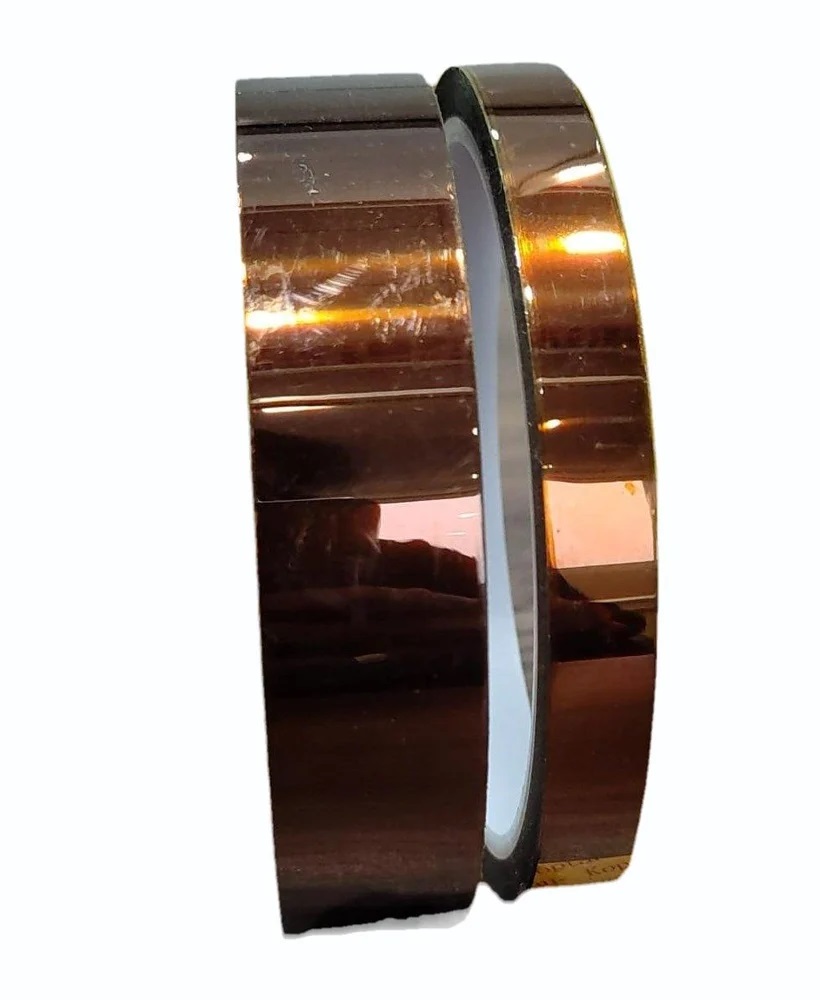
Kapton tape lead time is a make-or-break element in scale-up planning. Typically ranging from 2-4 weeks for standard orders to 6-8 weeks for custom specifications, it encompasses raw material procurement, manufacturing, and quality testing.
Key influencers include:
1. Raw Material Availability: Polyimide film, sourced from suppliers like DuPont, can face shortages due to global demand. Delays here directly extend kapton tape lead time.
2. Customization Requirements: Adding features like specific adhesive thickness or color coding increases processing time. For prototypes, we offer rapid prototyping with kapton tape lead time under 1 week.
3. Production Capacity: High-volume runs in bulk kapton tape orders may queue behind others, but partnering with a scalable manufacturer like ours minimizes this.
4. Quality Assurance: Rigorous tests for peel strength (ASTM D3330) and thermal endurance add 3-5 days but ensure reliability.
5. Logistics and Shipping: International shipments can add 1-2 weeks; opting for factory direct kapton tape streamlines this via consolidated freight.
From our experience, proactive communication on polyimide tape MOQ can shave days off kapton tape lead time by aligning orders with production schedules. For instance, forecasting demand allows us to stockpile materials, reducing lead times by up to 30%.
Polyimide tape MOQ—or minimum order quantity—serves as a threshold to make production economically viable. For Kapton tape, standard polyimide tape MOQ starts at 100-500 rolls, depending on specifications, but can drop to 50 for prototypes.
Why does polyimide tape MOQ matter in scale-up? Low MOQs facilitate initial testing without excess inventory, while higher ones unlock discounts in bulk kapton tape purchases. Factors affecting polyimide tape MOQ include:
· Material Costs: High-grade polyimide is expensive; smaller runs increase per-unit pricing.
· Setup Expenses: Die-cutting or spooling setups are fixed costs, amortized over larger quantities.
· Supplier Flexibility: Factory direct kapton tape providers like Jiaxing Risure offer tiered MOQs, starting low for new clients to build relationships.
In mass production, aim for polyimide tape MOQ that matches your annual forecast—say, 1,000 rolls quarterly—to optimize kapton tape lead time and pricing. Our B2B clients often start with prototype MOQs of 100 rolls, scaling to 10,000+ for full production, benefiting from economies of scale.
Spooling is a critical yet overlooked aspect of Kapton tape scale-up. Proper spooling ensures easy dispensing, reduces waste, and integrates seamlessly into automated lines.
Standard spools range from 3-inch cores for handheld use to 6-inch for machinery, with lengths up to 66 meters. Considerations include:
· Core Material and Size: Plastic cores prevent core collapse in high-speed unwinding; larger diameters minimize kapton tape lead time by allowing bigger rolls.
· Tension Control: Uniform winding prevents telescoping, a common issue in bulk kapton tape storage.
· Custom Labeling: For traceability, include batch numbers and specs on spools.
In prototype phases, small spools suffice, but mass production demands jumbo rolls to cut kapton tape lead time through fewer changeovers. Sourcing factory direct kapton tape enables custom spooling, like traverse winding for even distribution, enhancing efficiency in continuous oven lines or assembly robots.
Our expertise shows that optimized spooling can reduce application time by 20%, directly impacting overall polyimide tape MOQ feasibility.
Choosing factory direct kapton tape eliminates middlemen, offering transparency and control. Benefits include:
1. Quality Assurance: Direct access to production data, including certificates like RoHS and UL, ensures compliance.
2. Competitive Pricing: Bypass distributor markups, with savings up to 25% on bulk kapton tape.
3. Custom Solutions: Tailor adhesive formulations or thicknesses without delays, shortening kapton tape lead time.
4. Supply Chain Reliability: Real-time updates on polyimide tape MOQ and inventory prevent stockouts.
At Jiaxing Risure, our factory direct kapton tape model supports global B2B clients with dedicated account managers, fostering long-term partnerships. This approach not only accelerates scale-up but also builds trust through consistent delivery.
Procuring bulk kapton tape is the cornerstone of mass production efficiency. Strategies include:
· Volume Discounts: Orders exceeding 5,000 rolls often yield 15-30% savings, offsetting higher polyimide tape MOQ.
· Long-Term Contracts: Lock in prices and prioritize kapton tape lead time with annual agreements.
· Inventory Management: Use just-in-time (JIT) delivery to balance bulk kapton tape storage costs.
· Diversification: Mix standard and custom rolls in bulk to meet varying needs.
From prototypes (small batches) to mass runs (bulk kapton tape at 10,000+ rolls), scaling requires forecasting tools like ERP systems. Our clients report 40% cost reductions by shifting to factory direct kapton tape in bulk, with streamlined kapton tape lead time.
1. Prototype Phase: Define specs, test small polyimide tape MOQ, and validate with short kapton tape lead time.
2. Validation: Conduct field trials, adjusting for spooling compatibility.
3. Scale-Up Planning: Forecast demand, negotiate bulk kapton tape terms with factory direct kapton tape suppliers.
4. Production Ramp: Gradually increase volumes, monitoring kapton tape lead time metrics.
5. Optimization: Implement feedback loops for continuous improvement.
This structured approach, based on our manufacturing insights, ensures smooth transitions.
A PCB manufacturer started with 200-roll polyimide tape MOQ prototypes, facing 3-week kapton tape lead time. Scaling to bulk kapton tape (5,000 rolls) via factory direct kapton tape reduced lead time to 4 weeks and costs by 22%.
Challenges with spooling in wire harnessing were resolved by custom factory direct kapton tape, cutting kapton tape lead time from 8 to 5 weeks and enabling mass production of 10,000 units monthly.
High polyimide tape MOQ for thermal insulation was optimized, with bulk kapton tape deliveries ensuring compliance and reliability.
These examples highlight our authoritative role in facilitating successful scale-ups.
· Forecast Accurately: Use data analytics to predict needs, aligning with polyimide tape MOQ.
· Build Supplier Relationships: Factory direct kapton tape partnerships yield flexible kapton tape lead time.
· Incorporate Buffers: Add 10-15% to timelines for unforeseen delays.
· Sustainability Focus: Choose eco-friendly bulk kapton tape options to meet regulations.
Implementing these practices enhances trustworthiness in your supply chain.
Scaling Kapton tape from prototype to mass production demands careful attention to kapton tape lead time, polyimide tape MOQ, spooling, and sourcing strategies like factory direct kapton tape and bulk kapton tape. By following this guide, grounded in our expertise at Jiaxing Risure New Material Co., Ltd., you'll achieve efficient, cost-effective growth. Contact us for personalized consultations to optimize your operations.
Author: Jarod, Material Manager of Jiaxing Risure New Material Co., Ltd.